Inspections & compliance
Received an FSSAI Notice? What It Means and What to Do Next
Start an FSSAI notice response by reading the complete communication, recording receipt and deadline, and identifying its legal basis. Preserve evidence and address immediate food risks. A generic reply cannot replace a point-by-point assessment of the actual grounds.
By the MyFoodLicense team Sources checked 2 min read
In this guide
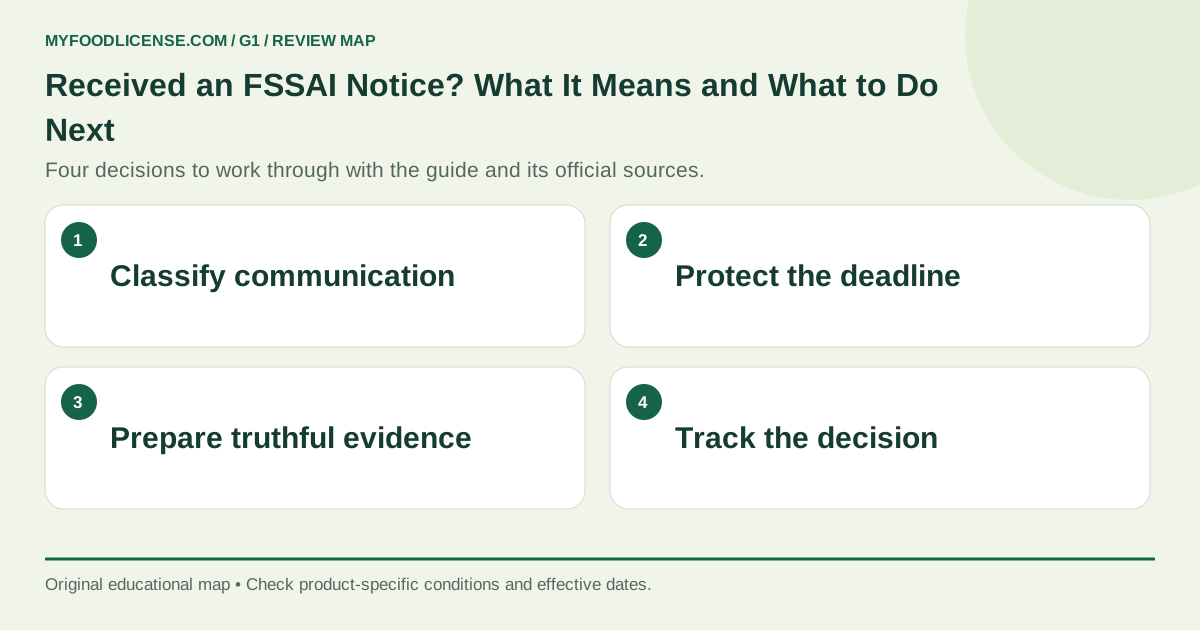
Identify the type of communication
Distinguish application clarification, inspection observation, improvement notice, sampling report, show-cause communication and suspension or cancellation order. Record the issuing authority and cited provision. The response and review route depend on this classification, not simply the word notice.
Protect the deadline and evidence
Save the original email, letter, attachments and proof of service. Build a timeline of inspection, sampling, receipt and relevant business events. Preserve certificates, product records and campaign or label versions. Do not alter historical logs or replace the original evidence with a revised summary.
Assess immediate operational action
Separate urgent safety controls from legal arguments. Identify affected stock, process or premises and any restriction in the communication. A request for clarification is different from a direction stopping an activity. Read the actual order before deciding what business may continue. Read relevant Act provisions.
Prepare a structured response
Use a table containing each allegation, factual position, evidence, corrective action and completion status. Explain limitations honestly and avoid unsupported declarations of full compliance. Where legal rights or interpretation are involved, obtain advice on the specific route and period. Improvement notices and sampling appeals have separate rules.
Submit and follow through
Use the stated official channel and retain acknowledgement. Track follow-up requests, inspection and the final recorded decision. Completing an internal action does not establish that the authority has accepted the reply or withdrawn an order. Keep the closure evidence with the incident file.
A worked example
Hypothetical example
A notice lists three hygiene observations and one product-label issue. The business assigns each point an evidence owner, completes immediate food protection and prepares separate supporting documents. A single statement that all issues are corrected would not make the response reviewable.
Your practical checklist
- Save the complete notice and proof of receipt.
- Identify type, authority and legal grounds.
- Record the exact response deadline.
- Preserve original operational evidence.
- Prepare point-by-point actions and attachments.
- Retain submission and final-decision records.
Download this preparation checklist
For help applying this review to your business, explore our FSSAI Notice Review service. Bring the documents described above so the consultation can focus on the decisions still unresolved.
Frequently asked questions
Do all notices have the same deadline?
No. Read the communication and applicable procedure.
Should I ignore a notice after fixing the problem?
No. Complete the required response and retain evidence.
Can I backdate missing logs?
No. Preserve truthful records and explain gaps accurately.
Does submission mean the matter is closed?
No. Track the authority’s actual decision.
When is legal advice useful?
Where allegations, appeal rights, restrictions or statutory deadlines require case-specific interpretation.
Official sources and further reading
Checked on 2 October 2026. Gazette notifications and operative directions prevail over compilations and summaries, including this guide.
- Food Safety and Standards Act, 2006: Sections 23–32, 46 and 48–67; numerical penalties are maxima and require case-specific interpretation.
- Food Safety and Standards Rules, 2011 compendium: Sampling, report and appeal procedure; distinguish statutory time periods from future amendments.
- Licensing and Registration Amendment Regulations, notification dated 10 March 2026: Regulation 2.1.7: perpetual validity, annual fees, applicable returns and suspension; regulation 2.1.17: risk-based inspections.
This guide is general information, not legal advice; the right route depends on your product and business facts. Examples marked hypothetical are illustrations, not client cases. MyFoodLicense is an independent consultancy and is not affiliated with FSSAI; applications are decided by the competent authority on the official FoSCoS portal.