Free FSSAI guides
FSSAI licensing, labelling and compliance, explained
105 practical guides for food businesses in India: which licence you need, what goes on your label, which claims you can make, and what to do when the regulator writes to you. Every guide links to the official sources, checked on 2 October 2026.
Registration & licensing
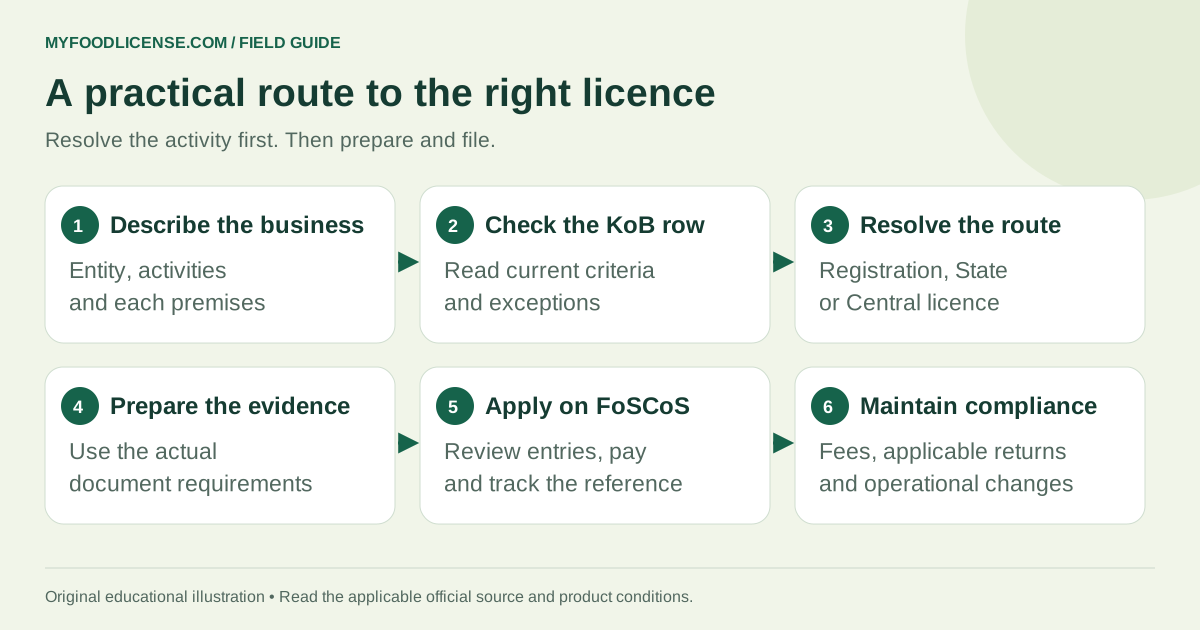
Complete guideFSSAI Licence & Registration in 2026: The Complete GuideUnderstand the April 2026 FSSAI thresholds, activity exceptions, perpetual validity and FoSCoS application process before starting your food business.Read the guide
- FSSAI Registration vs State Licence vs Central Licence: Which One Do You Need?Compare FSSAI registration, State and Central licences using the revised 2026 turnover bands and important Kind-of-Business exceptions.6 min read
- Documents Required for FSSAI Registration and Licence: A Practical ChecklistPrepare registration and licence documents by business activity, check common mismatches and download a practical FSSAI application checklist.7 min read
- FSSAI Licence Fees in 2026: Government Fee vs Professional Fee ExplainedUnderstand current FSSAI annual government fees, perpetual validity, professional charges and the questions to ask before paying for an application.6 min read
- How to Apply for an FSSAI Licence on FoSCoS: Step by StepApply for an FSSAI registration or licence through the official FoSCoS portal after identifying your premises, Kind of Business and current eligibility3 min read
- FSSAI Licence Renewal in 2026: Perpetual Validity, Annual Fees and Legacy CertificatesFSSAI renewal guidance changed in 2026: licences and registrations issued under the new framework have perpetual validity, subject to continuing obligations3 min read
- FSSAI Registration for Home Bakers and Home KitchensA home baker or home kitchen selling food needs the appropriate FSSAI authorisation for the actual activity3 min read
- FSSAI Licence for Cloud Kitchens (Swiggy & Zomato Requirements)A cloud kitchen needs FSSAI authorisation for the premises where food is prepared3 min read
- FSSAI Licence for Restaurants, Cafés and CaterersRestaurants, cafés and caterers need an FSSAI route matched to their actual business3 min read
- FSSAI Licence for E-commerce and Online Food Sellers (Amazon, Flipkart, Quick Commerce)An online food seller must assess its own food-business activities, while an e-commerce food platform has a separate Central-licensing row3 min read
- FSSAI Licence for Food Importers: Central Licence, IEC and ProcessA food importer requires the Central-licence route in the 2026 KoB table, irrespective of turnover3 min read
- FSSAI Licence for Food Manufacturers: 2026 Eligibility, Categories and DocumentsFor food manufacturing in 2026, start with the current manufacturing KoB row and product route3 min read
- FSSAI Licence for Exporters: Do You Need One?Food exporters must assess the export-related KoB that matches their role3 min read
- Kind of Business (KOB) on FoSCoS Explained and How to Pick the Right OneKind of Business, or KoB, describes what your food business does3 min read
- Running Several Kinds of Business Under One LicenceSeveral food-business activities at the same premises can require multiple KoB endorsements in the appropriate authorisation3 min read
- Multi-State Operations: Head Office Licence and Branch LicencesMulti-state food operations need a licensing assessment for the head office and each operating premises3 min read
- How to Modify an FSSAI Licence: Adding Products, Changing Address or CapacityModify an FSSAI authorisation when a material change affects its approved details or scope3 min read
- FSSAI Application Reverted or Rejected? How to RespondA reverted FSSAI application usually requires clarification or correction; rejection is an authority decision that needs a different review3 min read
- Change of Ownership, Partners or Company Name on an FSSAI LicenceChanging a company name, partners, ownership or legal constitution can affect an FSSAI authorisation differently3 min read
- How to Surrender or Close an FSSAI LicenceWhen a food business permanently closes, address its FSSAI authorisation as well as its premises and tax arrangements3 min read
- FSSAI for Retailers, Kirana Stores, Distributors and WholesalersRetailers, distributors and wholesalers need the appropriate FSSAI authorisation for their food-trading activities and premises2 min read
- FSSAI for Warehouses, Cold Storage and TransportersFood storage and transport activities have their own FSSAI KoB rows3 min read
- FSSAI for Repackers and RelabellersRepacking food and commissioning manufacture under your brand are different regulatory roles3 min read
- FSSAI for Street Food Vendors, Hawkers and Seasonal BusinessesStreet vendors and hawkers should check the applicable registration position, hygiene requirements and local permissions3 min read
- Tatkal FSSAI Licence and Registration: Who Qualifies?Tatkal is an official instant-issuance facility for specified eligible food-business activities, subject to digital verification and exclusions3 min read
- How to Check Whether an FSSAI Licence Number Is ValidVerify an FSSAI number through the official system and compare the returned business details with the actual supplier or premises3 min read
- Penalty for Running a Food Business Without an FSSAI LicenceOperating a food business without the required FSSAI licence can attract prosecution under section 63 of the Food Safety and Standards Act3 min read
- FSSAI Annual Return (Form D-1): Who Must File and By WhenForm D1 applies to specified licensed manufacturing and importing activities, including relevant repackers, relabellers and exporter-manufacturers3 min read
- FSSAI Licence for Tiffin Services, Mess and CanteensA tiffin service, mess and canteen should select the KoB that matches how meals are prepared and supplied3 min read
Labelling & packaging
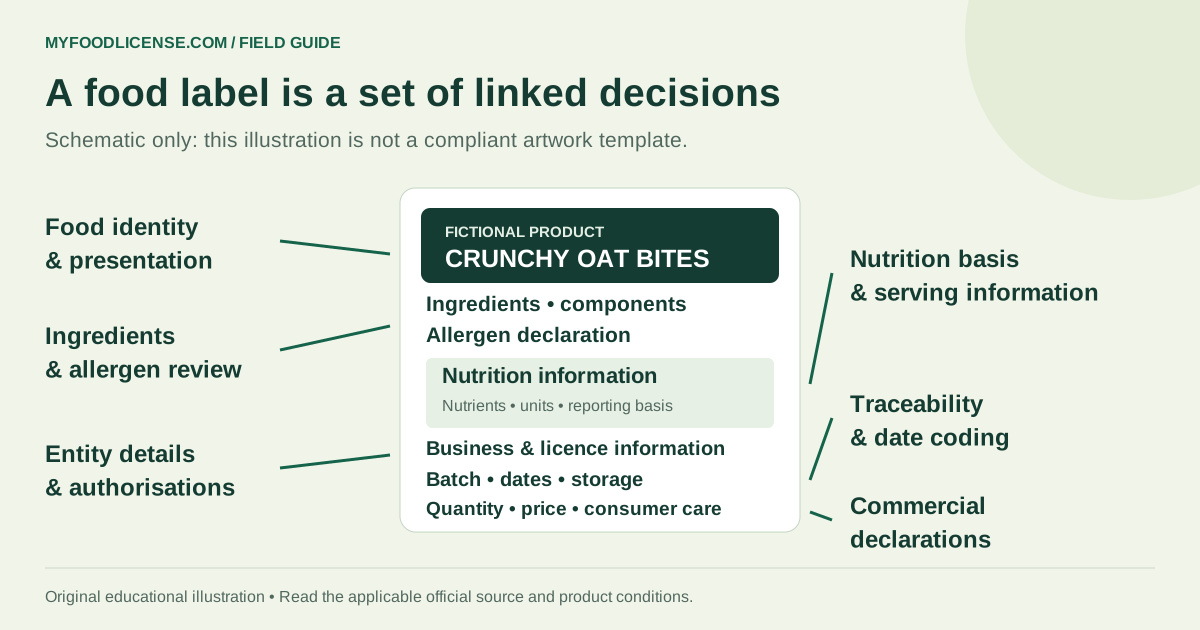
Complete guideFSSAI Labelling Requirements: A Complete Guide for Packaged Food BrandsReview Indian packaged-food labels with a declaration checklist, annotated illustration, artwork workflow and effective-date guidance for 2026–2027.Read the guide
- Mandatory Label Declarations for Packaged Food in India (Checklist)A packaged-food label in India needs a coordinated set of food, business, traceability and commercial declarations3 min read
- 12 Label Mistakes That Get Food Products Into TroubleFood-label errors often begin with an incorrect product assumption or outdated source data3 min read
- How to Write a Statement of Ingredients the FSSAI Way (Order, Percentages, Compound Ingredients)Write the ingredient list from the actual manufacturing formula, normally in descending order by weight at the time of manufacture3 min read
- Declaring Food Additives on a Label: Class Titles and INS NumbersAn additive label declaration generally combines the functional class with its specific name or recognised INS number3 min read
- Allergen Labelling in India: What to Declare and HowReview allergens from the complete formula, including compound ingredients and supplier carriers, and prepare the required declaration3 min read
- How to Make a Nutrition Information Table for Your LabelBuild the nutrition table from reliable product data on the reporting basis required for the food3 min read
- Veg and Non-Veg Logo Rules (Size, Colour, Placement)The vegetarian symbol uses a green circle within a green outlined square; the current non-vegetarian symbol uses a brown triangle within a brown outlined square3 min read
- FSSAI Logo and Licence Number on the Label: RulesA food label must carry the applicable FSSAI logo and licence-number declarations for the responsible businesses2 min read
- Legal Metrology on Food Packs: Net Quantity, MRP and Consumer CareFor retail food packs, review Legal Metrology declarations alongside FSSAI information3 min read
- Date Marking: Best Before vs Use By vs ExpiryBest-before concerns the period of expected quality, while expiry or use-by marks the end of the stated period for the product under its storage conditions3 min read
- Front-of-Pack Labelling in India: Where Things StandReview current mandatory front-of-pack information separately from the proposed Indian Nutrition Rating system3 min read
- Label Rules for Small Packs and MultipacksSmall packs and multipacks need a format-specific review of exemptions and outer-pack declarations2 min read
- Pre-Print Checklist: What to Check Before Your Label Goes to the PrinterBefore printing, reconcile the final artwork with the approved recipe, reports, certificates and applicable label requirements2 min read
- Harmonising Labels Across a Product RangeHarmonise a product range through controlled common rules and SKU-specific data3 min read
Claims & advertising
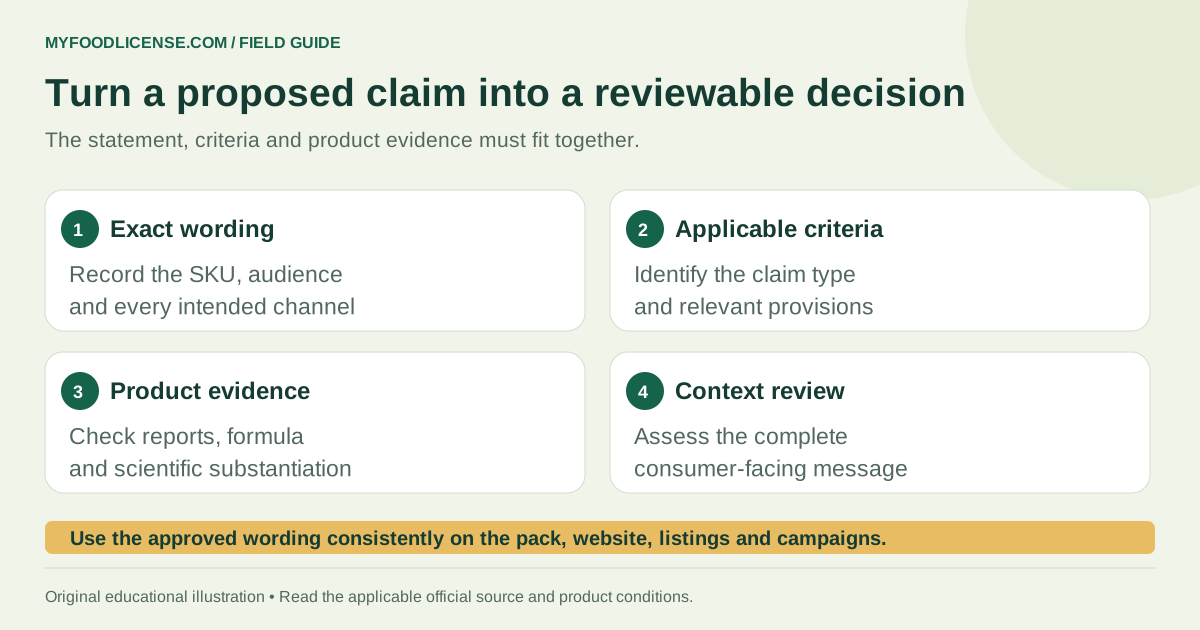
Complete guideFood Claims in India: What You Can Say on Packs, Websites and AdsAssess nutrition, health, natural and non-addition claims using FSSAI rules, worked examples and an evidence-file workflow for food brands.Read the guide
- Can You Call Your Food "Natural", "Fresh", "Pure" or "Original"?Natural, fresh, pure and original are regulated food representations, not unrestricted marketing adjectives3 min read
- "High Protein", "Low Fat", "Sugar Free": Criteria for Nutrition ClaimsNutrition claims must meet the Indian criterion for the exact nutrient, food form and reporting basis3 min read
- Nutrition Claims vs Health Claims: The Difference and Why It MattersA nutrition claim describes a nutrient level or comparison; a health claim links a food or constituent to health3 min read
- "No Added Sugar" vs "Sugar Free" vs "Zero Sugar"No added sugar concerns how a food is formulated; sugar-free concerns its final sugar concentration3 min read
- "Immunity Booster" and Other Risky Claims Brands Still MakeImmunity booster is a health representation that needs a precise regulatory and evidence assessment2 min read
- Influencer Marketing for Food Brands: The Rules on ClaimsFood claims remain subject to the applicable rules when delivered by an influencer2 min read
- Comparative Claims ("30% Less Sugar"): How to Make Them SafelyA less sugar or more protein statement needs a valid reference food, a transparent comparison and the applicable difference criterion3 min read
- Misleading Food Ads: Penalties and Real ExamplesMisleading food advertising can create liability under section 53 of the Food Safety and Standards Act and other applicable frameworks3 min read
- Do You Need Evidence for Your Claim? Building a Substantiation FileA claim-substantiation file should connect the exact proposed wording to the applicable criterion and relevant product evidence2 min read
Product classification & approvals
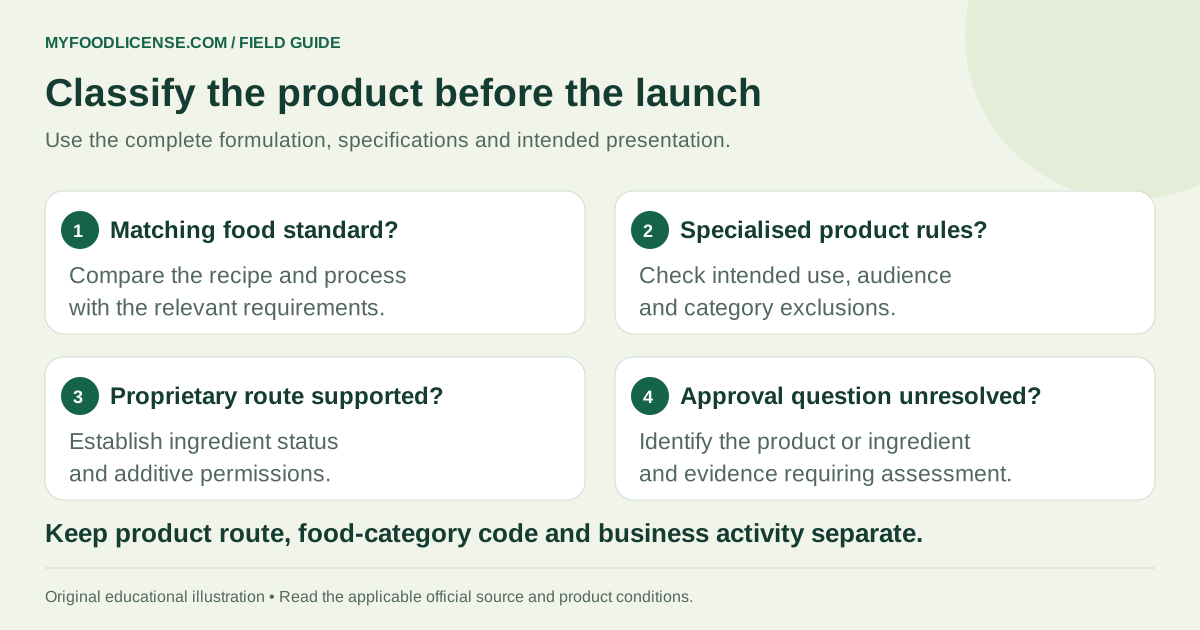
Complete guideStandardised, Proprietary or Non-Specified Food? A Guide to FSSAI Product ClassificationUnderstand FSSAI product-classification routes, proprietary-food limits, ingredient questions and when prior approval needs assessment.Read the guide
- Standardised vs Proprietary Food: What's the Difference?A standardised food must meet the applicable prescribed standard2 min read
- FSSAI Food Category System Explained (with Examples)The FSSAI food-category system helps locate additive permissions and other relevant product provisions2 min read
- Non-Specified Food and Novel Ingredient Approval: Process, Time and CostNon-specified food or ingredient approval is a prior safety-assessment route, separate from business licensing3 min read
- Is This Ingredient Allowed in India? How to Check an Ingredient's StatusTo check an ingredient’s Indian status, identify the exact material, food category, intended use and dose, then locate the applicable provision or approval2 min read
- Food Additives in India: Permitted Lists and Maximum LevelsFood-additive compliance depends on the actual substance, food category, final concentration and all applicable notes2 min read
- Can You Use This Product Name? FSSAI Rules on Naming FoodChoose a food name that accurately describes the product and respects any applicable prescribed standard2 min read
- Flavours on Food Labels: Natural, Nature-Identical and ArtificialFlavour permission and label wording need the actual flavour specification and food category2 min read
- Fortified Foods and the +F LogoThe +F logo relates to foods meeting the applicable fortification framework and product endorsement requirements2 min read
- Organic (Jaivik Bharat) and Vegan Logos: How to Get EndorsementOrganic and vegan are separate compliance routes3 min read
- Millet Products: Standards and LabellingMillet does not create a single regulatory category for every grain, flour, biscuit or drink2 min read
- When Your Recipe Doesn't Comply: Reformulating Without Losing the ProductReformulation should begin with a precise explanation of the compliance gap and the product attributes you want to preserve2 min read
Supplements & nutraceuticals
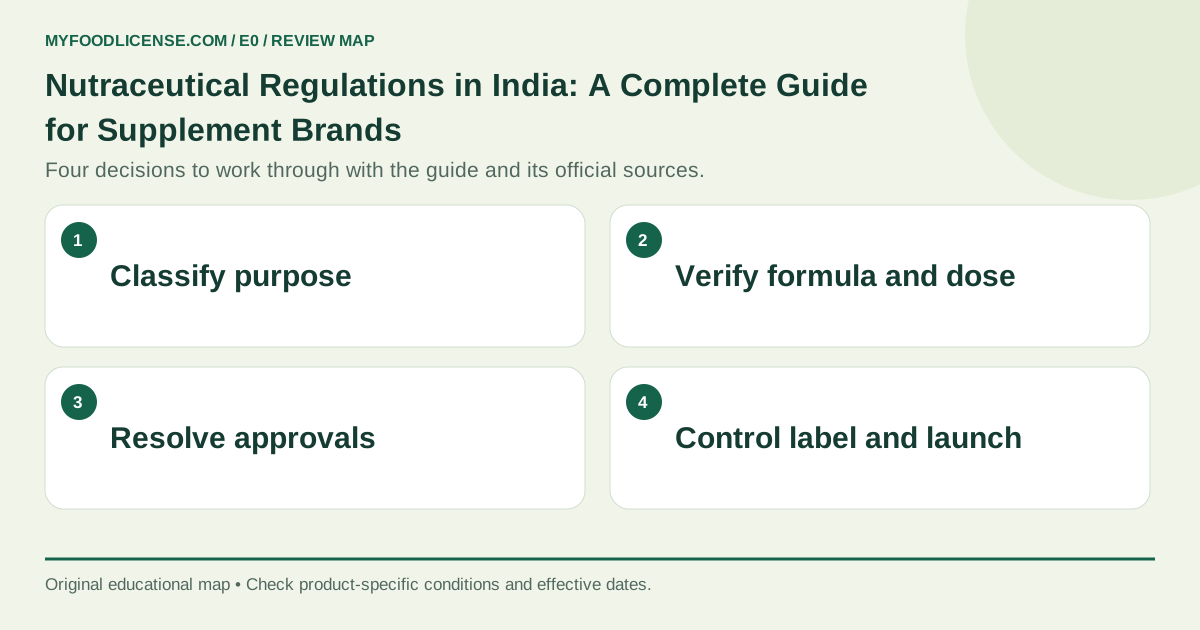
Complete guideNutraceutical Regulations in India: A Complete Guide for Supplement BrandsA supplement launch in India needs linked decisions on category, ingredients, dose, format, licensing, safety evidence, label and claimsRead the guide
- Health Supplement vs Nutraceutical vs FSDU vs FSMP: Which Category Is Your Product?Classify health supplements, nutraceuticals, FSDU and FSMP by their composition, purpose, intended users and representations2 min read
- How to Launch a Protein Powder Brand in India: Regulatory ChecklistA protein-powder launch needs classification, source and dose review, manufacturing authorisations, product evidence and label/claim assessment2 min read
- FSSAI or AYUSH? Herbal and Ayurvedic Products ExplainedHerbal origin does not decide whether a product belongs under FSSAI or the Ayurvedic-drug framework2 min read
- Vitamins and Minerals in Supplements: RDA Limits and Permitted FormsVitamin and mineral compliance needs both a permitted-form check and a daily active-nutrient calculation2 min read
- Gummies, Effervescents and Novel Formats: Regulatory PitfallsGummies and effervescent products need a category, ingredient, dose and format assessment3 min read
- Probiotics and Prebiotics: Permitted Strains and ClaimsProbiotic and prebiotic foods need specific identity, permission, dose and evidence reviews3 min read
- Botanicals in Nutraceuticals: How to Check if a Plant Ingredient Is PermittedA botanical assessment needs the exact species, plant part, form, extraction process, concentration and intended dose3 min read
- Labelling a Health Supplement: Mandatory Warnings and DeclarationsSupplement labels need general food declarations plus the applicable category, usage and warning information2 min read
- Claims for Supplements: What's AllowedSupplement claims must fit the product category, ingredients, daily dose, intended users and relevant evidence2 min read
Imported food
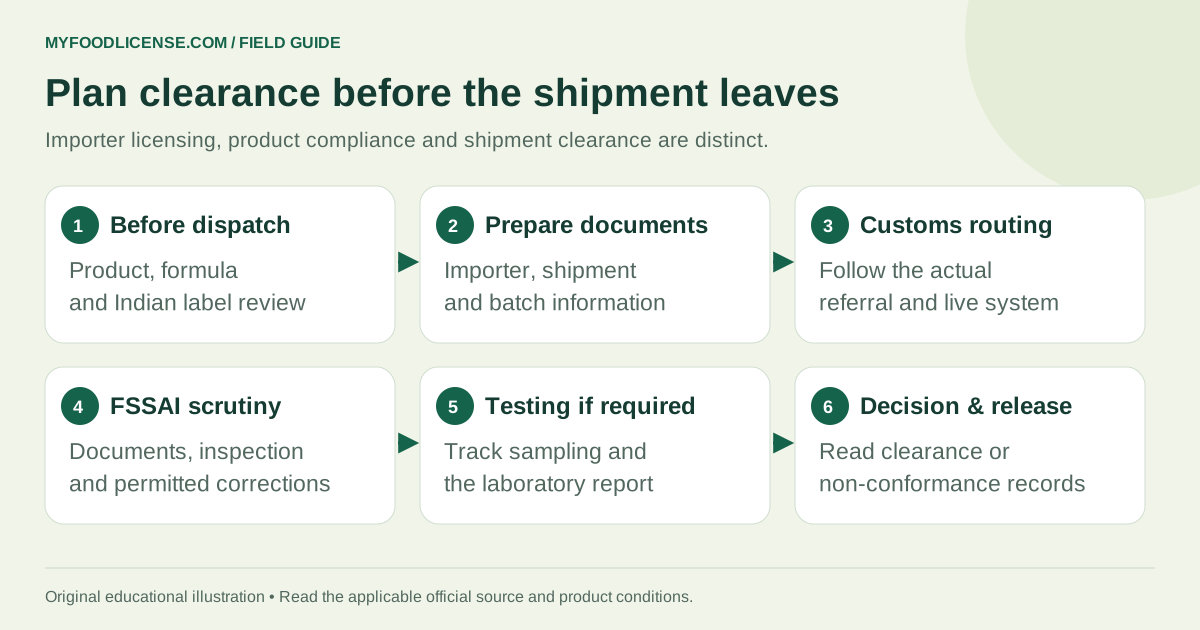
Complete guideImporting Food into India: FSSAI Clearance, Labels and Common Rejection RisksPlan Indian food imports with a pre-shipment checklist covering product status, importer licensing, labels, shelf life and the FSSAI clearance workflow.Read the guide
- FSSAI Import Clearance Explained: From Shipment to ReleasePlan food import clearance before dispatch, then follow the consignment’s actual Customs referral and FSSAI workflow3 min read
- Imported Food Labels in India: Language Rules and Permitted StickersImported food needs an India-specific label assessment before shipment3 min read
- Why Imported Food Gets Rejected at the Port (and How to Avoid It)Imported food can be refused clearance for product, document, label, shelf-life or testing non-conformities3 min read
- Allowed Abroad, Not Allowed in India: Additives and Ingredients to WatchAn ingredient or additive allowed abroad is not automatically permitted in India2 min read
- Your EU/US Label vs Indian Requirements: A Side-by-Side ComparisonA US or EU label should be treated as source artwork for an Indian gap review, not as an automatically compliant Indian pack3 min read
Inspections & compliance
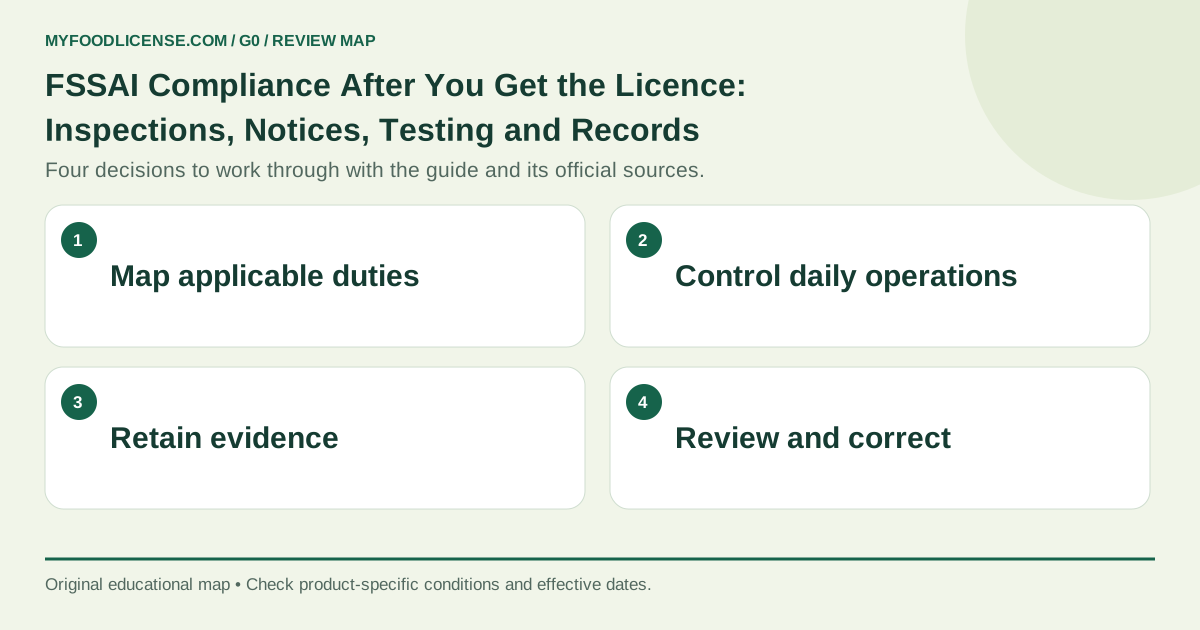
Complete guideFSSAI Compliance After You Get the Licence: Inspections, Notices, Testing and RecordsAn FSSAI authorisation starts a continuing compliance programme: keep the business scope accurate, maintain hygiene and records, test where applicable, file.Read the guide
- Received an FSSAI Notice? What It Means and What to Do NextStart an FSSAI notice response by reading the complete communication, recording receipt and deadline, and identifying its legal basis2 min read
- FSSAI Improvement Notices: Required Measures, Deadlines and Appeal RightsSection 32 improvement notices specify failures, required measures and a compliance period of at least 14 days3 min read
- Your Food Sample Failed the Lab Test: Your OptionsWhen a food sample fails, identify whether it was an internal quality test or an official regulatory sample, preserve the report and assess immediate.3 min read
- FSSAI Inspection Checklist: How to PreparePrepare for an FSSAI inspection by aligning the actual premises, operating controls and records with the authorised activities and applicable hygiene.2 min read
- Schedule 4 Hygiene Requirements, Explained SimplySchedule 4 sets hygiene requirements for food businesses, with different parts and later operationalised provisions for relevant activities2 min read
- FSMS Plan: What FSSAI Expects and How to Write OneAn FSMS plan should explain how your actual business identifies and controls food-safety hazards2 min read
- Food Recall Plan and Traceability: A Template ApproachA recall plan should identify affected food, stop relevant distribution, communicate with the right people and reconcile retrieval and disposition3 min read
- FoSTaC Training and the Food Safety Supervisor RequirementFSSAI’s FoSTaC guidance calls for State and Central licensed food businesses to have at least one trained and certified food-safety supervisor for every 25.3 min read
- Six-Monthly Lab Testing for Manufacturers: Who Must Do ItApplicable manufacturing licence conditions require testing relevant chemical and microbiological contaminants at a risk-based frequency and at least once.3 min read
- Suspension or Cancellation of an FSSAI Licence: What to DoAfter suspension or cancellation, read the actual grounds and restrictions, preserve the service date and assess the correct restoration or appeal route2 min read
- CAPA for Food Businesses: Corrective and Preventive Action Done ProperlyCAPA connects immediate correction with an evidence-based cause analysis, preventive action and an effectiveness check2 min read
Launching a food brand
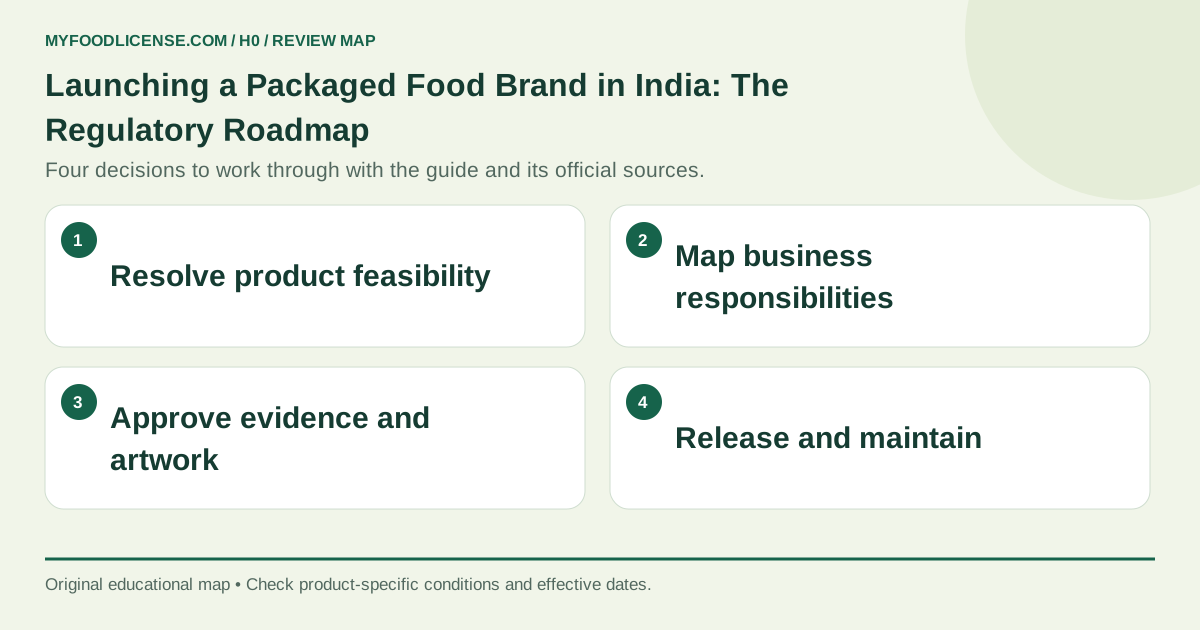
Complete guideLaunching a Packaged Food Brand in India: The Regulatory RoadmapPlan a packaged-food launch in the order that decisions depend on one another: classify the product, establish a compliant formula, map business roles,.Read the guide
- How Much Does It Cost to Make a Food Product Compliant in India?Compliance cost depends on the product, business roles, evidence already available and work still required2 min read
- Contract Manufacturing and Private Label: Whose Licence Covers What?In private-label production, map the brand owner and manufacturer separately2 min read
- D2C Food Brand Compliance Checklist (Website, Marketplaces, Labels)A D2C food brand needs consistent regulatory information across the product, label, website, marketplace and fulfilment operations2 min read
- Selling on Amazon, Flipkart, Blinkit and Zepto: Food Seller RequirementsPrepare regulatory product evidence and current platform documents before listing food on Amazon, Flipkart, Blinkit or Zepto3 min read
- What Your Packaging Designer Needs from You Before Designing a Food LabelGive your packaging designer reviewed source copy, product evidence, business details and pack constraints before layout begins2 min read
- Regulatory Feasibility: Questions to Answer Before Developing a New ProductRegulatory feasibility asks whether the proposed product can be made, sold and represented through a supported Indian route before substantial investment2 min read
- When Does a Food Brand Need a Regulatory Retainer?A regulatory retainer can suit a food brand with recurring product changes, multiple channels, ongoing filings or frequent authority and supplier questions2 min read
Regulatory updates
- FSSAI Updates: September 2026 Roundup for Food BusinessesThis September 2026 roundup highlights selected official FSSAI developments relevant to food businesses, checked on 2 October 20263 min read
- FSSAI Laboratory Amendment 2026: Changes Effective from April 2027FSSAI’s Laboratory and Sample Analysis Amendment Regulations, 2026 are final, but take effect on 1 April 20273 min read
- FoSCoS OTP Not Received or Documents Not Uploading: Practical FixesFor FoSCoS OTP or document-upload problems, first verify the official portal, the correct account and the live form’s requirements3 min read