Inspections & compliance
Your Food Sample Failed the Lab Test: Your Options
When a food sample fails, identify whether it was an internal quality test or an official regulatory sample, preserve the report and assess immediate product risks. Official sampling reports have a defined appeal route. Retesting informally does not replace that process.
By the MyFoodLicense team Sources checked 3 min read
In this guide
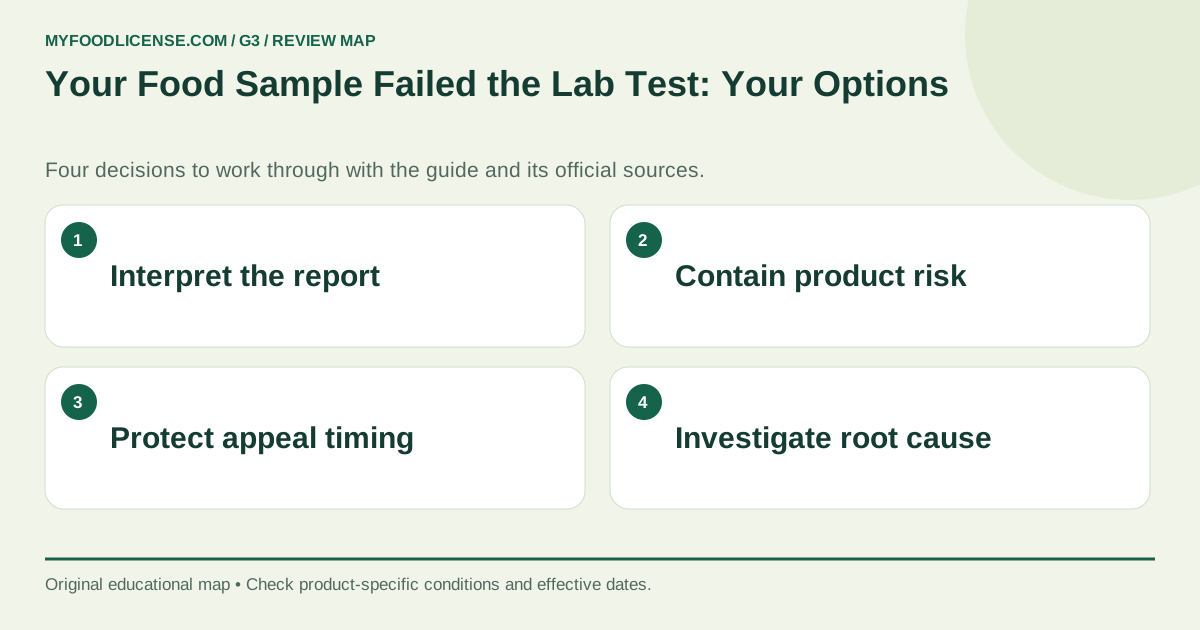
Identify the test and alleged failure
Record sample identity, batch, source, collection and receipt dates, laboratory, methods, units, category and prescribed criterion. Distinguish composition, misbranding and safety issues. A result should be interpreted against the correct product requirement, not whichever limit appears on a generic report.
Contain risk and preserve records
Identify affected stock and distribution, protect relevant retained samples and preserve manufacturing and supplier evidence. Assess whether product hold or recall action is needed independently of a challenge to the report. Do not destroy records or release implicated stock solely because an internal retest looks favourable.
Use the official report appeal route
Section 46(4) and rule 2.4.6 address appeal to the Designated Officer. The cited Rules provide Form VIII filing within 30 days of receiving the analysis report from the Designated Officer, with referral decisions and sample handling under the specified process. The referral report is final in that regard. Read the appeal procedure; read section 46.
Keep future laboratory changes in context
The September 2026 final amendment addresses methods, report forms and laboratory timelines, but comes into force on 1 April 2027. Do not apply that future effective date as if it creates a new October 2026 response period. The current Act and Rules already contain relevant analysis and appeal provisions. Read the effective date.
Investigate and prevent recurrence
Review root cause, source materials, process, storage and analytical issues supported by evidence. Separate a disagreement over interpretation from a confirmed operational defect. Document corrections and effectiveness checks, and obtain advice on the actual legal communication. Imported-sample review has its own framework. Read CAPA.
A worked example
Hypothetical example
A manufacturer receives an official report and obtains a favourable private retest. It preserves both but assesses the statutory Form VIII route and receipt date rather than sending the private report as if it automatically overturns the official result. Product-risk controls continue while the matter is reviewed.
Your practical checklist
- Identify internal versus official sampling.
- Read batch, method, units and criterion.
- Preserve report, service date and samples.
- Assess affected stock and immediate risks.
- Review the applicable appeal route and period.
- Investigate cause and verify corrective action.
Download this preparation checklist
For help applying this review to your business, explore our Sampling / Test Report Regulatory Assessment service. Bring the documents described above so the consultation can focus on the decisions still unresolved.
Frequently asked questions
Does a private retest cancel an official result?
No. Use the applicable official review or referral procedure.
What period does the cited rule state?
Form VIII within 30 days of receiving the analysis report from the Designated Officer.
Is an import NCR the same appeal route?
No. Assess the import-specific framework.
Are September 2026 changes already effective?
The cited amendment takes effect on 1 April 2027.
Should food-risk controls wait for appeal?
Assess immediate risk separately from the legal challenge.
Official sources and further reading
Checked on 2 October 2026. Gazette notifications and operative directions prevail over compilations and summaries, including this guide.
- Food Safety and Standards Act, 2006: Sections 23–32, 46 and 48–67; numerical penalties are maxima and require case-specific interpretation.
- Food Safety and Standards Rules, 2011 compendium: Sampling, report and appeal procedure; distinguish statutory time periods from future amendments.
- Laboratory and Sample Analysis Amendment Regulations, 14 September 2026: Final Gazette amendment effective 1 April 2027; separate future changes from current October 2026 procedure.
- Food Recall Procedure Regulations, 2017: Recall responsibilities, communication and recordkeeping.
This guide is general information, not legal advice; the right route depends on your product and business facts. Examples marked hypothetical are illustrations, not client cases. MyFoodLicense is an independent consultancy and is not affiliated with FSSAI; applications are decided by the competent authority on the official FoSCoS portal.