Inspections & compliance
Food Recall Plan and Traceability: A Template Approach
A recall plan should identify affected food, stop relevant distribution, communicate with the right people and reconcile retrieval and disposition. Traceability makes those actions possible. The March 2026 FoSCoS reporting function supports the process but does not replace the physical recall.
By the MyFoodLicense team Sources checked 3 min read
In this guide
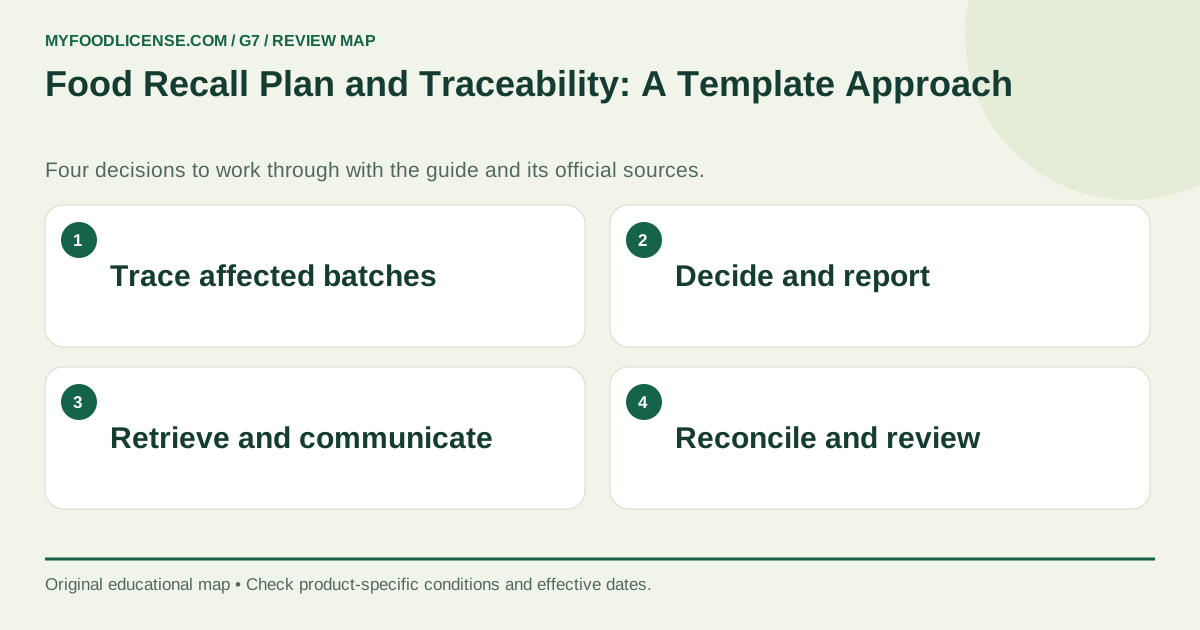
Create a usable batch chain
Link supplier materials to production batches and onward customers or destinations. Record quantities and dates. For relabelled products, arrange access to the contract manufacturer’s batch evidence. A supplier list without batch links is insufficient to locate affected food.
Define the decision and reporting process
The Recall Regulations specify responsibilities and information to the authority immediately, not exceeding twenty-four hours from awareness that food requires recall under the provisions. Assess actual risk and scope promptly. Read recall reporting requirements.
Use a practical plan template
| Plan field | What to record |
|---|---|
| Decision owners | Responsible coordinator, alternates and authority contact process |
| Affected food | Product, batch, dates, quantity and distribution scope |
| Immediate control | Stock hold, distribution stop and relevant production action |
| Communication | Customers, consumers and authority information |
| Retrieval and reconciliation | Issued, held, recovered and outstanding quantities |
| Disposition and closure | Authorised handling, evidence and effectiveness review |
This is a preparation structure; complete the actual regulatory information and product-specific procedures.
Use current FoSCoS reporting
The 18 March 2026 order implements food-recall functionality and directs initiating FBOs to fill the necessary system details as appropriate. Keep the portal record with communications and retrieval evidence. Uploading a form does not ensure that customers have stopped sale. Read the order.
Test and improve traceability
Run a suitable mock exercise and record how quickly affected batches and quantities can be identified. Investigate missing records or contacts and improve the plan. A real incident requires current risk assessment and authority engagement, not reliance on a hypothetical template alone.
A worked example
Hypothetical example
A sauce manufacturer discovers an implicated ingredient batch used across three production lots. Its traceability records identify customers and quantities for each lot. The recall team can define the affected scope and track retrieval instead of withdrawing unrelated products without evidence.
Your practical checklist
- Link input batches to finished lots.
- Maintain destination and quantity records.
- Name recall owners and alternates.
- Prepare timely authority and customer communication.
- Use current FoSCoS reporting as applicable.
- Reconcile stock, disposition and effectiveness.
Download this preparation checklist
For help applying this review to your business, explore our Recall / Traceability Procedure Review service. Bring the documents described above so the consultation can focus on the decisions still unresolved.
Frequently asked questions
Does a recall plan only mean a contact list?
No. It needs batch identification, actions, communication, retrieval and reconciliation.
What reporting period is cited?
Immediately, not exceeding twenty-four hours under the relevant Recall Regulations provision.
Does portal reporting complete the recall?
No. Physical control and communication remain necessary.
Can relabellers rely entirely on factory records?
Arrange usable access and responsibilities before an incident.
Is a mock exercise useful?
Yes. It can reveal gaps in batch data, quantities and contacts.
Official sources and further reading
Checked on 2 October 2026. Gazette notifications and operative directions prevail over compilations and summaries, including this guide.
- Food Recall Procedure Regulations, 2017: Recall responsibilities, communication and recordkeeping.
- FoSCoS food-recall functionality order, 18 March 2026: Current recall-reporting channel; portal reporting does not replace retrieval and communication.
- Food Safety and Standards Act, 2006: Sections 23–32, 46 and 48–67; numerical penalties are maxima and require case-specific interpretation.
This guide is general information, not legal advice; the right route depends on your product and business facts. Examples marked hypothetical are illustrations, not client cases. MyFoodLicense is an independent consultancy and is not affiliated with FSSAI; applications are decided by the competent authority on the official FoSCoS portal.