Inspections & compliance
CAPA for Food Businesses: Corrective and Preventive Action Done Properly
CAPA connects immediate correction with an evidence-based cause analysis, preventive action and an effectiveness check. Cleaning a spill or replacing a label fixes the visible defect; the file should also explain why it happened and how recurrence will be reduced.
By the MyFoodLicense team Sources checked 2 min read
In this guide
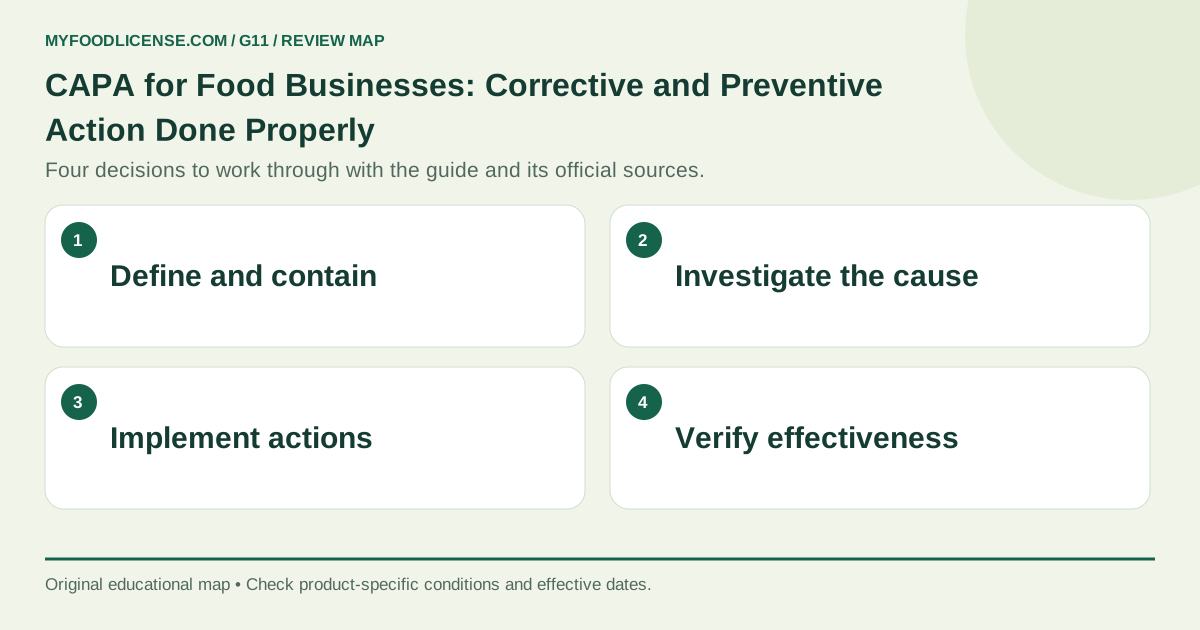
Define the nonconformance and scope
Record the observation, requirement, evidence, product or process and affected dates or batches. Separate a confirmed defect from an unverified hypothesis. Assess immediate product risk and containment before starting a long root-cause exercise.
Find a supported cause
Review process, people, equipment, materials, instructions and records. Use a suitable investigation method without turning a diagram into proof. Human error is rarely a complete explanation when the procedure, training or system made the error likely. Read food-safety implementation guidance.
Separate correction and preventive action
Correction addresses the present defect. Further actions should address the supported cause and relevant recurrence risks. Assign an owner, completion date and evidence for each action. Avoid closing a repeated issue only by telling staff to be careful.
Verify effectiveness
Define what evidence will show the action works: suitable inspections, monitoring results, tests or review of later production. A signed training sheet proves attendance, not necessarily that the original control failure stopped. Choose an effectiveness check suited to the actual issue.
Connect CAPA to authority and product records
Where CAPA supports a notice response, include the action and evidence in the point-by-point submission. Keep affected-stock and recall decisions separate but linked. Update the FSMS, specifications or approved artwork where the cause requires it. Read notice handling.
A worked example
Hypothetical example
A seasoning error recurs despite repeated reminders. The investigation finds similar containers and no verification step at weighing. The team improves identification and a suitable checking control, then reviews later batches for effectiveness rather than closing the issue with another warning email.
Your practical checklist
- Define defect, requirement and affected scope.
- Contain immediate product risk.
- Investigate causes using evidence.
- Assign correction and preventive actions.
- Set a suitable effectiveness check.
- Update procedures and retain closure evidence.
Download this preparation checklist
For help applying this review to your business, explore our CAPA Support service. Bring the documents described above so the consultation can focus on the decisions still unresolved.
Frequently asked questions
Is correction the same as CAPA?
Correction is one part; cause, further action and effectiveness also matter.
Is human error enough as root cause?
Investigate the conditions and controls that contributed to the error.
Does training attendance prove effectiveness?
No. Use evidence that the relevant behaviour or control improved.
Can CAPA replace a statutory reply?
No. Use it as relevant supporting evidence in the required response.
When is CAPA closed?
When actions and suitable effectiveness evidence support the recorded closure decision.
Official sources and further reading
Checked on 2 October 2026. Gazette notifications and operative directions prevail over compilations and summaries, including this guide.
- FSSAI nutraceutical-sector FSMS guidance: Voluntary implementation guidance and practical FSMS principles; not a universal certification mandate.
- Licensing Regulations compendium, August 2021: Base Schedule 4 structure and licence conditions; old thresholds and validity superseded by 2026 changes.
- Food Safety and Standards Act, 2006: Sections 23–32, 46 and 48–67; numerical penalties are maxima and require case-specific interpretation.
This guide is general information, not legal advice; the right route depends on your product and business facts. Examples marked hypothetical are illustrations, not client cases. MyFoodLicense is an independent consultancy and is not affiliated with FSSAI; applications are decided by the competent authority on the official FoSCoS portal.