Launching a food brand
When Does a Food Brand Need a Regulatory Retainer?
A regulatory retainer can suit a food brand with recurring product changes, multiple channels, ongoing filings or frequent authority and supplier questions. Define the work and response expectations clearly. It should create maintained decisions and records, not an unlimited promise of approval.
By the MyFoodLicense team Sources checked 2 min read
In this guide
Identify recurring needs
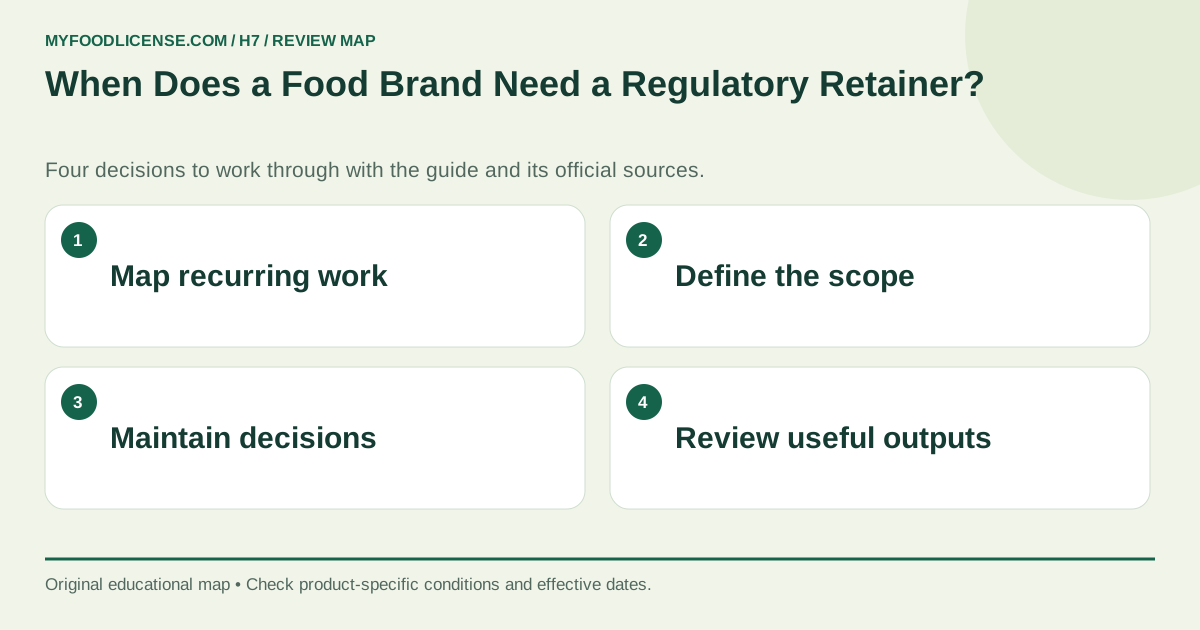
Map the next period’s products, suppliers, sites, label changes, claims, platforms and compliance obligations. A stable single product may need occasional project reviews; a growing range may create recurring coordination needs. Choose the arrangement from actual work rather than brand size alone.
Define included and separate work
Specify review hours or deliverables, response expectations, update monitoring, meetings and evidence assumptions. Identify whether testing, major dossiers, litigation, additional SKUs or urgent authority matters are separately scoped. Avoid using unlimited compliance as a substitute for a clear agreement.
Maintain the compliance register
Track authorisations, annual fees, applicable returns, product decisions, artwork versions and evidence gaps. Perpetual validity still has conditions, while product and business changes can trigger further review. Read continuing obligations.
Use controlled decisions across teams
Create an approved claim and source-data register that designers, marketing and production can use. Coordinate updates to packs and listings. Relevant regulatory changes should produce a documented impact assessment, not just a forwarded notification. Read substantiation files.
Review value and effectiveness
Measure useful outputs such as closed evidence gaps, timely decisions, consistent artwork and usable incident records. Review the scope periodically as the business changes. A retainer cannot guarantee regulator or marketplace decisions and should not imply official affiliation.
A worked example
Hypothetical example
A brand adds new flavours and platform listings every month. It scopes recurring formula, claim and artwork reviews, while treating a novel-ingredient dossier as separate work. The arrangement gives teams a maintained decision record and clear expectations about larger projects.
Your practical checklist
- List actual recurring regulatory work.
- Define deliverables and response expectations.
- State exclusions and evidence assumptions.
- Maintain authorisation and product registers.
- Coordinate approved copy across teams.
- Review scope and documented outputs periodically.
Download this preparation checklist
For help applying this review to your business, explore our FSSAI Compliance Gap Assessment service. Bring the documents described above so the consultation can focus on the decisions still unresolved.
Frequently asked questions
Does every brand need a retainer?
No. Choose project or ongoing support based on actual recurring needs.
Should urgent notices be included automatically?
Define their treatment and response scope explicitly.
Does a retainer guarantee approval?
No. Competent authorities and platforms make their own decisions.
What records should it maintain?
Relevant authorisation, product, evidence, claim, artwork and change registers.
When should scope be reviewed?
After growth, new categories, changed channels or materially different compliance needs.
Official sources and further reading
Checked on 2 October 2026. Gazette notifications and operative directions prevail over compilations and summaries, including this guide.
- Licensing and Registration Amendment Regulations, notification dated 10 March 2026: Regulation 2.1.7: perpetual validity, annual fees, applicable returns and suspension; regulation 2.1.17: risk-based inspections.
- Advertising and Claims Regulations compendium, Version IV, 14 December 2022: Nutrition-claim thresholds and general claim conditions. Protein uses RDA-based alternatives, not a universal percentage-of-energy rule.
- Labelling and Display Regulations compendium, Version VIII, 9 September 2025: Regulation 5: retail declarations, nutrition, dates and allergens. Read alongside later amendments and directions.
This guide is general information, not legal advice; the right route depends on your product and business facts. Examples marked hypothetical are illustrations, not client cases. MyFoodLicense is an independent consultancy and is not affiliated with FSSAI; applications are decided by the competent authority on the official FoSCoS portal.