Claims & advertising
Do You Need Evidence for Your Claim? Building a Substantiation File
A claim-substantiation file should connect the exact proposed wording to the applicable criterion and relevant product evidence. It is a decision record, not a collection of favourable articles. Keep approved wording, conditions and unresolved issues visible for every SKU and channel.
By the MyFoodLicense team Sources checked 2 min read
In this guide
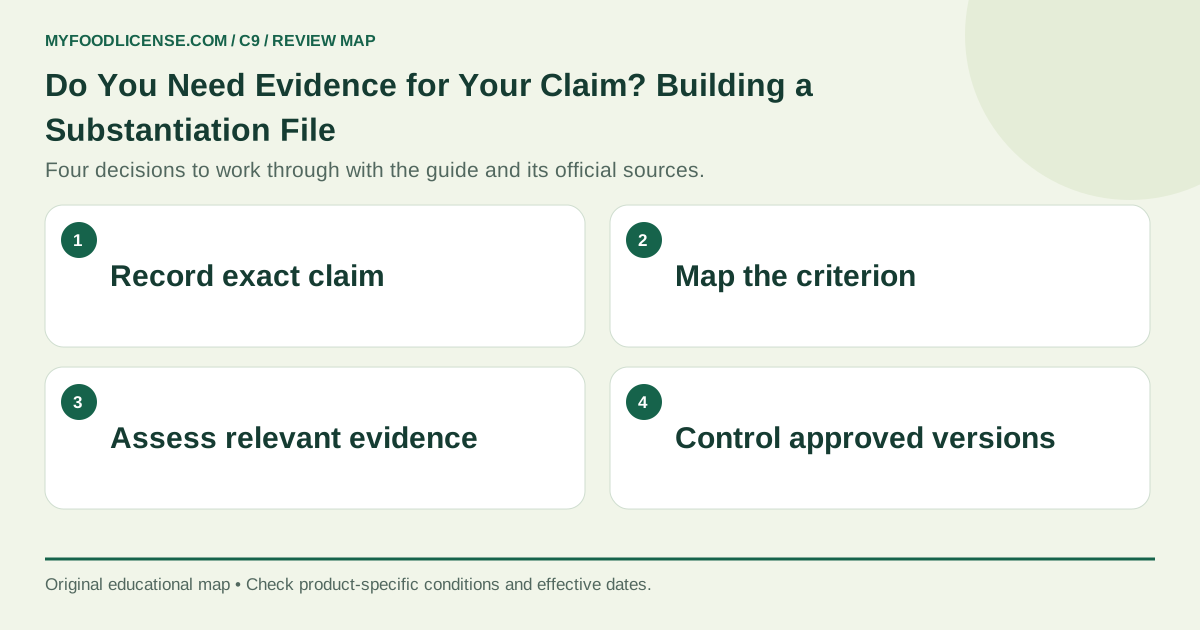
Record the claim precisely
List the product, recipe version, audience, dose or serving, exact wording, translations and channels. Include images and implied messages where they affect meaning. A file for supports normal function should not silently authorise prevents illness in a later campaign.
Map the regulatory basis
Classify the claim as content, comparative, non-addition or health-related and identify its applicable provisions. Record any prior-approval or notification requirement. The 2026 ePAAS order is relevant where the approval route applies. Claims framework; current approval channel.
Assemble evidence with relevance checks
For nutrient claims, keep the formula, reports, units and criterion calculation. For comparative claims, include the reference evidence. For health claims, examine study quality, population, substance, dose, finished-product relevance and outcome. A supplier brochure is not equivalent to a suitable scientific substantiation.
Document the assessment
Explain why the evidence supports the exact sentence and identify limitations. Record conditions of use, mandatory accompanying wording and the review decision. If evidence does not establish the claim, mark it unresolved or revise the message rather than hiding the gap in a long bibliography.
Control approval and refresh triggers
Give teams a register of approved versions and conditions. Reopen the file after formula, supplier, dose, audience or legal changes. Monitor shelf-life evidence where nutrient content is material to the claim. Retain superseded versions so previous campaigns remain traceable.
A worked example
Hypothetical example
A protein snack’s file contains a raw-material certificate but no finished-product calculation. The reviewer adds the recipe and relevant product data, checks the Indian claim criterion and records the selected basis. Marketing receives the approved wording rather than the entire unfiltered research folder.
Your practical checklist
- Record exact wording, SKU and channels.
- Identify criterion and approval route.
- Assess evidence relevance and quality.
- Keep calculations and reference products.
- Record conditions and the decision.
- Define change and refresh triggers.
Download this preparation checklist
For help applying this review to your business, explore our Claims Substantiation Dossier service. Bring the documents described above so the consultation can focus on the decisions still unresolved.
Frequently asked questions
Is a supplier brochure enough?
Usually it is input information, not a complete product-specific substantiation.
Do all claims need the same evidence?
No. Evidence must fit the claim type and applicable rule.
Should rejected wording be kept?
Retain the decision history so unsupported versions are not reused accidentally.
When should a file be refreshed?
After relevant formula, supplier, dose, audience, evidence or regulatory changes.
Does a large bibliography guarantee approval?
No. Relevance, quality and the applicable route matter.
Official sources and further reading
Checked on 2 October 2026. Gazette notifications and operative directions prevail over compilations and summaries, including this guide.
- Advertising and Claims Regulations compendium, Version IV, 14 December 2022: Nutrition-claim thresholds and general claim conditions. Protein uses RDA-based alternatives, not a universal percentage-of-energy rule.
- FSSAI order of 6 May 2026: ePAAS single-window approvals: Exclusive ePAAS submission from 1 June 2026 for specified approval and notification routes.
- Labelling and Display Regulations compendium, Version VIII, 9 September 2025: Regulation 5: retail declarations, nutrition, dates and allergens. Read alongside later amendments and directions.
This guide is general information, not legal advice; the right route depends on your product and business facts. Examples marked hypothetical are illustrations, not client cases. MyFoodLicense is an independent consultancy and is not affiliated with FSSAI; applications are decided by the competent authority on the official FoSCoS portal.