Launching a food brand
Launching a Packaged Food Brand in India: The Regulatory Roadmap
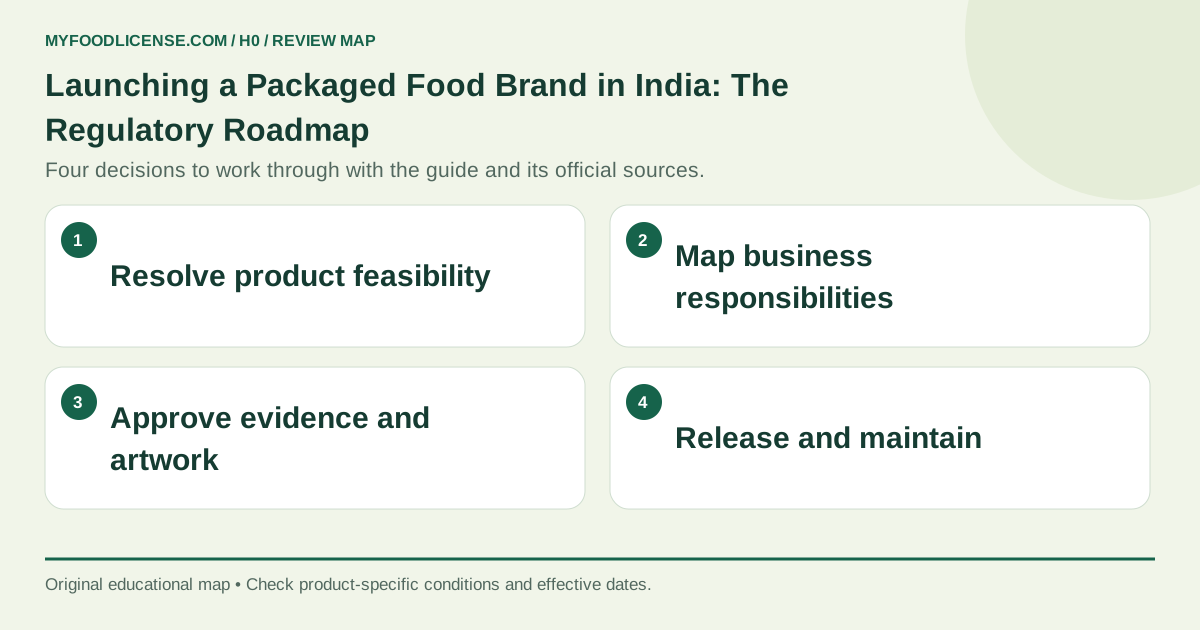
Plan a packaged-food launch in the order that decisions depend on one another: classify the product, establish a compliant formula, map business roles, prepare evidence, approve packaging and sales content, then release controlled batches. Licensing and label design should follow the actual product assessment.
By the MyFoodLicense team Sources checked 5 min read
In this guide
- Write a clear product brief
- Classify the product and formula
- Map the entities and operating premises
- Set the product evidence and quality plan
- Build label copy before final design
- Make digital content consistent
- Release a controlled first batch
- Maintain the business after launch
- A worked example
- Your practical checklist
- Explore the detailed guides
- Frequently asked questions
- Official sources
Write a clear product brief
Record the food, formula concept, intended users, format, preparation, storage, market and proposed claims. Include domestic or imported sourcing and intended sales channels. These facts determine the regulatory questions; a brand mood board cannot replace them.
Identify assumptions still unconfirmed, such as permission for a concentrated ingredient or a desired health claim. Resolve expensive uncertainties before investing in machinery, minimum-order stock or printed packaging. Use the feasibility questions.
Classify the product and formula
Compare the product with applicable standards and specialised routes before considering proprietary food. Keep product route, food-category code and business KoB separate. Establish ingredient identity, additive permission, levels, category notes and any approval gap. Read proprietary conditions; read additive permissions.
For supplements, imports and other specialised products, use the relevant framework rather than a generic snack checklist. Where approval is required, prepare the actual dossier and current route before commercial manufacture or import. Read classification, supplements and imports.
Map the entities and operating premises
Identify brand owner, manufacturer, repacker or relabeller, importer, warehouses and sellers. Determine who controls production, stock and distribution. An outsourced manufacturing model still needs an assessment of the brand’s own role.
Use the revised 2026 KoB table for route eligibility, including special product and activity rows. A low turnover forecast does not override Central-only requirements. Keep agreements and evidence consistent with the authorisations. Read current eligibility; review contract manufacturing.
Set the product evidence and quality plan
Establish specifications, relevant testing, process controls, packaging suitability and shelf-life support. Collect supplier specifications rather than relying only on invoices and brochures. Record which data support the nutrition, allergen, ingredient and claim decisions.
Define who approves a batch and how deviations are investigated. Agree access to factory and laboratory records where production is outsourced. Testing scope should fit the product and applicable requirements, not a generic certificate purchase. Read manufacturer testing.
Build label copy before final design
Prepare the actual food name, ingredient list, additives, allergens, nutrition, responsible-business details, dates, storage and commercial declarations. Add specialised warnings where applicable. FSSAI and Legal Metrology should be reviewed together. Read food declarations; read commercial information.
Give the designer controlled copy, measured pack details and coding constraints. Review claims against evidence before they become the visual centre of the pack. Prepare the designer brief and use pre-print checks.
Make digital content consistent
Review the website, marketplace titles, pack images, descriptions and campaign scripts against the approved product file. Platform onboarding has separate documentary and commercial requirements. It does not validate the recipe or approve every claim.
Assign responsibility for updating channels after a formulation, factory or artwork change. A physical pack can be correct while an old listing makes an unsupported promise. Use the D2C checklist and review platform requirements.
Release a controlled first batch
Compare production output with the approved formula, specifications, artwork and coding. Check actual printed labels and product condition. Record acceptance decisions and investigate discrepancies before distribution. A launch date in a marketing calendar should not substitute for unresolved product evidence.
Keep batch, quantity, supplier and destination records from the first sale. The first production run should be traceable to its source materials and approved artwork, not treated as an exception while the brand builds systems.
Maintain the business after launch
Track annual fees and applicable returns under perpetual validity, and review changes to sites, operators, activities and products. Build hygiene, training, testing, complaint and recall controls appropriate to the business. Read continuing-validity conditions.
Maintain a regulatory change register and refresh affected decisions when rules change. Keep stable product and article references, but update the underlying evidence after review. Read post-licence compliance and consider ongoing support.
A worked example
Hypothetical example
A startup plans a botanical snack with a health claim and books packaging before reviewing the extract. Its revised launch plan resolves ingredient status and claims first, then freezes the recipe, evidence and copy. This changes the sequence of investment decisions without inventing a guaranteed launch timeline.
Your practical checklist
- Prepare the product and claim brief.
- Classify the product and establish input permissions.
- Map entities, premises and licensing roles.
- Set specifications, tests and shelf-life evidence.
- Approve controlled label and claim copy.
- Reconcile website and platform content.
- Release traceable batches with reviewed artwork.
- Maintain compliance, changes and incident procedures.
Download this preparation checklist
For help applying this review to your business, explore our Complete Product Launch service. Bring the documents described above so the consultation can focus on the decisions still unresolved.
Explore the detailed guides
Use these focused articles to work through the decisions relevant to your business.
- How Much Does It Cost to Make a Food Product Compliant in India?
- Contract Manufacturing and Private Label: Whose Licence Covers What?
- D2C Food Brand Compliance Checklist (Website, Marketplaces, Labels)
- Selling on Amazon, Flipkart, Blinkit and Zepto: Food Seller Requirements
- What Your Packaging Designer Needs from You Before Designing a Food Label
- Regulatory Feasibility: Questions to Answer Before Developing a New Product
- When Does a Food Brand Need a Regulatory Retainer?
Frequently asked questions
Should design come before classification?
A clear product assessment and source copy help prevent costly artwork changes.
Does a factory licence cover the whole brand?
Assess each party’s role, premises and obligations.
Can a platform approval prove compliance?
No. Regulatory product and label assessment remain separate.
Can testing be chosen from a generic package?
Choose scope justified for the actual product and requirements.
Does compliance finish on launch day?
No. Ongoing validity, hygiene, testing, records and changes remain relevant.
Official sources and further reading
Checked on 2 October 2026. Gazette notifications and operative directions prevail over compilations and summaries, including this guide.
- Food Products Standards and Food Additives: regulation 2.12, Proprietary Food: Definition, exclusions, permitted ingredients, additive categories and the prohibition on treating a failed standardized product as proprietary.
- Food additive permissions: Appendix A: Category-specific additive limits, notes and restrictions; read later amendments.
- FoSCoS revised Kind-of-Business eligibility table, 2 April 2026 file: Activity-specific eligibility and annual fees. The PDF itself is marked updated 1 April 2026; relevant rows appear on pages 3, 6, 7 and 9.
- Labelling and Display Regulations compendium, Version VIII, 9 September 2025: Regulation 5: retail declarations, nutrition, dates and allergens. Read alongside later amendments and directions.
- Department of Consumer Affairs: packaged-commodity declarations: Net quantity, MRP including taxes, consumer care and unit sale price overview.
- Licensing and Registration Amendment Regulations, notification dated 10 March 2026: Regulation 2.1.7: perpetual validity, annual fees, applicable returns and suspension; regulation 2.1.17: risk-based inspections.
This guide is general information, not legal advice; the right route depends on your product and business facts. Examples marked hypothetical are illustrations, not client cases. MyFoodLicense is an independent consultancy and is not affiliated with FSSAI; applications are decided by the competent authority on the official FoSCoS portal.