Registration & licensing
Multi-State Operations: Head Office Licence and Branch Licences
Multi-state food operations need a licensing assessment for the head office and each operating premises. The 2026 table specifies a Central head-office route for businesses operating in two or more states. That authorisation does not replace appropriate factory, kitchen, warehouse or branch authorisations.
By the MyFoodLicense team Sources checked 3 min read
In this guide
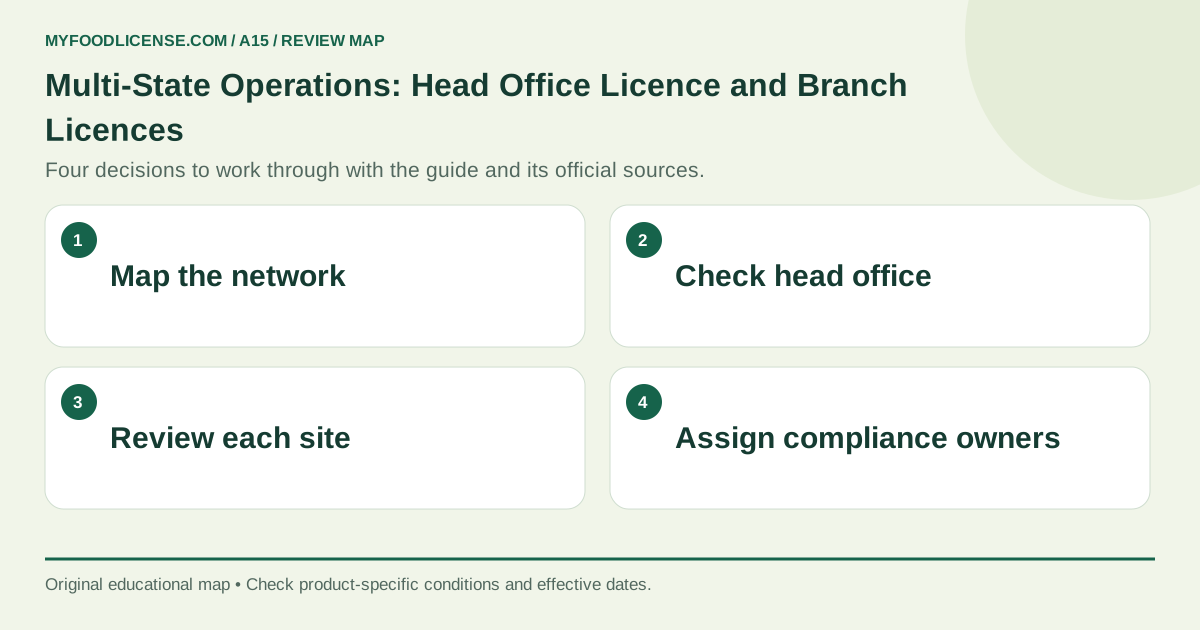
Map the network before counting licences
Prepare a list of legal entities, registered or head office, states, kitchens, factories, warehouses and sales premises. Add outsourced sites where another operator is responsible. Distinguish a correspondence office from a food premises, and explain who controls each operation.
Check the head-office criterion
The current Head Office row covers operations in two or more states and specifies Central licensing without a turnover restriction. Apply the rule to the actual business network rather than assuming a single-state company needs this route simply because customers live elsewhere. Read the head-office row.
Assess branches by their own activities
The authorisation for each site depends on its KoB and current criteria. An import-related role, manufacturing site and retail outlet can have different routes. Check special locations and product categories as well as turnover. A head-office certificate is not an operating certificate for every branch. Compare the licensing routes.
Keep a premises register
Record site addresses, operators, certificate numbers, KoBs, products, current status and responsible contacts. Use the register for supplier onboarding, invoice details and platform accounts. New sites should enter the assessment process before opening, while closed sites need their own closure review.
Allocate continuing obligations
Assign responsibility for site hygiene, supervisor coverage, fee checks, applicable returns and modifications. A central compliance team can coordinate the work, but site staff must understand the records and controls. During acquisitions or relocations, reconcile certificates with legal and operational changes instead of updating only the corporate spreadsheet.
A worked example
Hypothetical example
A food brand has an office in Delhi, production in Haryana and a warehouse in Maharashtra. It maps each operator and activity, assesses the multi-state head-office route and reviews each operating site separately. Supplier and marketplace records then reference the premises that actually perform the relevant work.
Your practical checklist
- Create an entity and premises map.
- Identify the states of actual operations.
- Assess the Central head-office row.
- Review each branch by activity and criteria.
- Maintain certificate and status records.
- Assign site-specific compliance owners.
Download this preparation checklist
For help applying this review to your business, explore our Multi-location Licensing service. Bring the documents described above so the consultation can focus on the decisions still unresolved.
Frequently asked questions
When is a head-office Central licence relevant?
The current table specifies it for food-business operations in two or more states.
Does it cover every branch automatically?
No. Operating premises still require appropriate authorisations.
Do customers in other states make me multi-state?
Assess actual operations and the relevant rule; customer geography alone does not describe the premises network.
Can outsourced warehouses be ignored?
No. Identify their operators and licensing responsibilities.
What happens when a branch closes?
Review surrender and closure requirements for that authorisation and update network records.
Official sources and further reading
Checked on 2 October 2026. Gazette notifications and operative directions prevail over compilations and summaries, including this guide.
- FoSCoS revised Kind-of-Business eligibility table, 2 April 2026 file: Activity-specific eligibility and annual fees. The PDF itself is marked updated 1 April 2026; relevant rows appear on pages 3, 6, 7 and 9.
- FSSAI licensing and registration FAQs, 26 July 2022: Online document submission and general application concepts only. Old turnover, validity, renewal and fee guidance is superseded by 2026 sources.
- Licensing and Registration Amendment Regulations, notification dated 10 March 2026: Regulation 2.1.7: perpetual validity, annual fees, applicable returns and suspension; regulation 2.1.17: risk-based inspections.
This guide is general information, not legal advice; the right route depends on your product and business facts. Examples marked hypothetical are illustrations, not client cases. MyFoodLicense is an independent consultancy and is not affiliated with FSSAI; applications are decided by the competent authority on the official FoSCoS portal.