Inspections & compliance
FSSAI Inspection Checklist: How to Prepare
Prepare for an FSSAI inspection by aligning the actual premises, operating controls and records with the authorised activities and applicable hygiene requirements. Readiness should reflect daily practice. A folder of certificates cannot compensate for unsafe handling visible on the site.
By the MyFoodLicense team Sources checked 2 min read
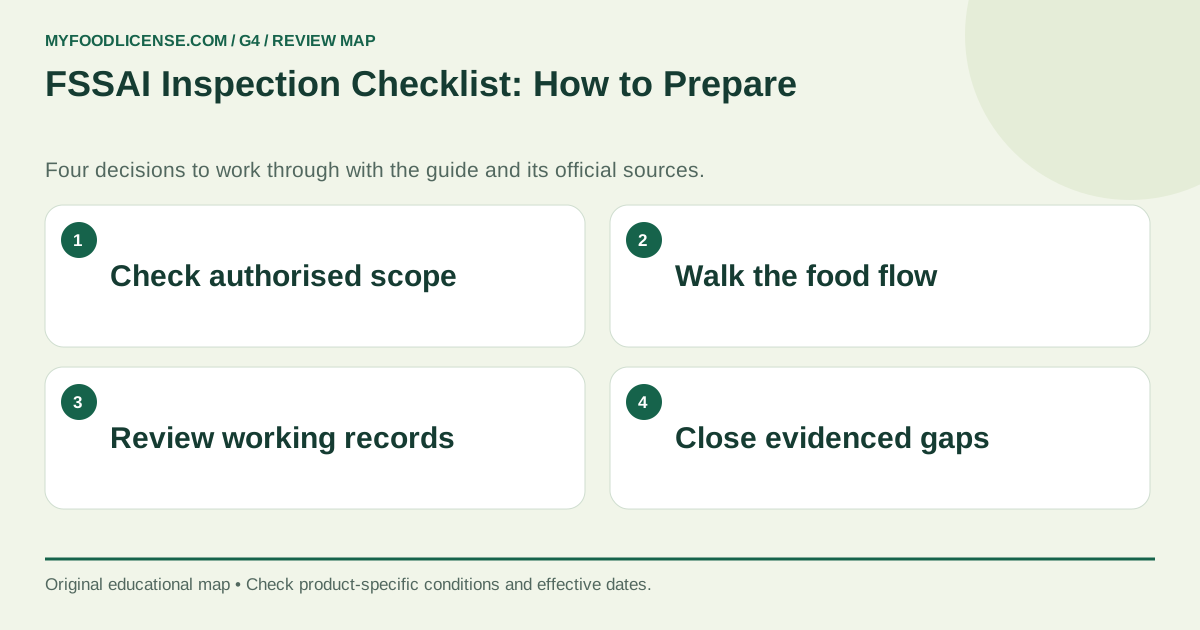
In this guide
Check scope and premises
Compare the certificate with the entity, address, activities and products actually operating. Review pending modifications and current status. Keep a clear site map and explain outsourced operations. The 2026 framework provides risk-based inspection rather than one identical schedule for every business. Read risk-based inspection provisions.
Walk the food flow
Follow receiving, storage, preparation or production, packing and dispatch. Look for raw/ready-to-eat separation, contamination risks, suitable water, cleaning, waste and pest controls. Use the applicable Schedule 4 part and operative directions. Read the hygiene framework.
Review records that prove controls
Select relevant supplier, batch, cleaning, temperature, training, testing and complaint records. Staff should understand what is recorded and what action follows a deviation. Do not produce completed-looking logs retrospectively to fill gaps.
Check people and equipment
Assess supervision, personal hygiene, staff knowledge, maintenance and appropriate monitoring equipment. Check FoSTaC coverage where applicable. A certificate belonging to someone no longer working at the site does not establish current supervision. Read supervisor guidance.
Respond to findings systematically
Record the officer’s observations and preserve the communication. Identify immediate food-risk actions and prepare evidence-based corrections. Where a statutory notice is issued, assess its own procedure and deadline. An internal audit can help prioritise work but should not be advertised as a guarantee of passing inspection.
A worked example
Hypothetical example
A kitchen keeps temperature sheets but staff cannot explain how readings are taken or what happens when food is outside the planned condition. The readiness review improves the actual monitoring and escalation process instead of adding another signature column.
Your practical checklist
- Compare site activities with certificate scope.
- Walk the complete food flow.
- Inspect hygiene, water and segregation controls.
- Review truthful operational records.
- Check training and supervision coverage.
- Track findings and corrective evidence.
Download this preparation checklist
For help applying this review to your business, explore our Inspection Readiness Assessment service. Bring the documents described above so the consultation can focus on the decisions still unresolved.
Frequently asked questions
Can an audit guarantee inspection approval?
No. The authority assesses the actual premises and evidence.
Are records alone sufficient?
No. Controls must also operate in practice.
Should staff understand the logs?
Yes. Monitoring is useful when staff know its purpose and response.
Are inspections always on the same schedule?
The current framework includes risk-based inspection.
What if a finding becomes a notice?
Read the specific statutory communication and applicable response route.
Official sources and further reading
Checked on 2 October 2026. Gazette notifications and operative directions prevail over compilations and summaries, including this guide.
- Licensing and Registration Amendment Regulations, notification dated 10 March 2026: Regulation 2.1.7: perpetual validity, annual fees, applicable returns and suspension; regulation 2.1.17: risk-based inspections.
- Licensing Regulations compendium, August 2021: Base Schedule 4 structure and licence conditions; old thresholds and validity superseded by 2026 changes.
- Licensing direction of 28 November 2022: Operationalised licensing and Schedule 4 provisions; read with current amendments.
- FSSAI Food Safety Training and Certification: Food safety supervisors for State and Central licensed businesses; one for every 25 food handlers or part thereof at each premises.
This guide is general information, not legal advice; the right route depends on your product and business facts. Examples marked hypothetical are illustrations, not client cases. MyFoodLicense is an independent consultancy and is not affiliated with FSSAI; applications are decided by the competent authority on the official FoSCoS portal.