Inspections & compliance
Schedule 4 Hygiene Requirements, Explained Simply
Schedule 4 sets hygiene requirements for food businesses, with different parts and later operationalised provisions for relevant activities. Turn the applicable requirements into site controls for water, premises, equipment, people, food handling and records. A generic hygiene certificate is not the complete assessment.
By the MyFoodLicense team Sources checked 2 min read
In this guide
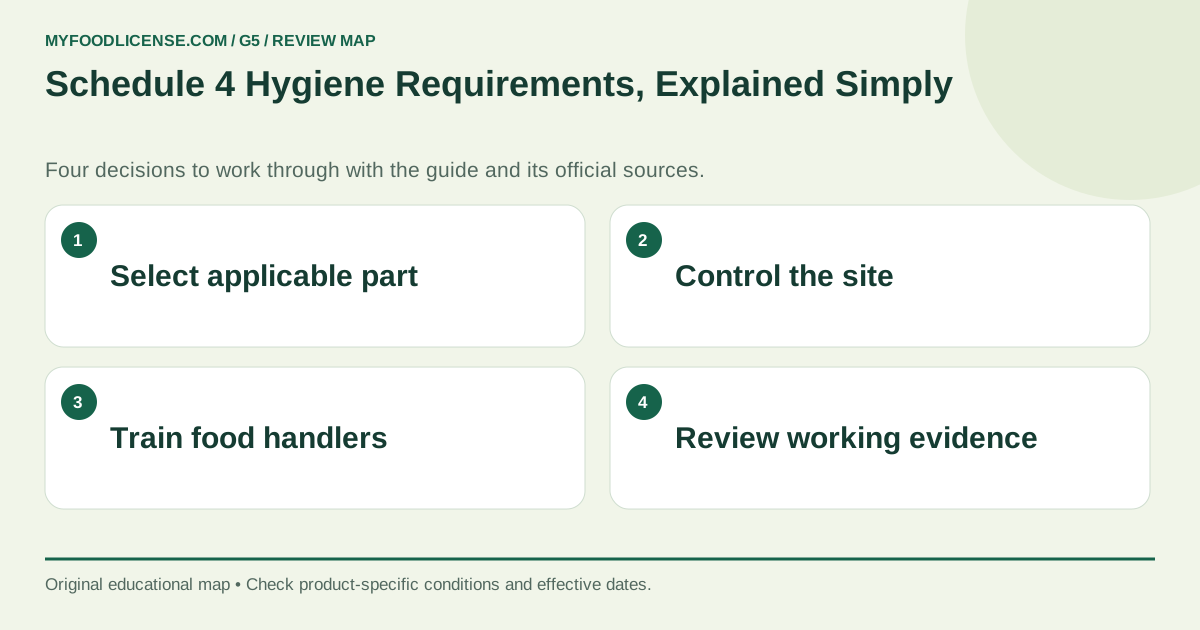
Select the applicable part
The base structure distinguishes registration-related hygiene, general licensed operations, milk, meat and catering requirements. Read the relevant activity provisions and later directions together. Do not apply only a general checklist where the sector has additional conditions. Read the base schedule; read operationalised changes.
Control the premises and equipment
Assess layout, surfaces, drainage, ventilation, lighting and equipment suitability. Plan separation that prevents contamination during actual work. Cleaning access and maintenance should be considered before equipment installation, rather than addressed only after an inspector asks.
Manage water, cleaning and pests
Establish suitable water sources and evidence, cleaning procedures, chemical storage and pest prevention. Define who performs tasks, how often and what records demonstrate completion. A pest-control invoice does not show that exposed food, damaged screens or entry points have been corrected.
Manage people and food flow
Set practical personal-hygiene, illness-reporting and training arrangements. Control receiving, storage, preparation, holding and dispatch according to the food and process. Review allergens and raw/ready-to-eat separation. Staff must be able to apply procedures during busy periods.
Keep evidence and review deviations
Use records proportionate to the applicable requirements and risks. Investigate repeated problems and verify that corrective measures work. Sector guidance can help with implementation, but distinguish guidance examples from the actual operative provisions. Build the FSMS plan.
A worked example
Hypothetical example
A small bakery contracts pest treatment but leaves ingredients open beside a loading door. Its hygiene review combines protected storage, entry-point correction and monitoring with the contractor service. The invoice is retained as one piece of evidence, not treated as the entire control.
Your practical checklist
- Select relevant Schedule 4 activity provisions.
- Review layout and equipment suitability.
- Control water, cleaning and chemical storage.
- Implement pest prevention and waste handling.
- Train staff in actual food-handling controls.
- Record deviations and verify correction.
Download this preparation checklist
For help applying this review to your business, explore our Hygiene / Schedule 4 Documentation Review service. Bring the documents described above so the consultation can focus on the decisions still unresolved.
Frequently asked questions
Does one Schedule 4 checklist fit every activity?
No. Select relevant parts and later provisions.
Is a pest invoice enough?
No. The premises and food-protection controls must also work.
Does guidance replace the regulation?
No. It helps implementation; the operative requirements remain the basis.
Should cleaning methods be documented?
Use clear procedures and relevant records staff can follow.
Is hygiene only a pre-licence task?
No. It is a continuing operational requirement.
Official sources and further reading
Checked on 2 October 2026. Gazette notifications and operative directions prevail over compilations and summaries, including this guide.
- Licensing Regulations compendium, August 2021: Base Schedule 4 structure and licence conditions; old thresholds and validity superseded by 2026 changes.
- Licensing direction of 28 November 2022: Operationalised licensing and Schedule 4 provisions; read with current amendments.
- FSSAI nutraceutical-sector FSMS guidance: Voluntary implementation guidance and practical FSMS principles; not a universal certification mandate.
This guide is general information, not legal advice; the right route depends on your product and business facts. Examples marked hypothetical are illustrations, not client cases. MyFoodLicense is an independent consultancy and is not affiliated with FSSAI; applications are decided by the competent authority on the official FoSCoS portal.