Supplements & nutraceuticals
Labelling a Health Supplement: Mandatory Warnings and Declarations
Supplement labels need general food declarations plus the applicable category, usage and warning information. Prepare the warning panel for the actual product and users. A universal copied block can omit important precautions or apply an exception incorrectly.
By the MyFoodLicense team Sources checked 2 min read
In this guide
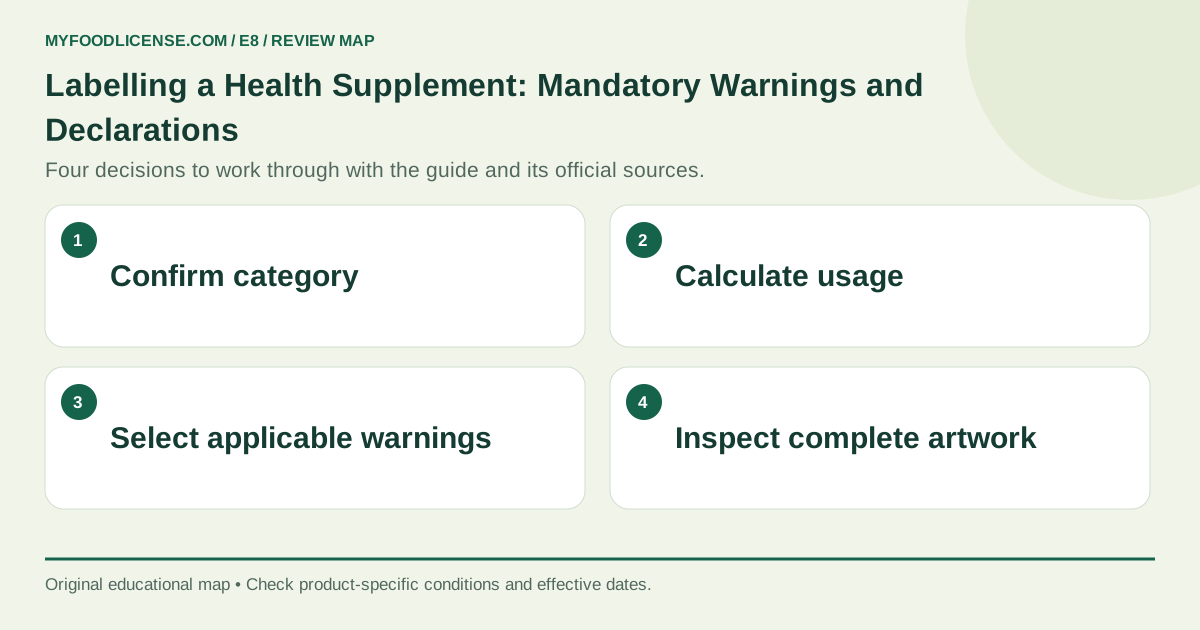
Start with category and audience
Record the assessed category, target users, age group and intended use. The operationalised provisions require the relevant category statement prominently near the name or brand, with additional audience information where applicable. Do not substitute a promotional description for the specialised identity. Read specialised labelling provisions.
Review the core usage and warning set
Assess not-for-medicinal-use wording and its specific exceptions, recommended usage, duration where relevant, the instruction not to exceed recommended daily usage, and relevant excess-consumption warnings. Review precautions, side effects, contraindications and product or drug interactions where applicable.
Apply category-specific qualifications
The varied-diet statement has stated exceptions for FSDU and FSMP; other warnings and medical-supervision information depend on the category. Review storage out of children’s reach and all relevant ingredient-specific warnings. A checklist must show which statements apply and why, rather than marking every line mandatory for every product.
Reconcile nutrient and substance declarations
Check amounts, relevant RDA percentage, serving and daily usage on the correct basis. Label instructions should match the calculations and evidence. A warning not to exceed use is unhelpful if the actual use directions are ambiguous. Read dose calculations.
Review the complete artwork and claims
Apply general business, ingredient, allergen, date and commercial declarations alongside the specialised panel. Ensure the final print is legible. Do not combine not-for-medicinal-use with an unsupported cure claim elsewhere on the pack or website. Read supplement claims.
A worked example
Hypothetical example
A label lists nutrient amounts per capsule but recommends two capsules twice daily. The reviewer calculates the full daily amount, checks the relevant conditions and makes usage instructions consistent. The warning panel is then assessed for that dose and intended population.
Your practical checklist
- Confirm category and target users.
- Prepare prominent category information.
- Review usage, duration and applicable warnings.
- Check category and ingredient-specific exceptions.
- Reconcile amounts, units and daily dose.
- Proof general declarations and all claims.
Download this preparation checklist
For help applying this review to your business, explore our Complete Label Review service. Bring the documents described above so the consultation can focus on the decisions still unresolved.
Frequently asked questions
Is not-for-medicinal-use universal?
Review its specified scope and exceptions for the actual category.
Do FSDU and FSMP use every ordinary warning?
No. The framework includes category-specific treatment.
Must the label explain daily usage?
Review the required usage information and ensure it is unambiguous.
Can a disclaimer repair a cure claim?
No. Assess the complete representation.
Do ordinary food declarations still matter?
Yes. Specialised requirements supplement applicable general requirements.
Official sources and further reading
Checked on 2 October 2026. Gazette notifications and operative directions prevail over compilations and summaries, including this guide.
- Operationalised supplement provisions, 29 March 2022 direction: Definitions, schedules, dosage, category-specific warnings and product requirements; read with later directions.
- Labelling and Display Regulations compendium, Version VIII, 9 September 2025: Regulation 5: retail declarations, nutrition, dates and allergens. Read alongside later amendments and directions.
- FSSAI RDA 2020 compliance direction, July 2023: Age and nutrient reference tables; distinguish nutritional content from raw compound mass.
This guide is general information, not legal advice; the right route depends on your product and business facts. Examples marked hypothetical are illustrations, not client cases. MyFoodLicense is an independent consultancy and is not affiliated with FSSAI; applications are decided by the competent authority on the official FoSCoS portal.