Supplements & nutraceuticals
Vitamins and Minerals in Supplements: RDA Limits and Permitted Forms
Vitamin and mineral compliance needs both a permitted-form check and a daily active-nutrient calculation. Raw compound weight is not the same as nutrient contribution. Use the applicable category provisions, specified levels and relevant ICMR RDA basis rather than a blanket percentage for every product.
By the MyFoodLicense team Sources checked 2 min read
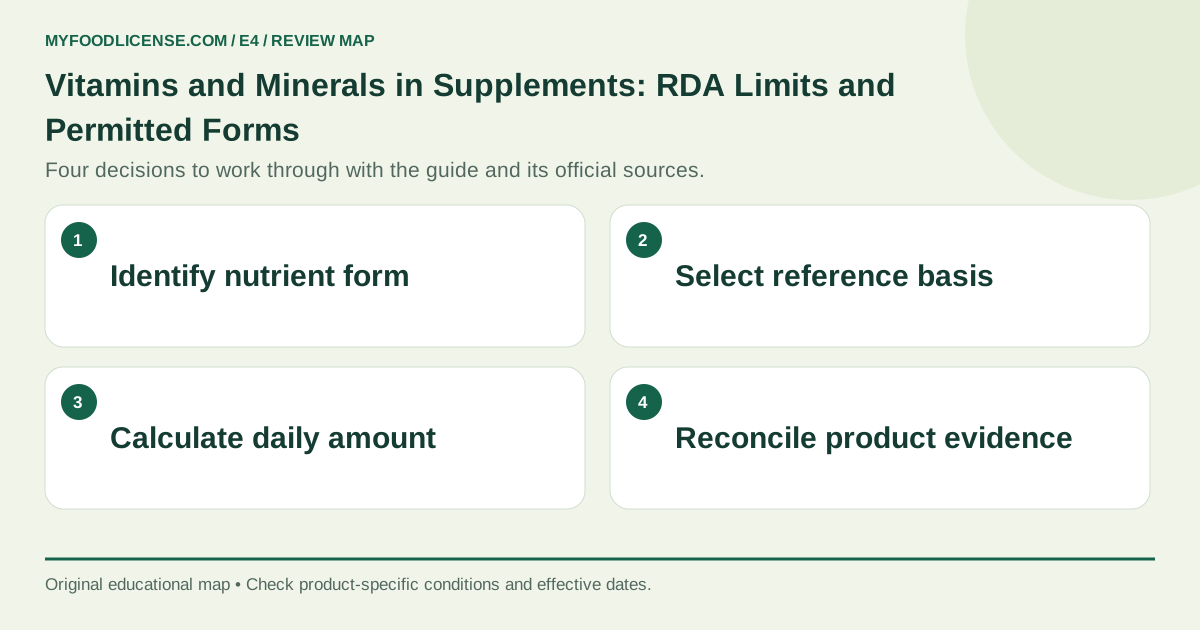
In this guide
Identify the exact source form
Record the vitamin derivative, mineral salt or chelate and supplier specification. Check the applicable schedule and any notification or approval condition. A familiar mineral name does not establish permission for every chemical form. Read nutrient and purity provisions.
Use the correct level and population
The operationalised rules address levels specified by the authority and the RDA position where levels are not specified, with category-specific treatment. Read the applicable exceptions and approval routes. The RDA direction contains relevant nutrient and age-group reference values. Read the reference direction.
Calculate total daily contribution
Multiply the active nutrient content by the recommended daily usage and sum contributions from every ingredient. As a hypothetical arithmetic example, two servings containing 5 mg of an active nutrient each provide 10 mg daily. That does not establish that 10 mg is permitted for a particular nutrient or population.
Review overages and evidence
The operationalised provisions address scientifically justified overages under the stated conditions. Do not use stability loss as an undocumented excuse for excessive input. Keep assay, purity, formulation, process and shelf-life evidence tied to the actual product and label values.
Connect dose to declarations and claims
Check recommended usage, serving information, units and relevant percentage declarations. A claim can impose additional criteria and evidence needs. Changes to a nutrient source or serving frequency should reopen the calculation and label review. Read supplement labelling.
A worked example
Hypothetical example
A manufacturer records the full mass of a mineral salt as the elemental mineral amount. The review uses the supplier’s assay and conversion basis, sums other sources and calculates the actual daily nutrient exposure before comparing with the relevant provision.
Your practical checklist
- Identify the exact source form.
- Check permitted entry and conditions.
- Select the applicable level and population.
- Calculate active nutrient across daily usage.
- Document assay, overage and stability basis.
- Reconcile label units and claim criteria.
Download this preparation checklist
For help applying this review to your business, explore our Nutrient Level / RDA Assessment service. Bring the documents described above so the consultation can focus on the decisions still unresolved.
Frequently asked questions
Is salt weight the nutrient amount?
No. Establish the active nutrient contribution and assay basis.
Is one RDA value right for every age?
No. Relevant age and population references can differ.
Can I use any vitamin derivative?
Check permitted forms and any notification or approval requirements.
Do all categories have one maximum rule?
No. Read category-specific levels, exceptions and conditions.
Can overages be added freely?
No. Apply the stated scientifically justified and regulatory conditions.
Official sources and further reading
Checked on 2 October 2026. Gazette notifications and operative directions prevail over compilations and summaries, including this guide.
- Operationalised supplement provisions, 29 March 2022 direction: Definitions, schedules, dosage, category-specific warnings and product requirements; read with later directions.
- FSSAI RDA 2020 compliance direction, July 2023: Age and nutrient reference tables; distinguish nutritional content from raw compound mass.
- FSSAI order of 6 May 2026: ePAAS single-window approvals: Exclusive ePAAS submission from 1 June 2026 for specified approval and notification routes.
This guide is general information, not legal advice; the right route depends on your product and business facts. Examples marked hypothetical are illustrations, not client cases. MyFoodLicense is an independent consultancy and is not affiliated with FSSAI; applications are decided by the competent authority on the official FoSCoS portal.