Claims & advertising
Can You Call Your Food "Natural", "Fresh", "Pure" or "Original"?
Natural, fresh, pure and original are regulated food representations, not unrestricted marketing adjectives. Assess the complete food, processing and consumer impression against the Advertising and Claims rules. Putting the word into a brand name does not automatically avoid the assessment.
By the MyFoodLicense team Sources checked 3 min read
In this guide
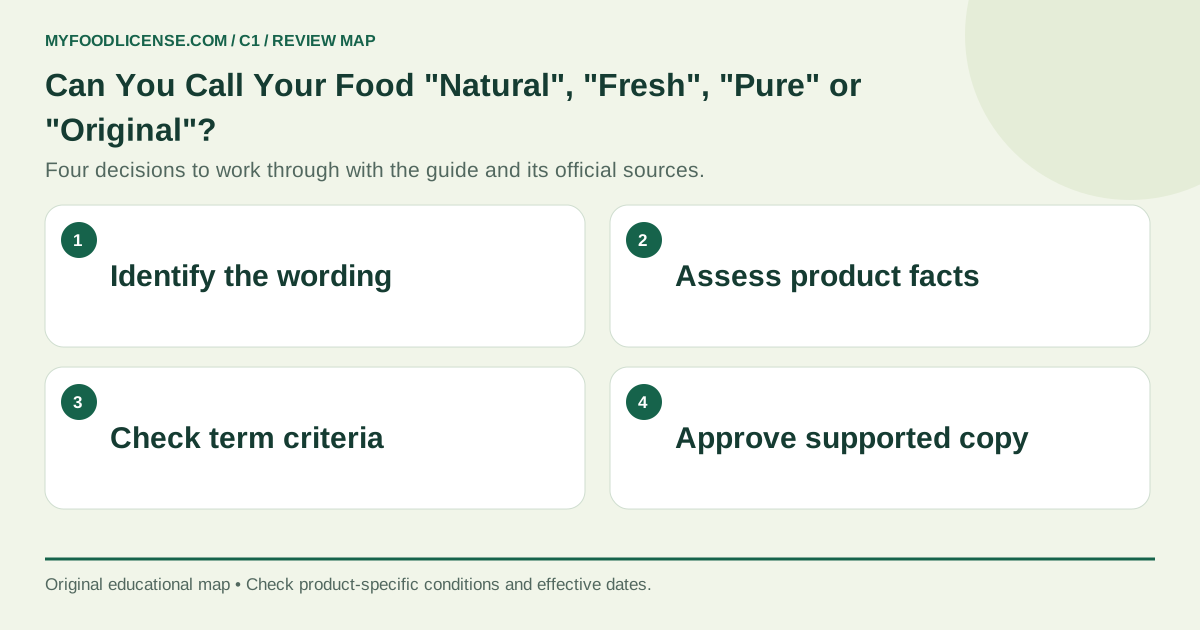
Identify what the word describes
Record whether the term describes the entire product, an ingredient, the process or a brand. A claim that one ingredient is natural does not automatically justify natural food for the complete recipe. Read the wording together with photographs, headlines and surrounding copy.
Apply Schedule V to the actual facts
The claims regulations set conditions for terms such as natural, fresh, pure, traditional and original. Processing and composition matter, and a multi-ingredient product needs a different review from a single ingredient. Check the exact term rather than treating the words as synonyms. Read Schedule V.
Review brand-name disclaimers
Where a trademark, brand or fancy name containing the listed adjectives is likely to mislead about the food’s nature, the regulation specifies a prominent disclaimer. It also prescribes minimum font sizes by principal-display-panel area. A trademark registration alone does not establish exemption from food-claim duties.
Check the 100% advisory separately
FSSAI’s May 2025 advisory asks businesses to discontinue 100% representations on labels and promotional material because of their misleading potential and lack of a defined regulatory basis. Identify it accurately as an advisory and assess the complete wording. Read the official advisory.
Build evidence before campaign approval
Keep ingredient specifications, process description, exact wording and the reason it meets the applicable condition. Review website, marketplace and influencer versions as well as the pack. Where a term cannot be supported, rewrite the message around accurate factual attributes rather than changing only its punctuation.
A worked example
Hypothetical example
A mixed snack contains minimally processed nuts but also a sweetened coating and flavour blend. The review does not extend the nuts’ natural description to the entire recipe automatically. It examines the proposed full-product wording and the processing evidence.
Your practical checklist
- Record the exact adjective and subject.
- Review complete formulation and processing.
- Apply the term-specific conditions.
- Assess misleading brand-name wording.
- Review 100% representations separately.
- Approve consistent copy across channels.
Download this preparation checklist
For help applying this review to your business, explore our Individual Claim Assessment service. Bring the documents described above so the consultation can focus on the decisions still unresolved.
Frequently asked questions
Is natural always permitted?
No. Apply the term-specific conditions to the actual food.
Does a natural ingredient make the whole food natural?
Not automatically. Review the complete product and message.
Does trademark registration exempt a claim?
No. Food representations and relevant disclaimers still need assessment.
Can fresh describe every processed food?
Check the relevant processing and presentation conditions.
Where should I keep supporting evidence?
Maintain it in the product’s controlled claim file with the approved wording.
Official sources and further reading
Checked on 2 October 2026. Gazette notifications and operative directions prevail over compilations and summaries, including this guide.
- Advertising and Claims Regulations compendium, Version IV, 14 December 2022: Nutrition-claim thresholds and general claim conditions. Protein uses RDA-based alternatives, not a universal percentage-of-energy rule.
- FSSAI advisory dated 28 May 2025: discontinuation of 100% claims: Direct official advisory on 100% label and promotional claims; identify it as an advisory.
This guide is general information, not legal advice; the right route depends on your product and business facts. Examples marked hypothetical are illustrations, not client cases. MyFoodLicense is an independent consultancy and is not affiliated with FSSAI; applications are decided by the competent authority on the official FoSCoS portal.