Labelling & packaging
Date Marking: Best Before vs Use By vs Expiry
Best-before concerns the period of expected quality, while expiry or use-by marks the end of the stated period for the product under its storage conditions. Current Indian food-labelling rules require a date-marking assessment that includes manufacture or packing and expiry/use-by; best-before may be additional.
By the MyFoodLicense team Sources checked 3 min read
In this guide
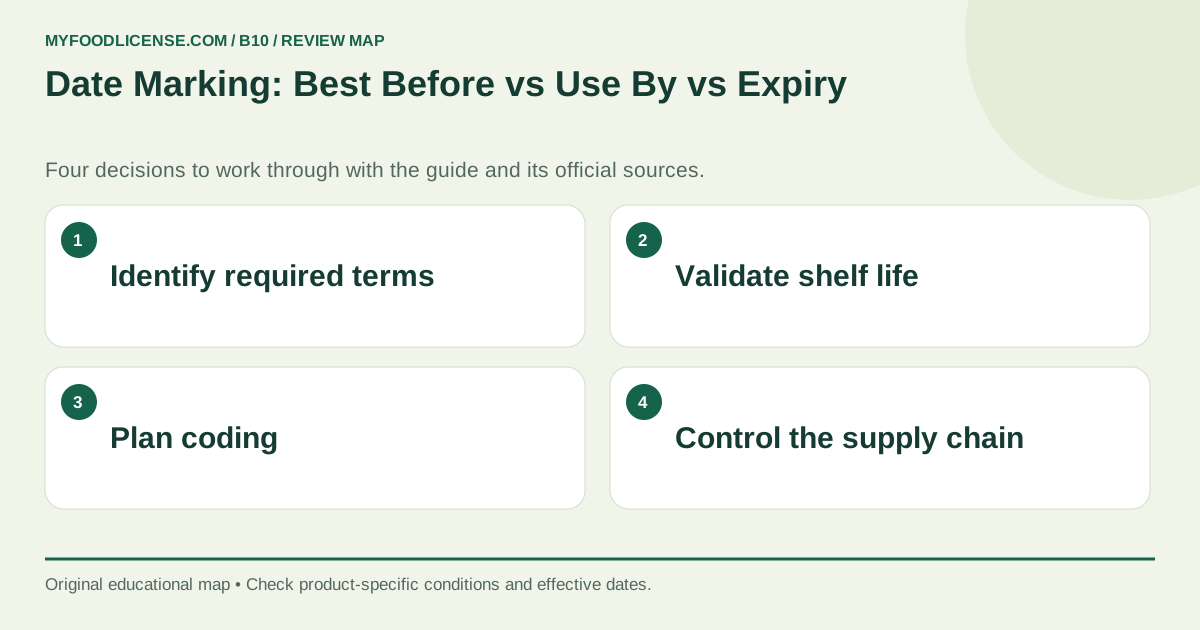
Read the terms in context
A date statement depends on the food, storage conditions and validated shelf life. Do not replace one expression with another solely to make a product seem longer lasting. The regulations define and use the terms differently. Read date-marking requirements.
Check required dates and exceptions
The general provision addresses manufacture or packing and expiry/use-by, with best-before as optional additional information. Specific exemptions and short-life or category provisions must be checked precisely. A single best-before line copied from a foreign pack is not a complete current Indian assessment.
Support the shelf-life decision
Use appropriate product, process, packaging and storage evidence. Consider relevant microbiological, chemical and sensory risks and whether the product changes after opening. A raw-material certificate or competitor’s date does not establish finished-product shelf life.
Make the code usable
Plan the actual location, contrast and date format, including variable printing. Link the batch or lot to production and distribution records. Check that coding survives normal handling and is not hidden by a fold, cap or secondary label. Printed storage instructions should match the evidence supporting the dates.
Apply the dates through the supply chain
Set receiving, stock rotation, dispatch and marketplace controls so the correct product reaches customers with suitable remaining life. Imported food has a separate remaining-shelf-life clearance assessment. Read import-rejection risks. Do not equate an internal quality review after best-before with permission to sell food beyond its expiry/use-by position.
A worked example
Hypothetical example
A chilled dessert’s artwork says store refrigerated, while dispatch routinely uses unvalidated ambient transport. The date review identifies that the storage assumption does not match the delivery process. Changing the printed month cannot fix the handling gap.
Your practical checklist
- Identify applicable required date statements.
- Check category-specific exemptions.
- Support shelf life for the actual food and pack.
- Match storage and use instructions to evidence.
- Verify legible batch and date coding.
- Control receiving, dispatch and remaining life.
Download this preparation checklist
For help applying this review to your business, explore our Back-of-Pack Review service. Bring the documents described above so the consultation can focus on the decisions still unresolved.
Frequently asked questions
Is best-before identical to expiry?
No. They have different regulatory meanings and purposes.
Can I use only best-before on every pack?
No. Assess current manufacture/packing and expiry/use-by requirements and exceptions.
Can I copy a competitor’s shelf life?
No. Support the decision for your own product, process and packaging.
Does refrigeration wording matter?
Yes. Date validity depends on the stated storage conditions being appropriate.
Are imports checked for remaining shelf life?
Yes. Assess the applicable import provision separately.
Official sources and further reading
Checked on 2 October 2026. Gazette notifications and operative directions prevail over compilations and summaries, including this guide.
- Labelling and Display Regulations compendium, Version VIII, 9 September 2025: Regulation 5: retail declarations, nutrition, dates and allergens. Read alongside later amendments and directions.
- Food Import Regulations compendium, Version III, 12 November 2021: Importer licence and IEC, clearance framework and restricted label rectification. Read with the 2025 amendment and current orders.
- FSSAI Southern Region food-import FAQs, 15 January 2020: Shelf-life wording and conceptual checklist. Old contact names, fees and portal UI instructions are not carried into the blogs.
This guide is general information, not legal advice; the right route depends on your product and business facts. Examples marked hypothetical are illustrations, not client cases. MyFoodLicense is an independent consultancy and is not affiliated with FSSAI; applications are decided by the competent authority on the official FoSCoS portal.