Launching a food brand
Contract Manufacturing and Private Label: Whose Licence Covers What?
In private-label production, map the brand owner and manufacturer separately. The factory needs authorisation for its actual site and products; the brand’s commissioned-production role may require a relabeller or other assessment. Contracts allocate work, but do not erase applicable statutory responsibilities.
By the MyFoodLicense team Sources checked 2 min read
In this guide
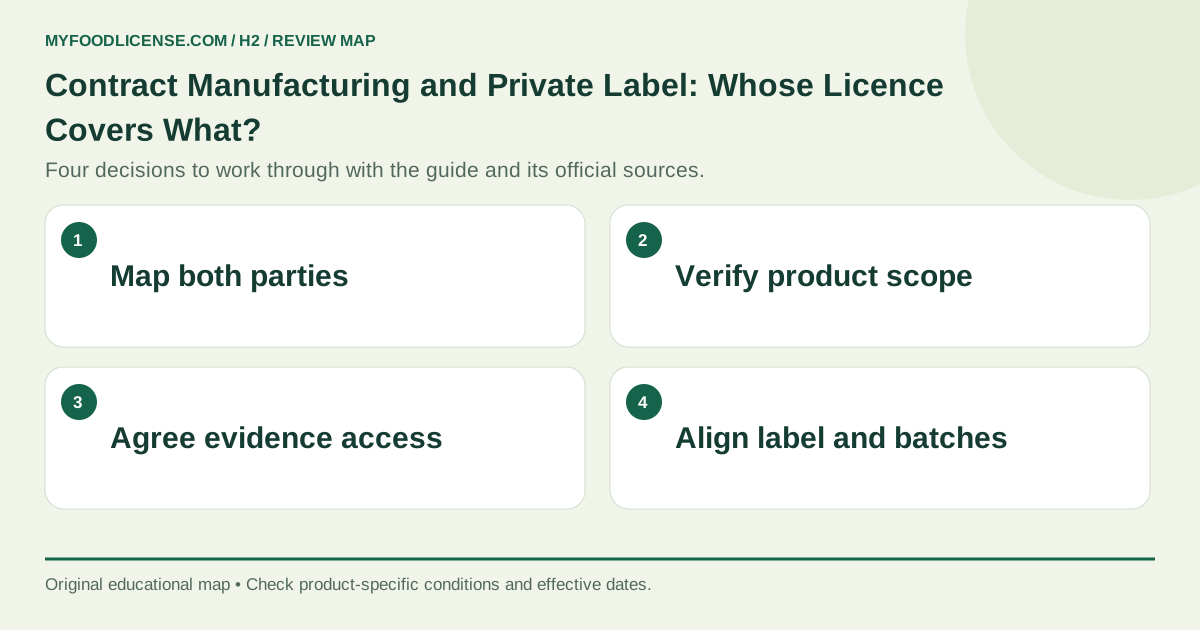
Draw the supply chain
Record who owns the recipe, purchases inputs, controls production, owns stock, invoices sales and handles complaints. Identify every factory and storage location. Buying finished branded packs and having food made under your own brand are different arrangements.
Verify each authorisation
Check current manufacturer entity, premises, KoBs and endorsed products against the proposed work. Assess the brand’s role and current route independently. Specialised products can carry Central requirements irrespective of turnover. Read activity and product rows.
Make the agreement evidence-friendly
Define specifications, change approval, batch release, testing, records access, complaints and recall cooperation. Establish what happens if an input, process or factory changes. A confidentiality clause should not make evidence needed for lawful declarations inaccessible.
Align labels with actual responsibilities
Review applicable brand-owner, manufacturer, packer and other business declarations and numbers. Do not print the factory number alone merely because the label template has one box. Keep the current agreement and certificates with the artwork decision. Read responsible-business declarations.
Maintain the product file after delivery
Obtain suitable batch and test information and assess relevant D1 or report-linking obligations for the actual role. Track distribution and complaints. The brand should be able to connect its retail lot to the manufacturing evidence if a food issue arises. Read repacker and relabeller duties.
A worked example
Hypothetical example
A brand commissions production at two factories and receives identical-looking packs. It maps each factory to the correct authorisation and artwork version, while maintaining its own role assessment. Distribution records preserve which batches came from which site.
Your practical checklist
- Map ownership and operational responsibilities.
- Verify each factory and product scope.
- Assess the brand’s own KoB.
- Agree specifications and change controls.
- Align label business declarations.
- Secure usable batch, test and recall records.
Download this preparation checklist
For help applying this review to your business, explore our Multiple KOB Assessment service. Bring the documents described above so the consultation can focus on the decisions still unresolved.
Frequently asked questions
Does the factory’s licence automatically cover the brand?
No. Assess the brand’s actual role separately.
Is private label always retailing?
A commissioned-production model can require a relabeller assessment.
Whose number goes on the pack?
Apply the relevant responsible-business declaration rules.
Can the factory change ingredients without review?
Use a controlled agreement and reassess material changes.
Who handles recalls?
Allocate practical tasks while preserving applicable responsibilities and evidence access.
Official sources and further reading
Checked on 2 October 2026. Gazette notifications and operative directions prevail over compilations and summaries, including this guide.
- FoSCoS revised Kind-of-Business eligibility table, 2 April 2026 file: Activity-specific eligibility and annual fees. The PDF itself is marked updated 1 April 2026; relevant rows appear on pages 3, 6, 7 and 9.
- Labelling and Display Regulations compendium, Version VIII, 9 September 2025: Regulation 5: retail declarations, nutrition, dates and allergens. Read alongside later amendments and directions.
- FSSAI licensing FAQs, December 2022: D1 applicability and 31 May baseline deadline; old licensing bands and renewal passages superseded.
- FoSCoS six-monthly laboratory report upload guidance: Manufacturer report upload/linking and product linkage; assess licence conditions and applicable lab scope.
This guide is general information, not legal advice; the right route depends on your product and business facts. Examples marked hypothetical are illustrations, not client cases. MyFoodLicense is an independent consultancy and is not affiliated with FSSAI; applications are decided by the competent authority on the official FoSCoS portal.