Registration & licensing
FSSAI for Repackers and Relabellers
Repacking food and commissioning manufacture under your brand are different regulatory roles. Assess Repacker or Relabeller using the actual production arrangement, not the appearance of the finished pack. The correct KoB, product scope and responsibility information should agree.
By the MyFoodLicense team Sources checked 3 min read
In this guide
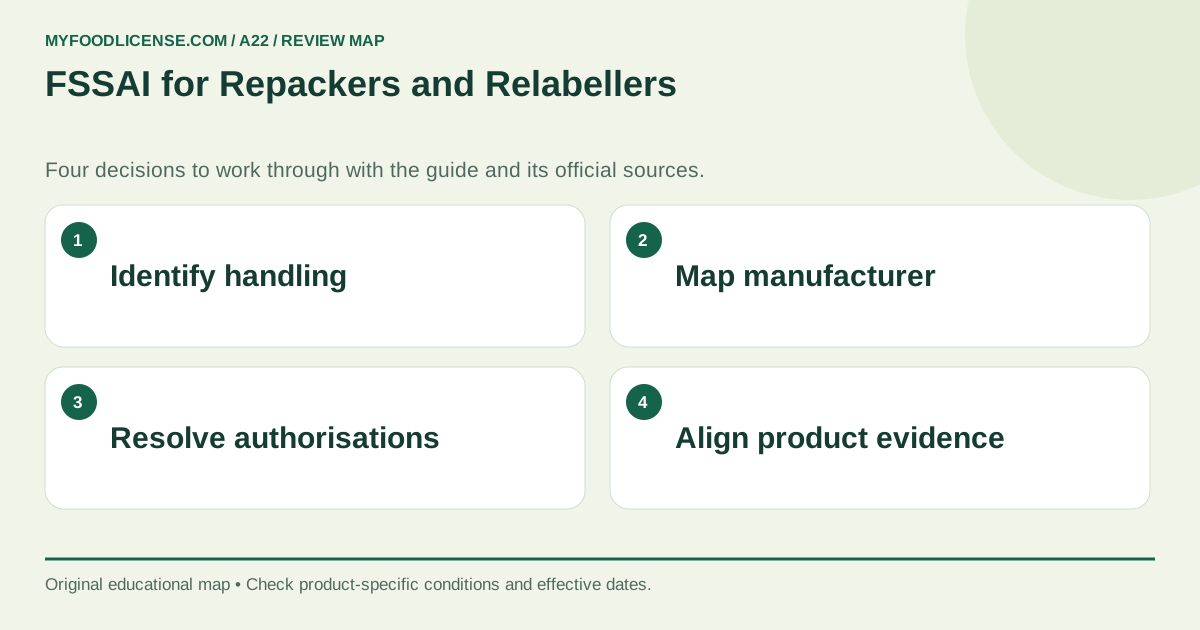
Understand the two arrangements
A repacker handles food by dividing or packing it from bulk into different packages. A relabeller commonly has products manufactured by a third party under its own brand arrangement. Opening food locally introduces different facility and hygiene facts from buying finished packs from a contract factory. Read the activity descriptions.
Assess the full licensing route
Check the revised 2026 criteria for the actual activity and products. Specialised product requirements can override general turnover assumptions. A brand that has no factory may still have food-business licensing duties. Review the commissioned products and their manufacturing sites before filing.
Obtain manufacturer and product evidence
For contract production, establish the manufacturer’s entity, site, relevant authorisation and endorsed product capability. Collect the recipe, specifications and supporting agreement or consent required by the live application. A generic letter from a factory does not establish the compliance of every proposed product.
Align pack responsibilities
The label should correctly identify responsible businesses and applicable licence numbers. The brand owner and different manufacturer or packer can require distinct declarations. Avoid printing only whichever number fits the available space. Read licence-number declarations; review private-label responsibilities.
Maintain manufacturing-related obligations
Repacking and relabelling can fall within annual-return and testing frameworks identified in official guidance. Assess applicability against your role and endorsed products, and arrange access to batch and test records from the manufacturer. Outsourcing production should not make product evidence inaccessible. Annual-return guidance; testing-report guidance.
A worked example
Hypothetical example
A spice brand receives finished pouches from a factory and initially applies as a retailer. Its production agreement leads to a relabeller assessment. Later, when it starts filling jars from bulk stock itself, the added physical handling creates a repacking and premises review.
Your practical checklist
- Describe whether food is opened locally.
- Identify the contract manufacturer and site.
- Check activity and specialised-product criteria.
- Prepare product specifications and agreements.
- Align responsible-business label declarations.
- Assess returns, testing and batch-record access.
Download this preparation checklist
For help applying this review to your business, explore our Multiple KOB Assessment service. Bring the documents described above so the consultation can focus on the decisions still unresolved.
Frequently asked questions
Are repacker and relabeller interchangeable?
No. Assess the physical handling and commissioned-production arrangement.
Can a brand without a factory have licensing duties?
Yes. Its own role in the food business still needs assessment.
Whose number goes on a private-label pack?
Apply the relevant brand-owner and manufacturer/packer declaration rules.
Do relabellers need D1 assessment?
Yes. Official return guidance includes relevant relabeller activities.
Can manufacturer records be outsourced too?
Arrange access and clear responsibility; outsourcing should not leave required evidence unavailable.
Official sources and further reading
Checked on 2 October 2026. Gazette notifications and operative directions prevail over compilations and summaries, including this guide.
- FoSCoS revised Kind-of-Business eligibility table, 2 April 2026 file: Activity-specific eligibility and annual fees. The PDF itself is marked updated 1 April 2026; relevant rows appear on pages 3, 6, 7 and 9.
- Labelling and Display Regulations compendium, Version VIII, 9 September 2025: Regulation 5: retail declarations, nutrition, dates and allergens. Read alongside later amendments and directions.
- FSSAI licensing FAQs, December 2022: D1 applicability and 31 May baseline deadline; old licensing bands and renewal passages superseded.
- FoSCoS six-monthly laboratory report upload guidance: Manufacturer report upload/linking and product linkage; assess licence conditions and applicable lab scope.
This guide is general information, not legal advice; the right route depends on your product and business facts. Examples marked hypothetical are illustrations, not client cases. MyFoodLicense is an independent consultancy and is not affiliated with FSSAI; applications are decided by the competent authority on the official FoSCoS portal.