Labelling & packaging
12 Label Mistakes That Get Food Products Into Trouble
Food-label errors often begin with an incorrect product assumption or outdated source data. Check the recipe, category and business details before reviewing typography. The following 12 mistakes are practical review points, not a claim that every example has led to an enforcement case.
By the MyFoodLicense team Sources checked 3 min read
In this guide
Six mistakes in the underlying information
- Using a marketing name without a suitable food identity.
- Copying another SKU’s ingredient list.
- Missing components of a compound ingredient.
- Declaring an additive without checking its actual function and permission.
- Missing allergens from a premix or flavour carrier.
- Using nutrition values from an outdated formulation.
These issues require formulation and supplier evidence, not just design changes. Read the ingredient and nutrition provisions.
Six mistakes in presentation and control
- Choosing the old non-vegetarian symbol.
- Printing an unrelated or outdated licence number.
- Using an unsupported high-protein or sugar claim.
- Treating best-before as a substitute for all required date marking.
- Omitting applicable net-quantity, MRP or consumer-care information.
- Approving a screen image without checking the actual-size proof.
Each issue should be assessed against the relevant provision and product facts. Claim criteria; commercial declarations.
Review linked consequences
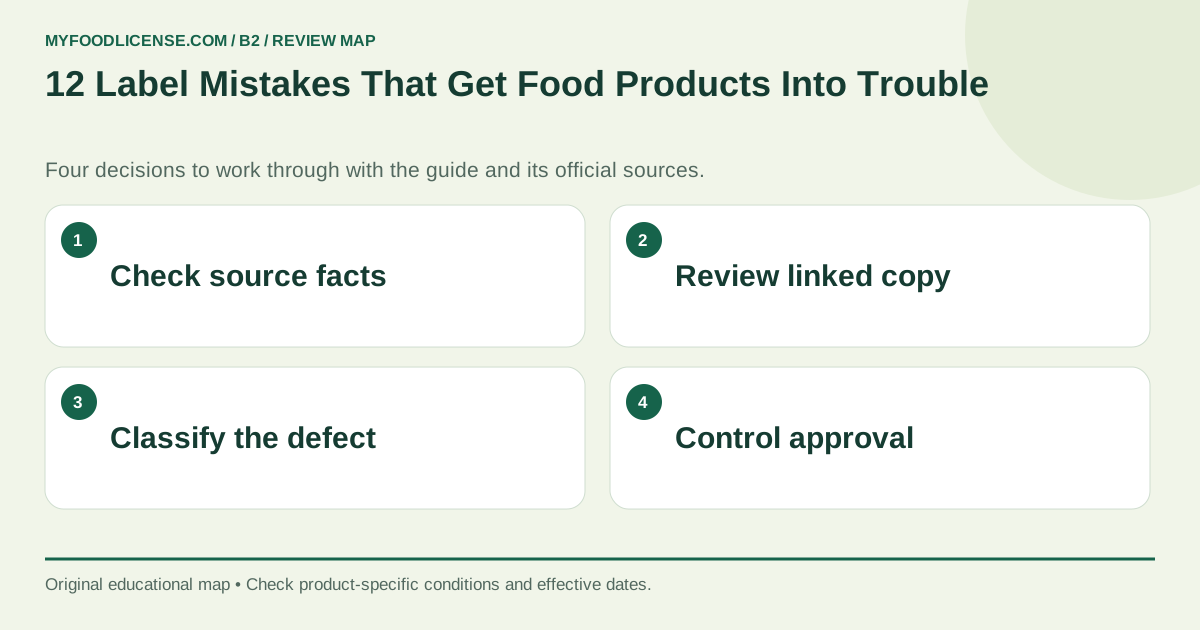
One recipe change can affect the name, ingredients, allergens, nutrition, claim and symbol assessment. Treating each text box as independent makes it easy to fix one error while preserving another. Build a change checklist that follows the data through every affected declaration.
Classify defects before deciding on stock
Separate a drafting error found before print from a problem already present on distributed packs. For existing stock, assess the exact defect, safety implications and permissible corrective route. A sticker is not a universal remedy, and an attractive reprint does not address food already in the market.
Create a repeatable approval record
Keep the formula version, supplier specifications, reports, certificate details, reviewed artwork and final print proof together. Record unresolved issues and who closed them. Where a real notice or complaint exists, preserve that evidence and assess it separately from an internal artwork checklist.
A worked example
Hypothetical example
A cookie brand changes chocolate suppliers. The artwork team updates the flavour name but leaves the previous compound-ingredient details and allergen assessment. A coordinated review catches the linked changes before the print run, without relying on a visual comparison alone.
Your practical checklist
- Check identity and ingredient source data.
- Review compound ingredients and additives.
- Reconcile allergens and nutrition.
- Verify symbols and licence information.
- Assess dates and commercial declarations.
- Keep a final actual-size approval record.
Download this preparation checklist
For help applying this review to your business, explore our Artwork Compliance Checklist service. Bring the documents described above so the consultation can focus on the decisions still unresolved.
Frequently asked questions
Does a beautiful label mean it is compliant?
No. The source data and applicable requirements must also be correct.
Can I copy a competitor’s label?
It does not establish the rules or facts for your product.
Can a sticker fix every mistake?
No. Assess the defect and applicable correction rules.
Should every formula change trigger a review?
Yes, especially where ingredients, allergens, nutrition or claims may change.
Are these actual enforcement cases?
No. They are common review categories illustrated hypothetically.
Official sources and further reading
Checked on 2 October 2026. Gazette notifications and operative directions prevail over compilations and summaries, including this guide.
- Labelling and Display Regulations compendium, Version VIII, 9 September 2025: Regulation 5: retail declarations, nutrition, dates and allergens. Read alongside later amendments and directions.
- Advertising and Claims Regulations compendium, Version IV, 14 December 2022: Nutrition-claim thresholds and general claim conditions. Protein uses RDA-based alternatives, not a universal percentage-of-energy rule.
- Department of Consumer Affairs: packaged-commodity declarations: Net quantity, MRP including taxes, consumer care and unit sale price overview.
This guide is general information, not legal advice; the right route depends on your product and business facts. Examples marked hypothetical are illustrations, not client cases. MyFoodLicense is an independent consultancy and is not affiliated with FSSAI; applications are decided by the competent authority on the official FoSCoS portal.