Labelling & packaging
How to Write a Statement of Ingredients the FSSAI Way (Order, Percentages, Compound Ingredients)
Write the ingredient list from the actual manufacturing formula, normally in descending order by weight at the time of manufacture. Compound ingredients, highlighted ingredients, additives and water need additional checks. A supplier’s marketing description is not a complete ingredient specification.
By the MyFoodLicense team Sources checked 3 min read
In this guide
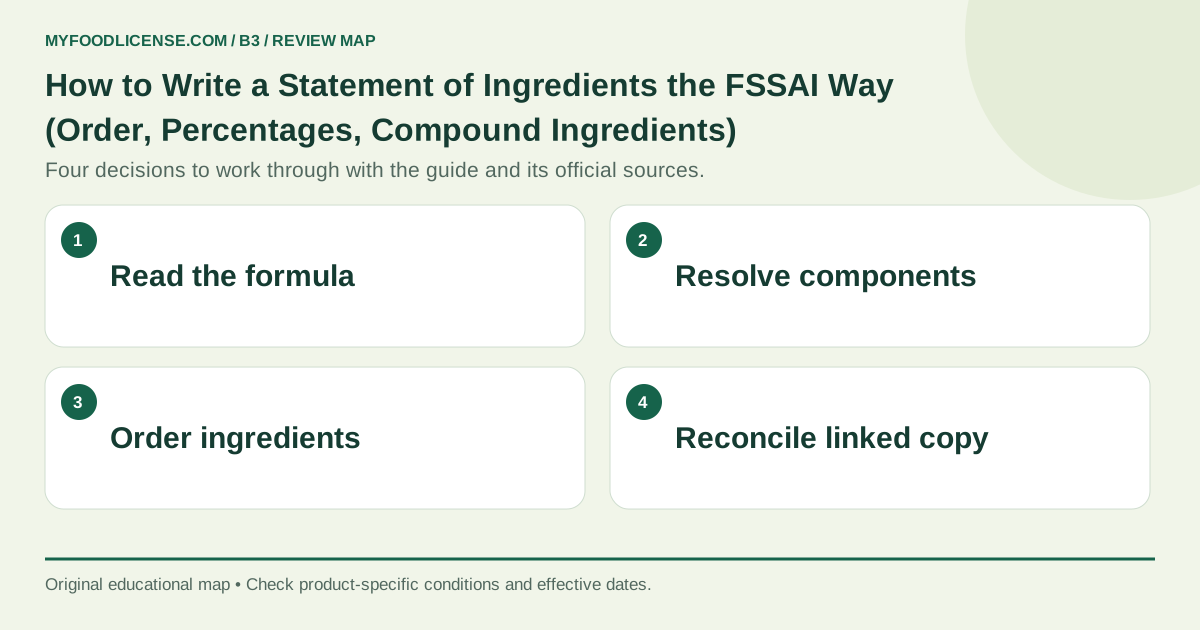
Start from the controlled formula
List each input, its quantity and relevant components. Use the point of manufacture for ordering rather than ranking ingredients by taste, nutrition or their position after moisture loss. Record permitted ingredient names and assess any specific exceptions before drafting the list. Read ingredient-list requirements.
Break down compound ingredients
A chocolate filling, seasoning or premix may itself contain several ingredients. The regulations allow the prescribed bracketed presentation or a suitable declaration of components as individual ingredients. The below-5% compound-ingredient provision has an exception for additives serving a technological function in the final food; it is not permission to ignore every component or separate allergen duties.
Review quantities of emphasised ingredients
Where an ingredient is emphasised through words, pictures or another relevant trigger, assess the required percentage declaration and its exceptions. A large almond photograph can create a question even if the ingredient name appears only once. Keep the quantity calculation linked to the actual recipe.
Check additives, water and component sources
Determine the functional class and specific name or INS declaration for applicable additives. Review added-water treatment under the stated rules. Obtain component and carrier details from suppliers where needed; a proprietary supplier blend does not remove the finished-product manufacturer’s declaration questions.
Reconcile the list with other copy
Check the food name, allergen statement, vegetarian assessment and claims against the final list. Keep the approved wording tied to a recipe version, and assess changes in premix supplier or concentration before reuse. Additive declarations and allergen review complete related tasks.
A worked example
Hypothetical example
A bakery uses a cocoa filling described on the purchase invoice only as chocolate paste. It obtains the actual composition, prepares the appropriate compound-ingredient declaration and reviews milk and soy sources. The invoice name alone would not have supported a complete label.
Your practical checklist
- Use the manufacturing formula and input weights.
- Obtain compound-ingredient specifications.
- Check highlighted-ingredient percentages.
- Review additives, carriers and water.
- Reconcile allergen and claim information.
- Record recipe and wording versions.
Download this preparation checklist
For help applying this review to your business, explore our SOI Preparation service. Bring the documents described above so the consultation can focus on the decisions still unresolved.
Frequently asked questions
Are ingredients ordered after baking?
The ordinary rule uses descending weight at the time of manufacture; assess the relevant exceptions.
Can I list only the premix name?
Review the compound-ingredient declaration rules and supplier composition.
Does below 5% remove all duties?
No. The provision has qualifications and does not erase separate applicable declarations.
Do pictures affect percentage declarations?
Emphasising an ingredient through presentation can trigger an assessment.
Who supplies the component details?
Obtain reliable specifications from the supplier and verify them against the actual input.
Official sources and further reading
Checked on 2 October 2026. Gazette notifications and operative directions prevail over compilations and summaries, including this guide.
- Labelling and Display Regulations compendium, Version VIII, 9 September 2025: Regulation 5: retail declarations, nutrition, dates and allergens. Read alongside later amendments and directions.
This guide is general information, not legal advice; the right route depends on your product and business facts. Examples marked hypothetical are illustrations, not client cases. MyFoodLicense is an independent consultancy and is not affiliated with FSSAI; applications are decided by the competent authority on the official FoSCoS portal.