Labelling & packaging
Allergen Labelling in India: What to Declare and How
Review allergens from the complete formula, including compound ingredients and supplier carriers, and prepare the required declaration. A precautionary cross-contact statement serves a different purpose from declaring an allergen intentionally present. Neither statement replaces controls in the facility.
By the MyFoodLicense team Sources checked 3 min read
In this guide
Identify the listed allergen sources
The regulations cover specified gluten-containing cereals, crustaceans, milk, egg, fish, peanuts and tree nuts, soybeans and sulphites at 10 mg/kg or more. Check the exact wording and exemptions for the product rather than expanding or narrowing the list from memory. Read regulation 5 allergen provisions.
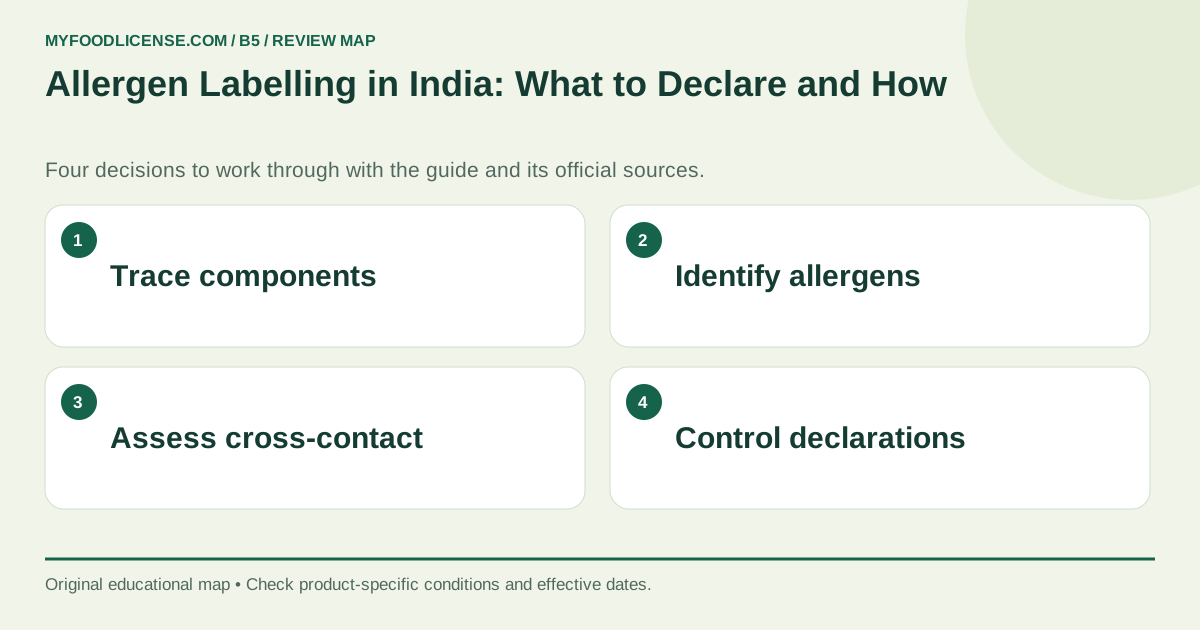
Trace every component
Review fillings, seasoning, enzyme preparations, flavours and premixes as well as major ingredients. Supplier changes can affect the assessment without changing the marketing name. Record the allergen source and where it enters the formula, and resolve incomplete specifications before approving an absence claim.
Separate presence from cross-contact
An intentional milk ingredient requires the relevant presence declaration. Possible cross-contact from shared equipment is a separate risk assessment for precautionary wording. A generic may-contain line should not conceal a known ingredient or substitute for cleaning, segregation and supplier controls.
Assess special exemptions precisely
The regulations contain specified exemptions, including treatment of raw agricultural commodities and particular derived products. Apply them only where the product fits the provision. A refined ingredient or a product that is itself an allergen requires a documented reading of the applicable text, not a broad all-natural exemption.
Control claims and artwork changes
Before saying allergen-free or gluten-free, assess the applicable claim criteria and product evidence. Reconcile the allergen statement with the ingredient list and all sales channels. Keep supplier approvals, cleaning assessments and artwork versions so a change can be traced. Build a claim evidence file.
A worked example
Hypothetical example
A snack uses a seasoning whose specification includes milk powder. The ingredient team identifies intentional milk presence, while the facility separately assesses possible nut cross-contact from a shared line. The two decisions use different evidence and are not combined into an indiscriminate may-contain-all statement.
Your practical checklist
- Review the complete formula and components.
- Map listed allergens to their sources.
- Check sulphite concentration where relevant.
- Assess cross-contact controls separately.
- Apply exemptions only to matching facts.
- Reconcile labels and any absence claims.
Download this preparation checklist
For help applying this review to your business, explore our Allergen Declaration Review service. Bring the documents described above so the consultation can focus on the decisions still unresolved.
Frequently asked questions
Can may-contain replace an intentional-allergen statement?
No. Intentional presence and cross-contact require separate assessments.
Do premix allergens count?
Yes. Review their contribution to the finished product.
What is the sulphite threshold?
The cited rule lists sulphites at 10 mg/kg or more.
Can I say gluten-free without evidence?
Review the applicable claim criterion, formula and supporting product evidence.
Do supplier changes need an allergen review?
Yes. Component changes may alter the assessment even when the product name stays the same.
Official sources and further reading
Checked on 2 October 2026. Gazette notifications and operative directions prevail over compilations and summaries, including this guide.
- Labelling and Display Regulations compendium, Version VIII, 9 September 2025: Regulation 5: retail declarations, nutrition, dates and allergens. Read alongside later amendments and directions.
- Advertising and Claims Regulations compendium, Version IV, 14 December 2022: Nutrition-claim thresholds and general claim conditions. Protein uses RDA-based alternatives, not a universal percentage-of-energy rule.
This guide is general information, not legal advice; the right route depends on your product and business facts. Examples marked hypothetical are illustrations, not client cases. MyFoodLicense is an independent consultancy and is not affiliated with FSSAI; applications are decided by the competent authority on the official FoSCoS portal.