Launching a food brand
What Your Packaging Designer Needs from You Before Designing a Food Label
Give your packaging designer reviewed source copy, product evidence, business details and pack constraints before layout begins. Separate factual declarations from creative preferences. The designer should know which information is fixed, variable or awaiting a regulatory decision.
By the MyFoodLicense team Sources checked 2 min read
In this guide
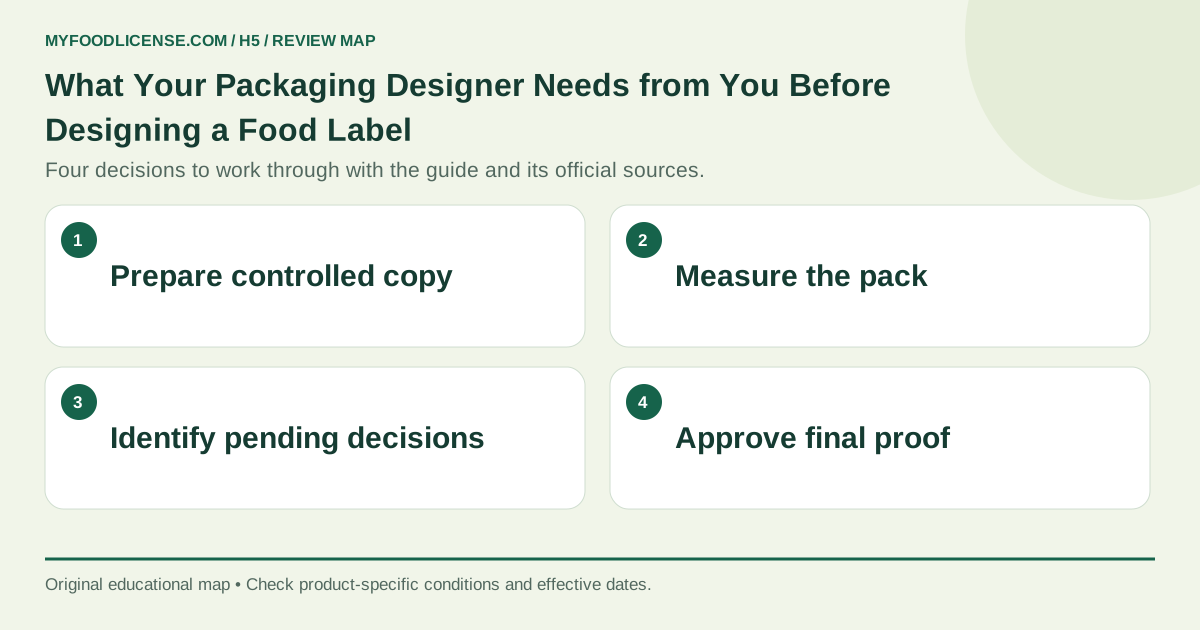
Supply the product source sheet
Include legal food name, brand wording, formula version, ingredient and allergen copy, nutrition data, claims and relevant warnings. Mark unresolved questions explicitly. A competitor’s pack can be a visual reference, but cannot supply your product’s legal copy.
Provide verified business and coding details
Supply current responsible-business information, applicable licence numbers, net quantity, MRP and consumer-care data. Define batch/date coding format and location, storage and use instructions. Confirm each field has an evidence owner. Read food declarations; commercial declarations.
Explain the physical pack
Give the measured dieline, principal display panel, material, printing constraints, seals, folds and variable-code area. Review required symbol and text sizes on that actual format. A scalable digital layout cannot establish minimum dimensions without the physical measurements.
Control claims and official marks
Provide approved wording and conditions, rather than inviting stronger improvised benefits. Use current prescribed symbols and any approved specialised marks. Do not ask the designer to create an official-looking certification badge. Prepare approved claim copy.
Define proof and sign-off
Require an actual-size review proof and identify the final production file. Record approvals, pending conditions and version changes. After a source-data update, assess all affected copy before reusing the design. Use the pre-print checklist.
A worked example
Hypothetical example
A designer receives only a product name and a rough nutrition screenshot. The brand replaces the informal brief with controlled copy, final pack dimensions and business evidence. Layout can then allocate space for required information instead of adding warnings at the last minute.
Your practical checklist
- Provide reviewed product and declaration copy.
- Verify business, quantity and price fields.
- Supply actual measured dieline and constraints.
- Identify variable coding areas.
- Give approved claims and symbol specifications.
- Define proof versions and sign-off conditions.
Download this preparation checklist
For help applying this review to your business, explore our Label Development Regulatory Inputs service. Bring the documents described above so the consultation can focus on the decisions still unresolved.
Frequently asked questions
Can the designer infer ingredients from photos?
No. Provide controlled source copy from the actual product file.
Does a visual reference establish legal wording?
No. Your product and applicable rules need their own assessment.
Why provide dimensions early?
Placement, legibility and symbol sizes depend on the actual pack.
Should pending decisions be hidden?
No. Mark them explicitly before final proof or printing.
Who approves the final file?
Assign the factual, regulatory and commercial review responsibilities clearly.
Official sources and further reading
Checked on 2 October 2026. Gazette notifications and operative directions prevail over compilations and summaries, including this guide.
- Labelling and Display Regulations compendium, Version VIII, 9 September 2025: Regulation 5: retail declarations, nutrition, dates and allergens. Read alongside later amendments and directions.
- Department of Consumer Affairs: packaged-commodity declarations: Net quantity, MRP including taxes, consumer care and unit sale price overview.
- Advertising and Claims Regulations compendium, Version IV, 14 December 2022: Nutrition-claim thresholds and general claim conditions. Protein uses RDA-based alternatives, not a universal percentage-of-energy rule.
This guide is general information, not legal advice; the right route depends on your product and business facts. Examples marked hypothetical are illustrations, not client cases. MyFoodLicense is an independent consultancy and is not affiliated with FSSAI; applications are decided by the competent authority on the official FoSCoS portal.