Labelling & packaging
Harmonising Labels Across a Product Range
Harmonise a product range through controlled common rules and SKU-specific data. Shared layout can improve consistency, but ingredients, allergens, nutrition, dates and claims must remain linked to each actual product. A master template should make differences visible rather than conceal them.
By the MyFoodLicense team Sources checked 3 min read
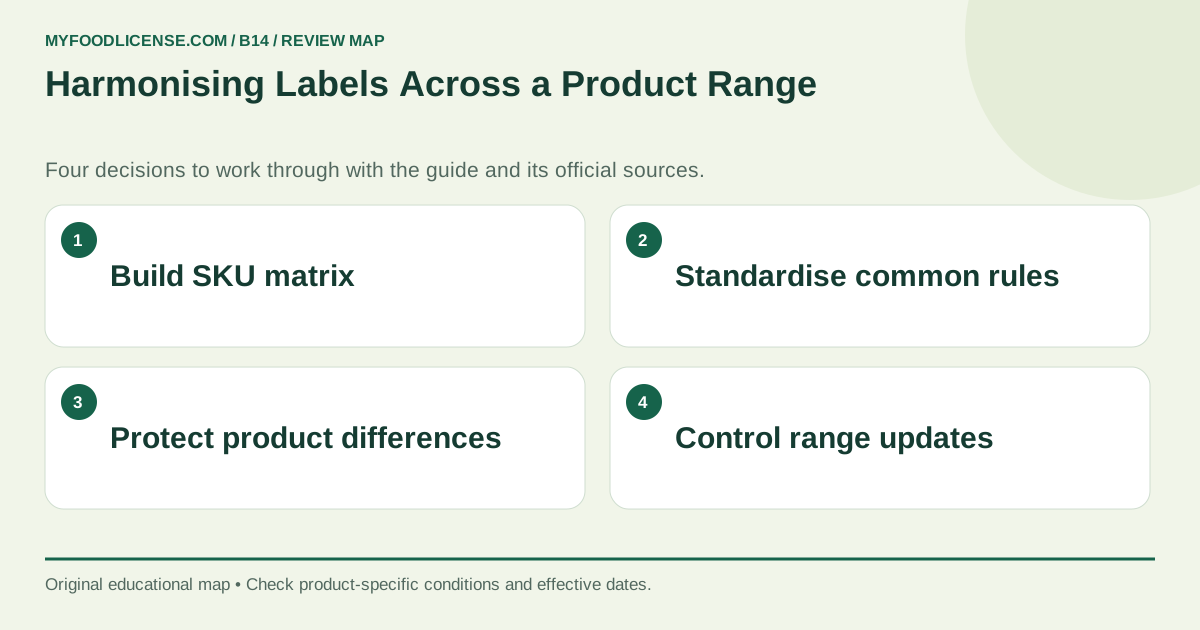
In this guide
Create a SKU source matrix
Record legal name, recipe version, supplier components, allergens, nutrition report, claim decision, pack sizes, manufacturing site and shelf-life basis for every SKU. Mark which fields are truly common and which require individual review. Keep the matrix connected to the artwork file identifiers.
Standardise legitimate shared elements
Agree placement, approved business wording, typography and information hierarchy where the rules and facts permit. Use the applicable Labelling and Display requirements and current commercial declarations as constraints. Consistency should follow reviewed requirements rather than an attractive but unsuitable house style. Read the labelling rules.
Protect SKU-specific declarations
A new flavour may introduce allergens, different additives or a changed nutrition profile. A different pack size can change serving, quantity, price or symbol-size questions. Do not duplicate the first approved label and assume the rest only need a colour and flavour-name change.
Control manufacturing and commercial variants
Where sites or responsible businesses differ, map the correct details to each version. Review local, export and imported presentations separately. Use a controlled variant register so overseas artwork or a discontinued factory version does not reach the domestic printer.
Make changes across the range deliberately
Define a change request describing the source update and affected SKUs. Recheck connected fields, approve the revised files and remove obsolete versions from shared folders. Keep evidence of which batches used each artwork. Follow the pre-print process.
A worked example
Hypothetical example
A brand’s three granola flavours share a design, but one adds peanut butter and another changes the serving size. The source matrix identifies the separate allergen and nutrition decisions. The team keeps common layout rules while approving product-specific copy.
Your practical checklist
- Build a complete SKU and source matrix.
- Identify genuinely common elements.
- Protect formula-specific declarations.
- Map pack-size and site variants.
- Use controlled file and batch references.
- Apply changes to all affected versions.
Download this preparation checklist
For help applying this review to your business, explore our Multi-SKU Artwork Harmonisation service. Bring the documents described above so the consultation can focus on the decisions still unresolved.
Frequently asked questions
Can all flavours use one ingredient list?
Only if it accurately reflects each product; different formulas usually require distinct copy.
Can nutrition values be shared automatically?
No. Establish a justified basis for each actual product.
Does pack size affect compliance?
It can affect quantities, servings, price and presentation requirements.
What is a useful master template?
One that standardises valid common elements and clearly identifies SKU-specific fields.
How do I prevent outdated files?
Control version identifiers, approvals and printer access to the current release.
Official sources and further reading
Checked on 2 October 2026. Gazette notifications and operative directions prevail over compilations and summaries, including this guide.
- Labelling and Display Regulations compendium, Version VIII, 9 September 2025: Regulation 5: retail declarations, nutrition, dates and allergens. Read alongside later amendments and directions.
- Department of Consumer Affairs: Legal Metrology rules and amendments: Official amendment register including 2026 changes; assess actual product/package applicability.
- Advertising and Claims Regulations compendium, Version IV, 14 December 2022: Nutrition-claim thresholds and general claim conditions. Protein uses RDA-based alternatives, not a universal percentage-of-energy rule.
This guide is general information, not legal advice; the right route depends on your product and business facts. Examples marked hypothetical are illustrations, not client cases. MyFoodLicense is an independent consultancy and is not affiliated with FSSAI; applications are decided by the competent authority on the official FoSCoS portal.