Registration & licensing
Change of Ownership, Partners or Company Name on an FSSAI Licence
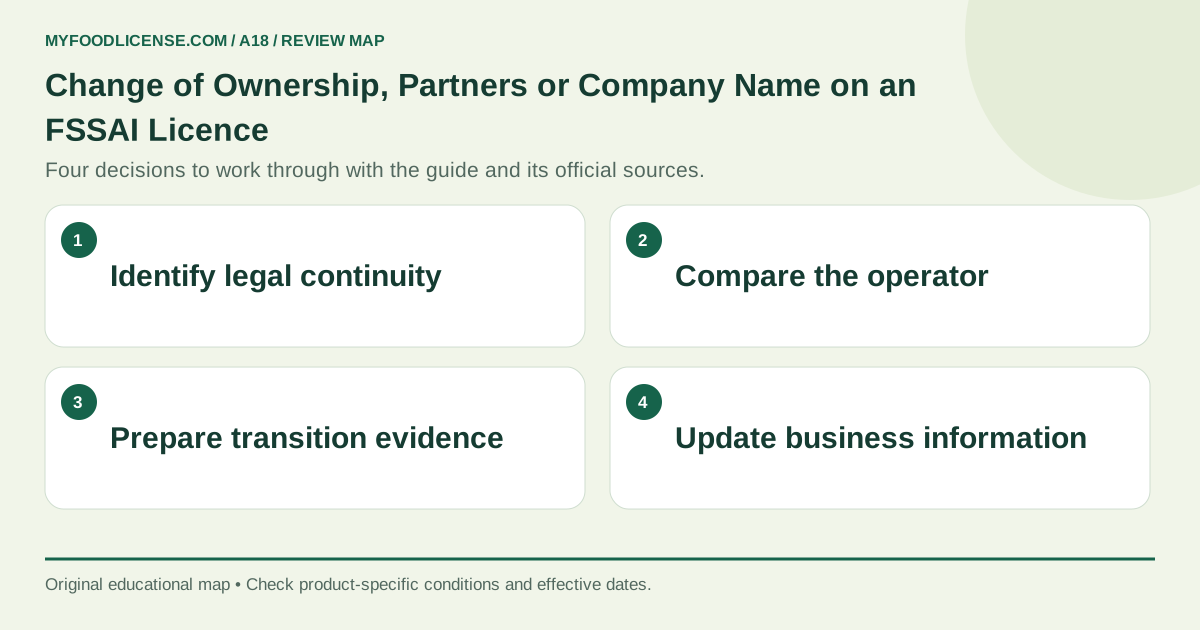
Changing a company name, partners, ownership or legal constitution can affect an FSSAI authorisation differently. Identify whether the same legal entity continues and who will operate the food premises. A transfer following an owner’s death is a specific route, not a general shortcut for every business sale.
By the MyFoodLicense team Sources checked 3 min read
In this guide
Separate name from legal identity
A company renaming itself may remain the same legal person. A proprietorship sold to a company or a change in constitution can create different operator facts. Gather incorporation, partnership, ownership and authorisation documents before selecting a portal action.
Review the actual certificate and arrangement
Compare the current applicant, premises, KoBs and responsible person with the proposed operator. Identify who controls production and stock during the change. Legal documents alone do not show whether the food activity has moved to another premises or whether the new operator requires a fresh assessment.
Do not generalise the death-transfer provision
Official licensing FAQs describe transfer following the holder’s death, supported by a death certificate and legal-heir evidence. That is a particular circumstance. Other acquisitions, partner changes and constitution changes must use the appropriate current procedure. Read the transfer guidance.
Prepare the transition file
Keep the old and new details, effective dates, supporting instruments, board or partner authority and current account communications. Seek clarification where the correct route is uncertain before choosing a convenient field. Track fees, pending returns and authority matters so outstanding obligations are not lost between operators.
Reconcile consumer and commercial information
Review pack business declarations, invoices, website details and platform records against the approved position. Allocate responsibility for old stock and complaints. A company-name change should not cause the manufacturing identity or licence number on packaging to become ambiguous. Read the label licence-number guide.
A worked example
Hypothetical example
A proprietor incorporates a company and plans to invoice all future stock through it. The assessment treats this as an operator and constitution question rather than simply correcting the proprietor’s spelling. The transition plan maps the premises, authorisation, existing stock and customer information to the appropriate entity.
Your practical checklist
- Identify whether the legal entity continues.
- Compare actual operator and certificate details.
- Gather constitution and authorisation documents.
- Assess the specific transfer or modification route.
- Resolve pending obligations during transition.
- Review labels, invoices and platform records.
Download this preparation checklist
For help applying this review to your business, explore our Change in Constitution / Business Details service. Bring the documents described above so the consultation can focus on the decisions still unresolved.
Frequently asked questions
Is a company name change the same as ownership transfer?
No. Determine whether the same legal person continues.
Can I transfer a deceased owner’s licence?
The licensing framework has a specific legal-heir transfer procedure and evidence requirements.
Can that procedure be used for any acquisition?
Do not assume so. Assess the particular transaction and current procedure.
Do labels need review after a change?
Yes, where the responsible business details or authorisation information are affected.
Who handles old complaints?
Define responsibilities in the transition plan while preserving applicable statutory duties.
Official sources and further reading
Checked on 2 October 2026. Gazette notifications and operative directions prevail over compilations and summaries, including this guide.
- FSSAI licensing and registration FAQs, 26 July 2022: Online document submission and general application concepts only. Old turnover, validity, renewal and fee guidance is superseded by 2026 sources.
- Official FoSCoS application portal: Official applications, help topics, current document lists and eligibility information.
- Labelling and Display Regulations compendium, Version VIII, 9 September 2025: Regulation 5: retail declarations, nutrition, dates and allergens. Read alongside later amendments and directions.
This guide is general information, not legal advice; the right route depends on your product and business facts. Examples marked hypothetical are illustrations, not client cases. MyFoodLicense is an independent consultancy and is not affiliated with FSSAI; applications are decided by the competent authority on the official FoSCoS portal.