Imported food
FSSAI Import Clearance Explained: From Shipment to Release
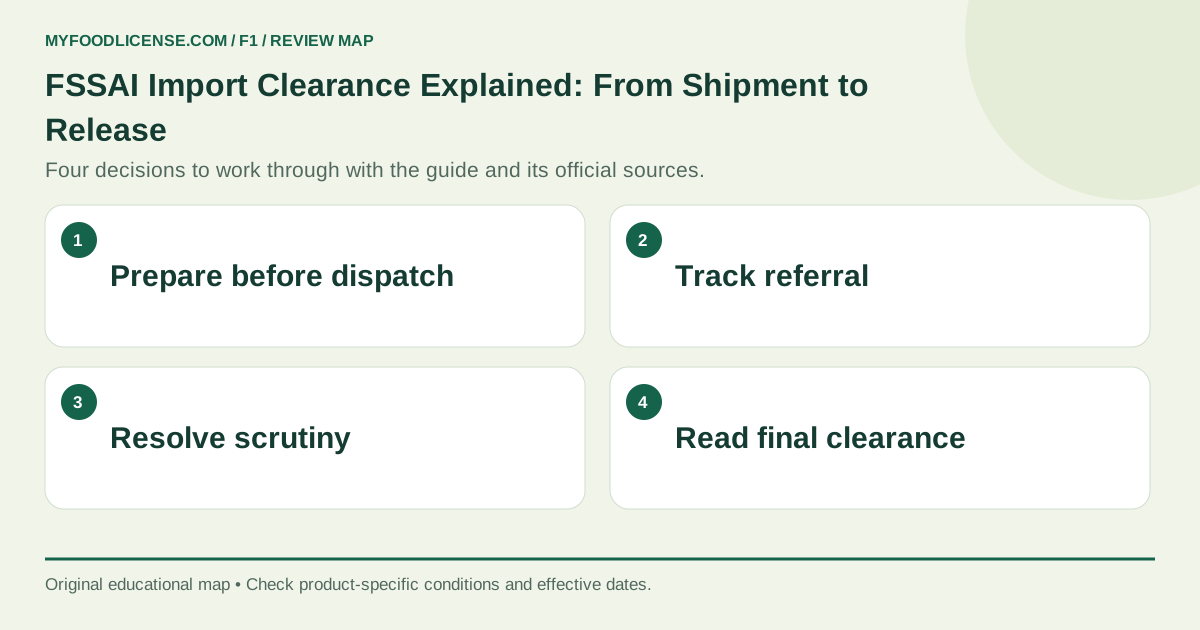
Plan food import clearance before dispatch, then follow the consignment’s actual Customs referral and FSSAI workflow. Document scrutiny, visual inspection, sampling where required and the final decision are distinct stages. Importer licensing alone does not clear a shipment.
By the MyFoodLicense team Sources checked 3 min read
In this guide
Prepare the shipment file
Identify importer, product, batch, origin, supplier and intended use. Review the recipe, Indian category, labels, remaining shelf life and conditional approvals. Keep the commercial and product documents consistent before the Bill of Entry is filed. Read the import planning guide.
Follow Customs referral and the live system
The import framework connects Customs filing with the relevant FSSAI clearance process. Risk-based routing can affect whether a consignment is referred and what assessment applies. Use the actual live system and officer communication; older manuals are workflow references rather than guaranteed current screen instructions. Read the Imports Manual.
Document and visual scrutiny
The authorised officer reviews relevant documents and the consignment’s packaging, labels and condition under the applicable process. Respond to queries with product-specific evidence. Permitted rectification is limited and supervised; it should not be assumed available for every defect. Read imported-label corrections.
Payment and laboratory assessment
FSSAI’s April 2026 update describes payment flexibility after visual inspection but before the relevant P-NOC, NOC or NCR generation. Sampling and testing depend on the applicable referral and product process. Check laboratory notification and scope, and retain sample and report records. Read the April system update.
Read the decision before release
NOC, provisional treatment and non-conformance have different consequences. Do not treat an intermediate step as unconditional release. Where an NCR is issued, examine grounds and the applicable review or retesting route promptly. The September 2026 laboratory amendment has a future April 2027 effective date and should not be applied prematurely. Read the dated amendment.
A worked example
Hypothetical example
A food shipment is referred for clearance and the importer supplies matching recipe, label and batch documents. A visual query is answered before the process continues. The importer tracks the actual decision record instead of assuming a Customs filing receipt establishes FSSAI release.
Your practical checklist
- Review the product before dispatch.
- Prepare matching shipment documents.
- Track the actual Customs/FSSAI referral.
- Resolve document and visual queries.
- Follow current payment and testing instructions.
- Read the final decision and conditions.
Download this preparation checklist
For help applying this review to your business, explore our Import Documentation Regulatory Review service. Bring the documents described above so the consultation can focus on the decisions still unresolved.
Frequently asked questions
Does a Central licence clear the consignment?
No. Licensing and shipment clearance are separate.
Is every consignment handled identically?
No. Risk-based routing and applicable product conditions matter.
Can every label defect be fixed at the port?
No. Rectification is limited to the applicable permitted scope.
Does a provisional record mean unconditional release?
Read its conditions and the applicable process.
Do September 2026 laboratory changes apply immediately?
The cited final amendment specifies 1 April 2027.
Official sources and further reading
Checked on 2 October 2026. Gazette notifications and operative directions prevail over compilations and summaries, including this guide.
- Food Import Regulations compendium, Version III, 12 November 2021: Importer licence and IEC, clearance framework and restricted label rectification. Read with the 2025 amendment and current orders.
- FSSAI Food Imports Manual: Document scrutiny, inspection, sampling, NOC and non-conformance workflow; current Customs/SWIFT implementation may alter screens.
- FSSAI monthly achievements: April 2026: Cross-check for updated fees and 10 April 2026 import-payment workflow. Official indexed PDF content was accessible although direct fetching was inconsistent.
- Laboratory and Sample Analysis Amendment Regulations, 14 September 2026: Final Gazette amendment effective 1 April 2027; separate future changes from current October 2026 procedure.
This guide is general information, not legal advice; the right route depends on your product and business facts. Examples marked hypothetical are illustrations, not client cases. MyFoodLicense is an independent consultancy and is not affiliated with FSSAI; applications are decided by the competent authority on the official FoSCoS portal.