Registration & licensing
FSSAI Licence for Exporters: Do You Need One?
Food exporters must assess the export-related KoB that matches their role. The 2026 table specifies Central licensing for listed export activities without a turnover restriction. A merchant exporter, export manufacturer and certified 100% export-oriented unit are distinct business models.
By the MyFoodLicense team Sources checked 3 min read
In this guide
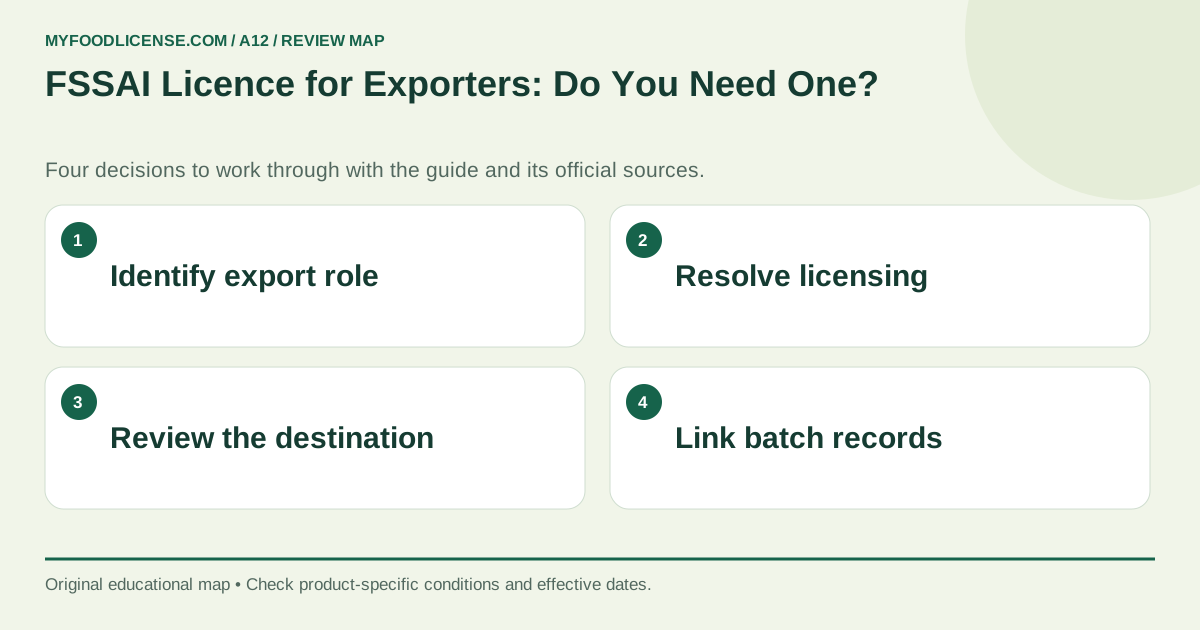
Identify the exporter’s role
A merchant exporter buys goods made by another manufacturer. An export manufacturer produces food for overseas sale. A 100% EOU has a particular recognised status and conditions. Write down the actual supply chain and avoid selecting EOU merely because you intend to export all current stock.
Read the export eligibility rows
The current table lists Merchant/Trader Exporter, Exporter-Manufacturer and 100% EOU with Central licensing. The EOU description includes its recognised certificate and export-only product context. Product standards and domestic sale questions need a separate assessment. Read the export rows.
Separate Indian authorisation from destination compliance
An Indian FSSAI licence does not approve a product for every overseas market. Destination rules may cover ingredients, labels, health certificates, establishments or customer requirements. Prepare a market-specific checklist based on the food and country, rather than treating a foreign buyer’s artwork approval as the complete compliance decision.
Keep supplier and batch evidence
Merchant exporters need a clear link between the supplier, manufacturing premises, product specifications and exported batches. Manufacturers need production and testing records suited to their products. Maintain invoices, shipment records and any certificates actually required by the trade or destination. Avoid adding generic export certificates to the file without checking their applicability.
Review returns and domestic activity
Licensed export-manufacturers are within the annual-return framework. If export-only goods or a certified EOU arrangement changes to include domestic sales, review the applicable product and licence conditions before release. Different market labels must be controlled so export stock does not accidentally enter domestic channels with unsuitable declarations.
A worked example
Hypothetical example
A trader buying packaged tea for an overseas customer initially describes itself as a manufacturer. Its supply-chain review identifies the merchant-exporter role and the actual licensed tea producer. The file then links supplier batches to shipment documents, while destination label requirements are reviewed separately.
Your practical checklist
- Distinguish merchant exporter, manufacturer and certified EOU.
- Check the current Central eligibility row.
- Identify supplier and batch records.
- Review destination-market requirements.
- Assess D1 applicability.
- Control export-only and domestic stock separately.
Download this preparation checklist
For help applying this review to your business, explore our Central FSSAI Licence – New service. Bring the documents described above so the consultation can focus on the decisions still unresolved.
Frequently asked questions
Do merchant exporters need an FSSAI route?
Yes. The current export-trader row specifies Central licensing.
Is every exporter a 100% EOU?
No. EOU status has its own recognised conditions and documentary requirements.
Does FSSAI approval establish overseas compliance?
No. Destination-country and shipment requirements need a separate review.
Do exporter-manufacturers file annual returns?
They are within the relevant D1 framework; confirm the reporting year and applicable obligations.
Can export-only stock be sold domestically?
First assess Indian product requirements and any restrictions attached to the export-only arrangement.
Official sources and further reading
Checked on 2 October 2026. Gazette notifications and operative directions prevail over compilations and summaries, including this guide.
- FoSCoS revised Kind-of-Business eligibility table, 2 April 2026 file: Activity-specific eligibility and annual fees. The PDF itself is marked updated 1 April 2026; relevant rows appear on pages 3, 6, 7 and 9.
- FSSAI licensing FAQs, December 2022: D1 applicability and 31 May baseline deadline; old licensing bands and renewal passages superseded.
- FSSAI licensing and registration FAQs, 26 July 2022: Online document submission and general application concepts only. Old turnover, validity, renewal and fee guidance is superseded by 2026 sources.
This guide is general information, not legal advice; the right route depends on your product and business facts. Examples marked hypothetical are illustrations, not client cases. MyFoodLicense is an independent consultancy and is not affiliated with FSSAI; applications are decided by the competent authority on the official FoSCoS portal.