Registration & licensing
FSSAI Licence Renewal in 2026: Perpetual Validity, Annual Fees and Legacy Certificates
FSSAI renewal guidance changed in 2026: licences and registrations issued under the new framework have perpetual validity, subject to continuing obligations. Existing certificates need a transition check. Annual fees, applicable returns and suspension status now matter more than copying an old renewal countdown.
By the MyFoodLicense team Sources checked 3 min read
In this guide
What changed in 2026?
The March 2026 amendment replaces the ordinary fixed-validity model with perpetual validity unless an authorisation is suspended, cancelled or surrendered. FSSAI’s March FAQs explain the treatment of certificates issued on or after 1 April 2026. Read the notification and transition guidance together. Licensing amendment; transition FAQs.
What should an existing licence holder do?
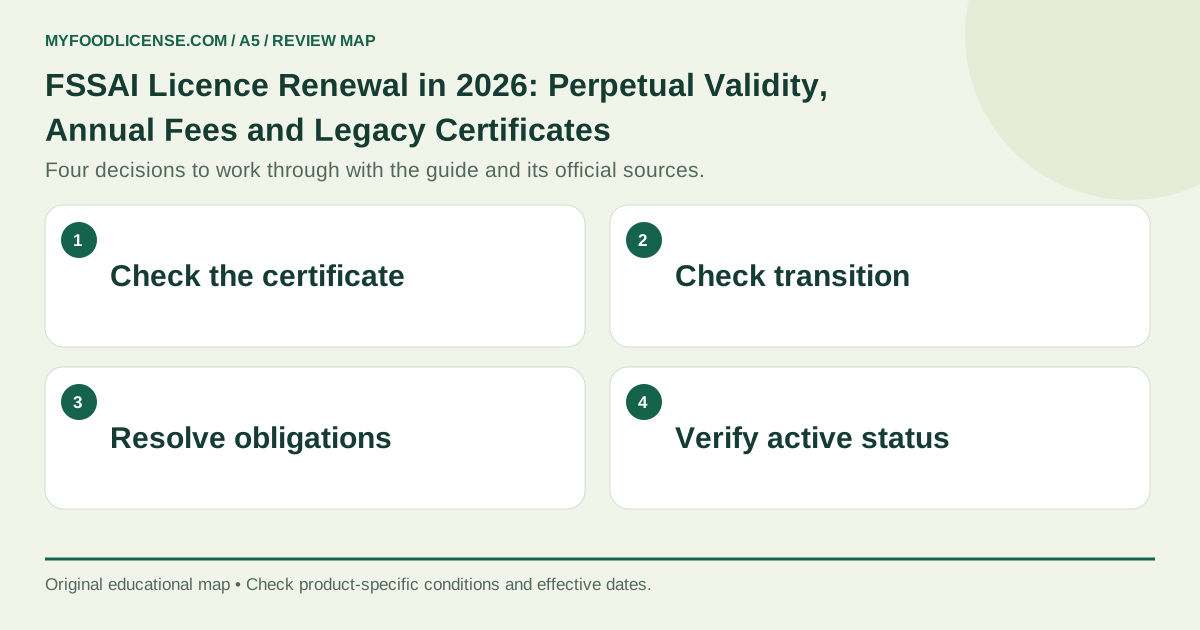
Open the actual FoSCoS record and compare it with the certificate in your files. Record the old validity dates, issue date, fee history, current status and any migration instruction. A legacy PDF showing an expiry date does not explain every transition question. Do not assume that applying a new turnover threshold automatically completes all changes to your account.
Perpetual validity still requires payments and returns
Under the amended framework, failure to pay the annual fee or submit an applicable return leads to deemed suspension. The rules provide for revocation after the outstanding obligations and due penalties are resolved. Food business cannot continue during suspension. Keep fee and return evidence together, and identify whether D1 applies to your activities. Read the annual-return guide.
Avoid outdated late-fee advice
Old renewal articles commonly discuss fixed-year validity, renewal windows and late-renewal charges. Those passages cannot be applied mechanically to a new perpetual certificate. Distinguish a legacy renewal issue from an annual-fee default or a late return. Ask for a calculation tied to the actual authorisation and operative provision, rather than a single penalty number for every situation.
Build a continuing-compliance calendar
Assign an owner for fee checks, return applicability, contact details and modifications. Save receipts and acknowledgement records. Review operational changes such as a new site, ownership change or added product before treating them as covered. Perpetual validity keeps the authorisation alive under conditions; it does not enlarge its endorsed business scope.
A worked example
Hypothetical example
A bakery owner finds a 2025 certificate with an expiry date and reads a blog saying renewal has disappeared. The owner checks the current account, obtains the applicable transition position and records fee obligations before making a filing decision. The decision is based on that certificate’s status, rather than either the old PDF or the headline alone.
Your practical checklist
- Compare your certificate with the current FoSCoS account.
- Record issue date, old validity and current status.
- Check transition or migration instructions.
- Confirm annual-fee payment history.
- Assess return applicability and outstanding dues.
- Do not operate under a suspended authorisation.
Download this preparation checklist
For help applying this review to your business, explore our Licence Renewal service. Bring the documents described above so the consultation can focus on the decisions still unresolved.
Frequently asked questions
Do new FSSAI licences need ordinary renewal?
The 2026 framework provides perpetual validity, subject to fees, returns and other compliance conditions.
Is my old licence automatically perpetual?
Check the specific legacy record and current transition instructions before concluding that its old expiry date is irrelevant.
Does perpetual validity mean no annual fee?
No. Continuing fee obligations remain under the revised model.
Can non-filing of a return suspend a licence?
Yes, where that return applies; the amended validity provision links applicable-return defaults to deemed suspension.
What should I do after suspension?
Identify and resolve the exact grounds, retain the acknowledgement and verify restoration before resuming food business.
Official sources and further reading
Checked on 2 October 2026. Gazette notifications and operative directions prevail over compilations and summaries, including this guide.
- Licensing and Registration Amendment Regulations, notification dated 10 March 2026: Regulation 2.1.7: perpetual validity, annual fees, applicable returns and suspension; regulation 2.1.17: risk-based inspections.
- FSSAI implementation FAQs issued 27 March 2026: Operational guidance on fee prepayment, migration, unchanged licence numbers and licences issued on or after 1 April 2026.
- Official FoSCoS application portal: Official applications, help topics, current document lists and eligibility information.
This guide is general information, not legal advice; the right route depends on your product and business facts. Examples marked hypothetical are illustrations, not client cases. MyFoodLicense is an independent consultancy and is not affiliated with FSSAI; applications are decided by the competent authority on the official FoSCoS portal.