Supplements & nutraceuticals
Gummies, Effervescents and Novel Formats: Regulatory Pitfalls
Gummies and effervescent products need a category, ingredient, dose and format assessment. The operationalised 2022 provisions list several delivery forms, including gummies, with conditions and category-specific restrictions. A novel presentation does not automatically mean either prohibition or unrestricted permission.
By the MyFoodLicense team Sources checked 3 min read
In this guide
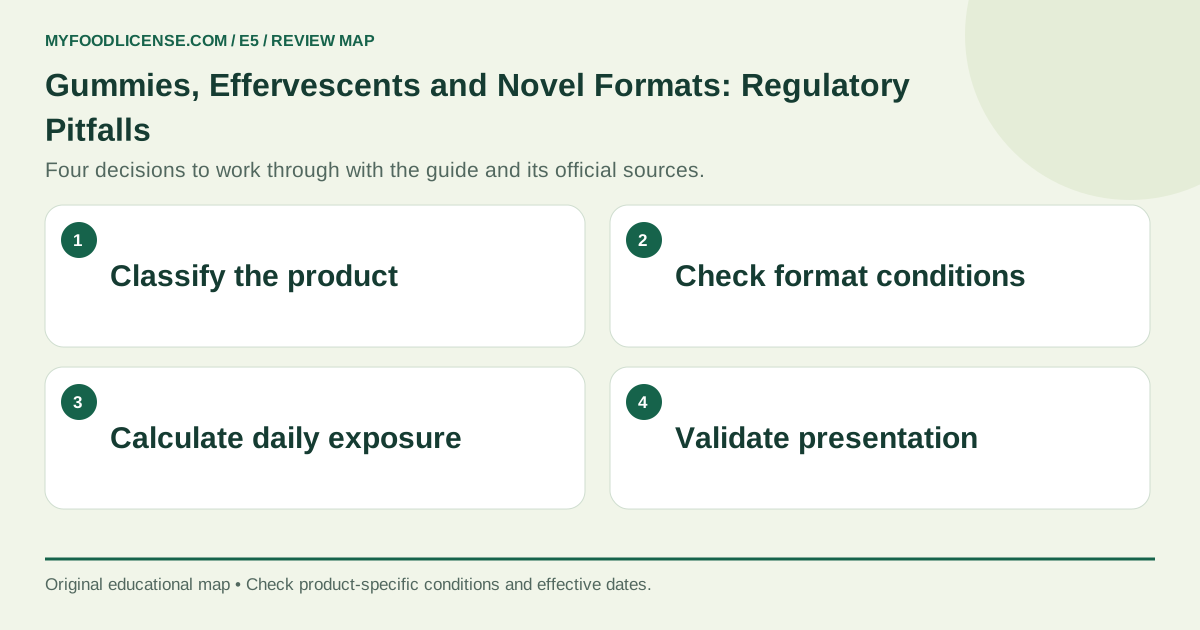
Classify purpose before format
Record the intended users, physiological or dietary purpose, recommended usage and complete formula. A candy-like product can still belong to a specialised category. The format alone cannot settle whether the product is ordinary confectionery, a health supplement or another route. Read category selection.
Read delivery-format conditions
The operationalised provisions list forms such as powders, tablets, capsules, liquids, gummies, jellies, bars and candies, subject to stated conditions and category restrictions. Conventional-looking forms require clear differentiation where regulated as supplements. Nano-derived ingredients and modified delivery formats raise separate approval questions. Read delivery-format provisions.
Check every excipient and additive
Review gelling agents, coatings, acids, sweeteners, colours, flavours and carriers for the actual category and format. Pharmaceutical use abroad is not proof of food permission in India. Effervescent systems can also contribute sodium or other nutrients that need dose and declaration review.
Control daily exposure and stability
A serving may contain more than one piece or tablet. Calculate the full recommended daily usage and avoid confusing per-piece amounts with daily dose. Review moisture, packaging, uniformity and stability appropriate to the product. An attractive pilot sample does not establish batch consistency.
Prepare appropriate presentation and warnings
Make the specialised identity, users and usage clear rather than presenting the product as ordinary unlimited-consumption confectionery. Review child-access and other applicable warnings. Claims require the same evidence and route assessment as in other formats. Read supplement declarations.
A worked example
Hypothetical example
A vitamin gummy contains two pieces per serving and permits two servings daily. The review calculates four pieces of daily exposure, checks excipient permissions and packaging stability, then aligns the front-panel category and usage copy. The per-piece number alone would have understated the assessment.
Your practical checklist
- Classify purpose and intended users.
- Read format and category conditions.
- Check all excipients and additives.
- Calculate complete daily exposure.
- Validate uniformity, packaging and stability.
- Differentiate specialised presentation and warnings.
Download this preparation checklist
For help applying this review to your business, explore our Complete Formulation Assessment service. Bring the documents described above so the consultation can focus on the decisions still unresolved.
Frequently asked questions
Are gummies automatically prohibited?
No. The cited operationalised provisions list gummies with applicable conditions.
Is every gummy a food supplement?
No. Purpose, composition and presentation determine the assessment.
Can pharma excipients be copied into food?
Establish food permission for the actual category and use.
Does one piece equal the daily dose?
Only if the actual recommended usage says so.
Does novel delivery need approval?
Assess the specific format and ingredient conditions; certain modified formats have separate approval questions.
Official sources and further reading
Checked on 2 October 2026. Gazette notifications and operative directions prevail over compilations and summaries, including this guide.
- Operationalised supplement provisions, 29 March 2022 direction: Definitions, schedules, dosage, category-specific warnings and product requirements; read with later directions.
- Direction dated 18 October 2022, uploaded 28 November 2022: Operationalisation of 2022 provisions and May 2022 additions; distinguish directions from final Gazette regulations.
- Food additive permissions: Appendix A: Category-specific additive limits, notes and restrictions; read later amendments.
- FSSAI order of 6 May 2026: ePAAS single-window approvals: Exclusive ePAAS submission from 1 June 2026 for specified approval and notification routes.
This guide is general information, not legal advice; the right route depends on your product and business facts. Examples marked hypothetical are illustrations, not client cases. MyFoodLicense is an independent consultancy and is not affiliated with FSSAI; applications are decided by the competent authority on the official FoSCoS portal.