Classification & formulation
Non-Specified Food and Novel Ingredient Approval: Process, Time and Cost
Non-specified food or ingredient approval is a prior safety-assessment route, separate from business licensing. Since 1 June 2026, the specified approval applications must go through ePAAS. Do not interpret a preliminary-scrutiny period as a guaranteed final approval timeline.
By the MyFoodLicense team Sources checked 3 min read
In this guide
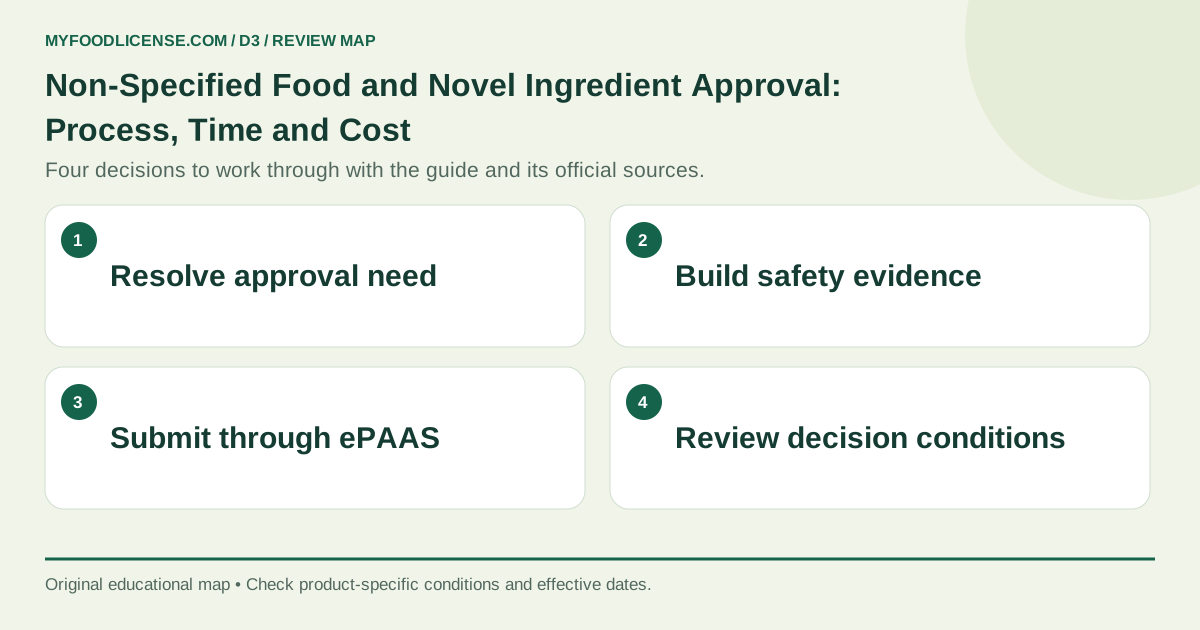
Establish why approval is needed
Identify the food or ingredient, source, specification, manufacturing process, proposed uses and consumption. First check whether an existing standard, specialised provision or valid applicable approval already resolves the question. Novelty is a regulatory assessment, not simply a new brand or flavour. Read the approval regulations.
Prepare a coherent safety dossier
The dossier should address identity, composition, process, specifications, analytical methods, intended use, exposure and relevant safety evidence. Describe how the evidence relates to the actual material and dose. History of use abroad can be supporting evidence but is not automatic Indian permission.
Use the current submission channel
The 6 May 2026 order requires the specified prior-approval submissions exclusively through ePAAS from 1 June 2026. The portal supports submission, monitoring and relevant review or appeal. The order states that manual, offline or email-based applications are not entertained thereafter. Read the ePAAS order.
Understand time and cost correctly
The regulations provide a 45-day preliminary-deficiency communication period and a 30-day response period, with the stated extension mechanism. Those periods are not a final-approval promise. Budget the current official application charge shown for the route, dossier preparation, testing and any further evidence. Do not quote an unverified fixed all-inclusive fee.
Approval must lead to the correct next steps
Read the decision, approved identity, conditions and scope. The regulations then require the relevant licence route. Check how the approval applies to the applicant, material and proposed product rather than treating any public status-list entry as permission for any supplier. Review ingredient-status evidence.
A worked example
Hypothetical example
A brand proposes a concentrated ingredient sold overseas and submits only a supplier brochure. It instead prepares identity, process, dose and safety evidence, then uses the current approval route where required. Its launch schedule includes possible clarification cycles rather than promising a 45-day clearance.
Your practical checklist
- Identify the exact approval question.
- Check existing provisions and applicable decisions.
- Prepare identity, exposure and safety evidence.
- Use the current ePAAS forms and fee.
- Plan clarification work without timing guarantees.
- Read approval conditions and complete licensing.
Download this preparation checklist
For help applying this review to your business, explore our Dossier Preparation service. Bring the documents described above so the consultation can focus on the decisions still unresolved.
Frequently asked questions
Is approval the same as a licence?
No. Product or ingredient approval and business licensing serve different purposes.
Is 45 days a guaranteed approval time?
No. It is the cited preliminary-deficiency period.
Can I apply by email now?
The May 2026 order directs the specified routes exclusively to ePAAS from 1 June 2026.
Is overseas approval enough?
No. Establish the applicable Indian route and evidence.
What does the project cost?
Separate the current official charge from dossier, testing and professional scope; obtain a route-specific quotation.
Official sources and further reading
Checked on 2 October 2026. Gazette notifications and operative directions prevail over compilations and summaries, including this guide.
- Approval for Non-Specified Food and Food Ingredients Regulations, compendium dated 14 October 2022: Prior approval, application evidence and sequence of product approval followed by licensing. No universal approval-time promise.
- FSSAI order of 6 May 2026: ePAAS single-window approvals: Exclusive ePAAS submission from 1 June 2026 for specified approval and notification routes.
- Non-specified product/ingredient application status, 3 June 2026: Applicant/product-specific status list; not blanket ingredient permission for any supplier or formulation.
This guide is general information, not legal advice; the right route depends on your product and business facts. Examples marked hypothetical are illustrations, not client cases. MyFoodLicense is an independent consultancy and is not affiliated with FSSAI; applications are decided by the competent authority on the official FoSCoS portal.