Launching a food brand
Regulatory Feasibility: Questions to Answer Before Developing a New Product
Regulatory feasibility asks whether the proposed product can be made, sold and represented through a supported Indian route before substantial investment. Review category, ingredients, dose, approvals, business roles and claims together. A development idea is not yet a compliant launch specification.
By the MyFoodLicense team Sources checked 2 min read
In this guide
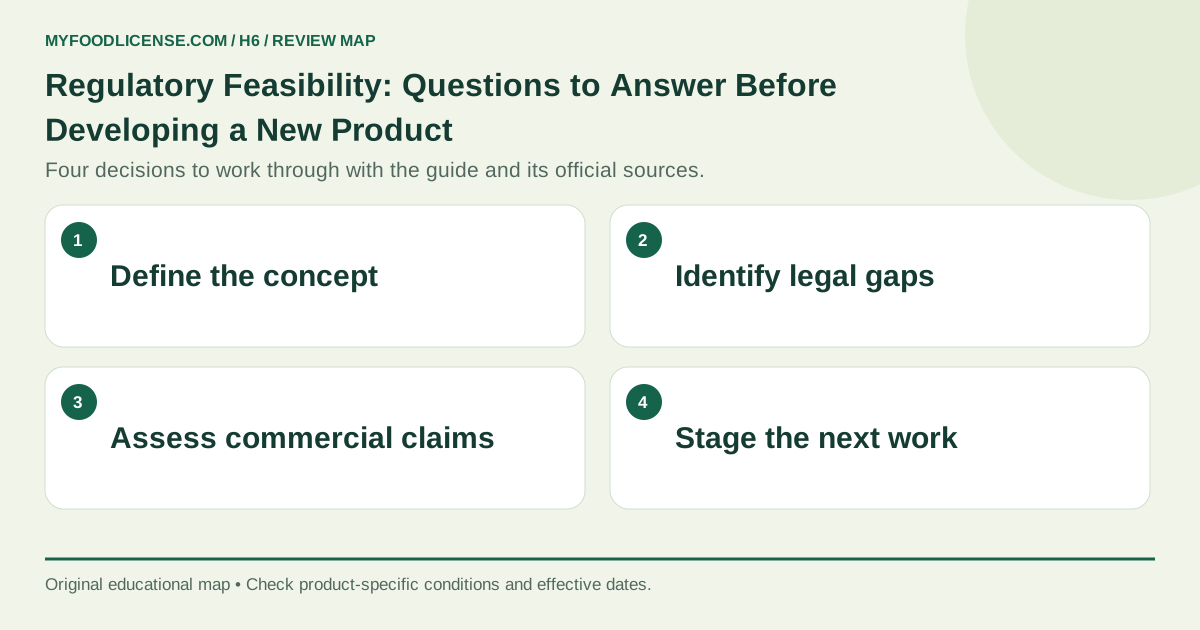
Ask what the product really is
Record formulation, processing, format, intended use, audience and market. Identify the desired food name and claims. A conventional snack, concentrated extract and medically positioned powder raise different questions even if they share an ingredient.
Check the expensive uncertainties first
Establish whether a standard or specialised route applies, whether each exact ingredient is permitted and whether the dose and format fit. Identify prior-approval gaps and data needs. Overseas popularity does not settle Indian permission. Product-route conditions; specialised requirements.
Assess whether the commercial promise is supportable
Review the intended claim, evidence and applicable route. A brand can have a permitted recipe but an unsupported central marketing promise. Resolve that problem before relying on a campaign to justify packaging or inventory investment. Build claim evidence.
Map practical implementation
Identify manufacturer capability, licences, sites, tests, packaging, shelf-life work and required records. Separate an achievable product concept from assumptions that still need supplier or technical evidence. For specified approvals, use the current ePAAS framework. Read approval routing.
Write a decision record
Summarise supported decisions, unresolved questions, evidence owners, options and dependencies. Use it to stage development and investment. Feasibility is an evidence-based assessment, not an approval guarantee or an invented universal launch timeline.
A worked example
Hypothetical example
A startup wants a concentrated botanical in a children’s gummy with a disease-prevention claim. Feasibility reviews the audience, ingredient identity, dose, format and representation before formulation spending. It can revise the concept around supported options rather than discovering all gaps after printing.
Your practical checklist
- Define complete product and users.
- Identify route and ingredient uncertainties.
- Review dose and delivery conditions.
- Assess the main commercial claim.
- Map evidence, approvals and manufacturer capability.
- Record options and staged dependencies.
Download this preparation checklist
For help applying this review to your business, explore our Regulatory Feasibility Assessment service. Bring the documents described above so the consultation can focus on the decisions still unresolved.
Frequently asked questions
Is feasibility the same as approval?
No. It identifies the route, support and unresolved work.
Should it happen before printing?
Yes. Material uncertainties should be resolved before costly commitments.
Does a popular foreign product prove feasibility?
No. Indian requirements need separate assessment.
Can a legal formula have an unsuitable claim?
Yes. Product and claim compliance are separate decisions.
What should the report contain?
Supported findings, evidence gaps, options, owners and dependencies.
Official sources and further reading
Checked on 2 October 2026. Gazette notifications and operative directions prevail over compilations and summaries, including this guide.
- Food Products Standards and Food Additives: regulation 2.12, Proprietary Food: Definition, exclusions, permitted ingredients, additive categories and the prohibition on treating a failed standardized product as proprietary.
- Operationalised supplement provisions, 29 March 2022 direction: Definitions, schedules, dosage, category-specific warnings and product requirements; read with later directions.
- FSSAI order of 6 May 2026: ePAAS single-window approvals: Exclusive ePAAS submission from 1 June 2026 for specified approval and notification routes.
- Advertising and Claims Regulations compendium, Version IV, 14 December 2022: Nutrition-claim thresholds and general claim conditions. Protein uses RDA-based alternatives, not a universal percentage-of-energy rule.
This guide is general information, not legal advice; the right route depends on your product and business facts. Examples marked hypothetical are illustrations, not client cases. MyFoodLicense is an independent consultancy and is not affiliated with FSSAI; applications are decided by the competent authority on the official FoSCoS portal.