Classification & formulation
Is This Ingredient Allowed in India? How to Check an Ingredient's Status
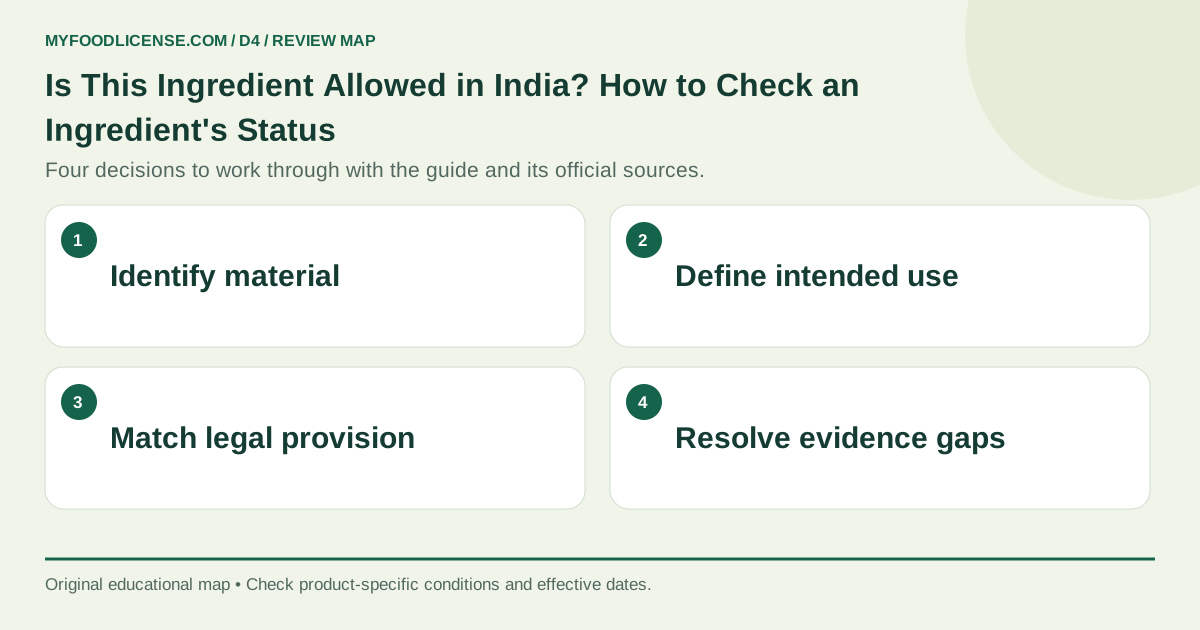
To check an ingredient’s Indian status, identify the exact material, food category, intended use and dose, then locate the applicable provision or approval. A common name, supplier assurance or overseas legal status is insufficient to establish permission for every Indian product.
By the MyFoodLicense team Sources checked 2 min read
In this guide
Define the material precisely
Record chemical or botanical identity, species and plant part where relevant, source, extraction process, concentration, purity and specification. Different extracts of the same plant can have different regulatory questions. An ingredient trade name may conceal these facts.
Check the correct regulatory route
Read the relevant food standard, proprietary-food provision, specialised schedule or additive list as applicable. Distinguish an ordinary ingredient from an additive, nutrient, botanical extract or novel material. The intended product and technological or physiological role affect the assessment. Official regulations directory.
Read conditions, not only names
Check source, permitted form, dose, target population and category restrictions. A schedule entry for one plant part or substance cannot silently authorise all derivatives. Keep the actual specification next to the cited provision so the identity match is reviewable.
Review approvals carefully
Public application-status lists show particular products, ingredients and applicants. Check the decision and applicable scope before treating an approved entry as a general permission. A pending or closed application is not approval. Read the official status list.
Resolve gaps before commercial use
Where permission is not established, assess the prior-approval route or a compliant alternative. Preserve the reasoning and supplier correspondence. Recheck the decision when the source, extract, dose or intended product changes. Read non-specified approval and botanical assessment.
A worked example
Hypothetical example
A supplier describes an extract only as ginger active. The brand requests species, rhizome source, extraction method and marker specification, then compares the exact material with the applicable provision. Familiarity with ginger as a spice does not settle the concentrated extract question.
Your practical checklist
- Identify the exact material and specification.
- Define food category, role and dose.
- Locate the applicable provision.
- Read source and use restrictions.
- Check decision scope where approval is cited.
- Resolve gaps before use or shipment.
Download this preparation checklist
For help applying this review to your business, explore our Ingredient Regulatory Status service. Bring the documents described above so the consultation can focus on the decisions still unresolved.
Frequently asked questions
Does a familiar ingredient name prove permission?
No. Identity, form, use and conditions must match.
Is an overseas approval enough?
No. Indian provisions and applicable approvals require separate review.
Does a public approved list cover every supplier?
Do not assume so. Read the relevant decision and scope.
Can pending approval support launch?
A pending application is not an approval decision.
Should a supplier change trigger reassessment?
Yes, where identity, process, specification or source changes materially.
Official sources and further reading
Checked on 2 October 2026. Gazette notifications and operative directions prevail over compilations and summaries, including this guide.
- FSSAI current regulations directory: Product standards, specialised regulations, original notifications, compendiums and amendment lists.
- Food Products Standards and Food Additives: regulation 2.12, Proprietary Food: Definition, exclusions, permitted ingredients, additive categories and the prohibition on treating a failed standardized product as proprietary.
- Non-specified product/ingredient application status, 3 June 2026: Applicant/product-specific status list; not blanket ingredient permission for any supplier or formulation.
- FSSAI order of 6 May 2026: ePAAS single-window approvals: Exclusive ePAAS submission from 1 June 2026 for specified approval and notification routes.
This guide is general information, not legal advice; the right route depends on your product and business facts. Examples marked hypothetical are illustrations, not client cases. MyFoodLicense is an independent consultancy and is not affiliated with FSSAI; applications are decided by the competent authority on the official FoSCoS portal.