Classification & formulation
Organic (Jaivik Bharat) and Vegan Logos: How to Get Endorsement
Organic and vegan are separate compliance routes. Organic food involves the applicable certification and endorsement framework; vegan food requires its own ingredient, process and logo assessment. A vegetarian symbol, organic ingredient certificate or general food licence does not establish both.
By the MyFoodLicense team Sources checked 3 min read
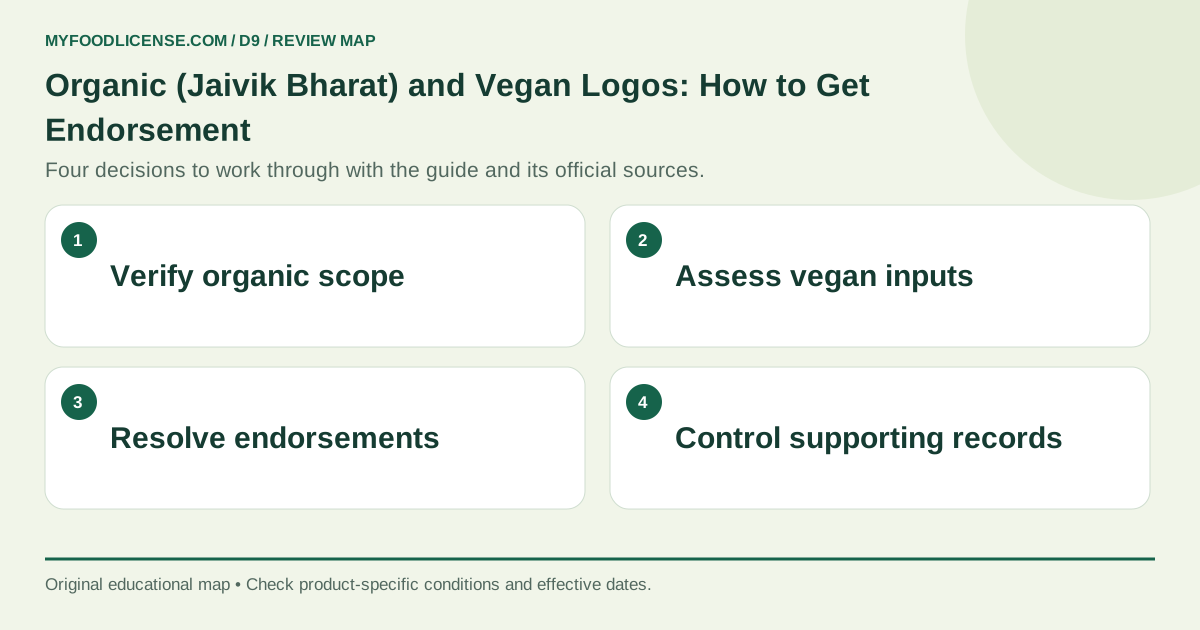
In this guide
Organic: establish the certification basis
The Organic Foods framework recognises NPOP and PGS-India systems, with limited stated exemptions. Establish the product, operator and certificate scope and relevant traceability. Direct-sale or small-producer treatment must fit the actual provision; it is not a blanket exemption for an online organic brand. Read the organic framework.
Organic: review licence and label treatment
Official licensing guidance describes product endorsement supported by the relevant certification. Review the Jaivik Bharat mark, certification information and the scope of the organic claim. A certified raw ingredient does not automatically establish that a multi-ingredient processed product is certified organic. Read endorsement guidance.
Vegan: assess more than the main recipe
Review ingredients, additives, processing aids, source materials and cross-contact controls under the vegan framework. Milk, honey and animal-derived processing inputs are separate questions from the general vegetarian assessment. Keep supplier and production evidence that supports the product status. Official vegan resources.
Vegan: use the current approval channel
The May 2026 ePAAS order includes Vegan Endorsement in its specified routes from 1 June 2026. The official register also lists a June 2026 logo-specification amendment. Check current authorised artwork and requirements rather than copying an old online logo or emailing a legacy application address. Read the current channel.
Control the claims and continuing evidence
Maintain certificates, approval decisions, ingredient sources, site controls and artwork versions. Reassess expiry of supporting certification and supplier or manufacturing changes. Keep organic and vegan evidence in separate sections so one mark is not used to imply the other status.
A worked example
Hypothetical example
A plant-based snack uses a certified organic cereal but non-certified additional ingredients. Its organic-product claim requires a separate scope review. The vegan assessment examines the flavour carrier and processing inputs, so neither decision follows automatically from the cereal certificate.
Your practical checklist
- Separate organic and vegan decisions.
- Verify certification and product scope.
- Check any exemption against actual facts.
- Review vegan inputs and production controls.
- Use current endorsement channel and logo specifications.
- Maintain traceability and change reviews.
Download this preparation checklist
For help applying this review to your business, explore our Licence Modification service. Bring the documents described above so the consultation can focus on the decisions still unresolved.
Frequently asked questions
Is vegetarian the same as vegan?
No. Vegan requirements are distinct.
Does an organic ingredient certify the whole product?
Not automatically. Review the certification scope and processed-product requirements.
Can I use the vegan logo without endorsement?
Follow the applicable approval framework before using the mark.
Where are current vegan applications submitted?
The May 2026 order includes the route in ePAAS from 1 June 2026.
Are organic exemptions universal?
No. They are limited and fact-dependent.
Official sources and further reading
Checked on 2 October 2026. Gazette notifications and operative directions prevail over compilations and summaries, including this guide.
- Jaivik Bharat regulatory overview: NPOP/PGS-India framework and limited exemptions; read with current organic regulations.
- FSSAI vegan-food regulations and application resources: Official regulations, endorsement guidance, fees and current status; check June 2026 logo amendment.
- FSSAI order of 6 May 2026: ePAAS single-window approvals: Exclusive ePAAS submission from 1 June 2026 for specified approval and notification routes.
- FSSAI licensing and registration FAQs, 26 July 2022: Online document submission and general application concepts only. Old turnover, validity, renewal and fee guidance is superseded by 2026 sources.
- FSSAI official food-law notifications: Final versus draft changes and newer import/laboratory amendments.
This guide is general information, not legal advice; the right route depends on your product and business facts. Examples marked hypothetical are illustrations, not client cases. MyFoodLicense is an independent consultancy and is not affiliated with FSSAI; applications are decided by the competent authority on the official FoSCoS portal.