Supplements & nutraceuticals
Probiotics and Prebiotics: Permitted Strains and Claims
Probiotic and prebiotic foods need specific identity, permission, dose and evidence reviews. A fermented food is not automatically a probiotic product. For live organisms, strain identity and viable count through the stated shelf life are central questions.
By the MyFoodLicense team Sources checked 3 min read
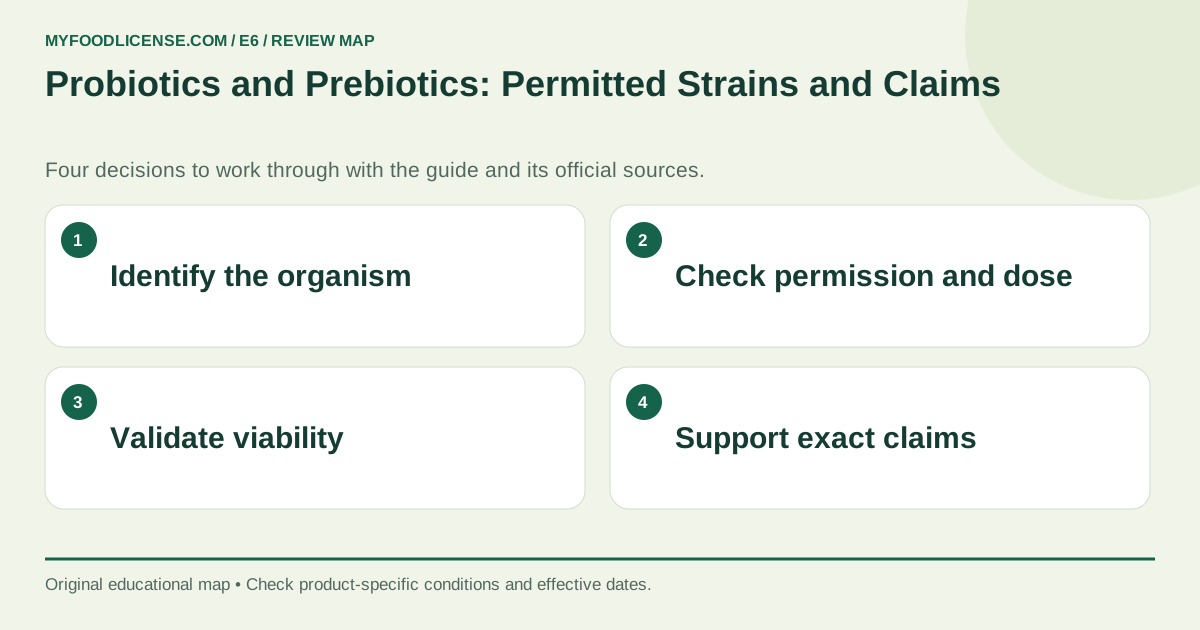
In this guide
Distinguish the two concepts
The operationalised framework defines prebiotic and probiotic foods separately. Probiotics involve live microorganisms with demonstrated relevant benefits; prebiotics involve qualifying non-viable components with the applicable effects. Ordinary fermentation or the word fibre does not establish either route. Read the definitions.
Identify the actual material
For microorganisms, collect genus, species, strain designation, source and supporting specification. For prebiotics, establish chemical identity, composition and purity. Check the applicable schedule and conditions, using the correct version of the framework rather than mixing historical schedule numbers.
Review dose and survival
The cited operationalised probiotic provision specifies a minimum viable count of 10⁸ CFU in the recommended daily serving, with its stated lower-count approval exception. Read category and format conditions as well. Plan evidence that viable counts remain suitable under the actual packaging and storage conditions, not just at ingredient dispatch.
Assess claims at the relevant strain and dose
Evidence for one strain does not automatically support another with a similar species name. Evaluate the population, dose, outcome and finished-product relevance. Avoid treatment promises based on generic gut-health articles. Read supplement-claim assessment.
Prepare the label and manufacturing file
Review organism identity, count, recommended usage, storage and applicable warnings. The operationalised provisions have specific format conditions, including prior-approval questions for certain formats. Keep supplier, batch, assay and stability evidence available. Read current approval routing.
A worked example
Hypothetical example
A brand buys a culture with a high count at production but has no evidence for the finished product after warm storage. It reviews strain permission, packaging and viable count through shelf life before approving a daily-dose claim. The supplier’s initial count alone does not establish the retail product position.
Your practical checklist
- Distinguish probiotic and prebiotic routes.
- Record exact strain or material identity.
- Check current schedule and conditions.
- Assess daily quantity and format restrictions.
- Support shelf-life viability and storage.
- Review claims for the actual strain and dose.
Download this preparation checklist
For help applying this review to your business, explore our Ingredient Permissibility Assessment service. Bring the documents described above so the consultation can focus on the decisions still unresolved.
Frequently asked questions
Is every fermented food probiotic?
No. The applicable properties and evidence must be established.
Is species identity enough?
Relevant strain identity and evidence are important to the assessment.
What count does the cited provision state?
10⁸ CFU in the recommended daily serving, with the specified approval exception.
Can benefits transfer between strains automatically?
No. Evaluate the evidence for the actual organism and use.
Does a dispatch count prove shelf-life viability?
No. Review the finished product under its actual storage conditions.
Official sources and further reading
Checked on 2 October 2026. Gazette notifications and operative directions prevail over compilations and summaries, including this guide.
- Operationalised supplement provisions, 29 March 2022 direction: Definitions, schedules, dosage, category-specific warnings and product requirements; read with later directions.
- Direction dated 18 October 2022, uploaded 28 November 2022: Operationalisation of 2022 provisions and May 2022 additions; distinguish directions from final Gazette regulations.
- FSSAI order of 6 May 2026: ePAAS single-window approvals: Exclusive ePAAS submission from 1 June 2026 for specified approval and notification routes.
- Advertising and Claims Regulations compendium, Version IV, 14 December 2022: Nutrition-claim thresholds and general claim conditions. Protein uses RDA-based alternatives, not a universal percentage-of-energy rule.
This guide is general information, not legal advice; the right route depends on your product and business facts. Examples marked hypothetical are illustrations, not client cases. MyFoodLicense is an independent consultancy and is not affiliated with FSSAI; applications are decided by the competent authority on the official FoSCoS portal.