Classification & formulation
When Your Recipe Doesn't Comply: Reformulating Without Losing the Product
Reformulation should begin with a precise explanation of the compliance gap and the product attributes you want to preserve. Changing an ingredient, dose or process can affect classification, safety, nutrition, allergens and claims. Validate the revised product before releasing a new label.
By the MyFoodLicense team Sources checked 2 min read
In this guide
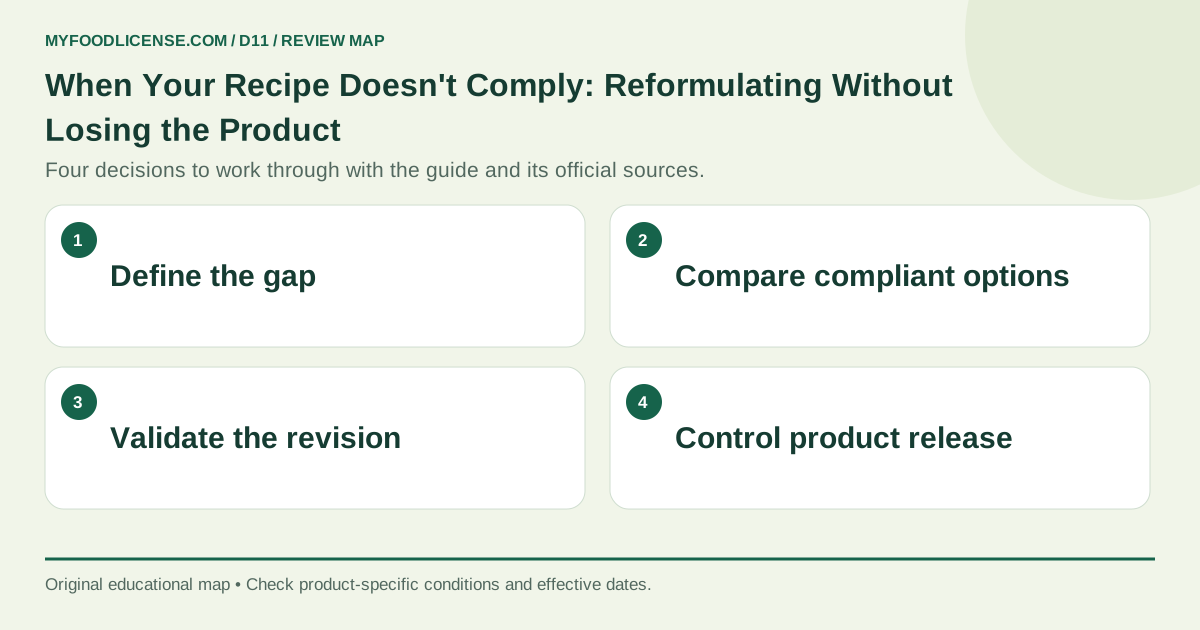
Define the problem before changing the recipe
Record the failed parameter or unsupported ingredient, its legal basis and the evidence. Distinguish an analytical nonconformance from a category, ingredient-permission or label problem. A food name change cannot automatically solve failure against an applicable standard. Read proprietary-food limitations.
Develop compliant options
Compare substitution, dose reduction, process change or a genuinely appropriate category approach. Read additive limits, ingredient conditions and specialised rules for each option. Preserve intended flavour or texture as a development objective, while recognising that a compliance decision needs more than sensory similarity. Read additive conditions.
Model linked consequences
Prepare a before-and-after table covering identity, ingredient order, allergens, nutrition, claim criteria, process and shelf life. A lower-sugar formula can change water activity or product stability; a new protein source can alter allergens and flavour. Identify what evidence must be renewed.
Trial and validate the revised product
Use appropriate pilot production, specifications and testing for the actual risks and requirements. Check packaging interaction and stability as relevant. Set acceptance criteria before the trial rather than choosing the most favourable result afterwards.
Control regulatory and commercial release
Review the licence product scope, any required approvals, label and online claims. Assign a new controlled formula version and manage old stock and artwork. Preserve records that identify which batches used each recipe. Follow pre-print approval and refresh claim evidence.
A worked example
Hypothetical example
A beverage exceeds an applicable additive limit. The team evaluates lower dosage and alternative processing, checks product stability and updates the declaration and claim file for the selected compliant option. It does not treat a relabelled category code as the technical solution.
Your practical checklist
- Define the exact compliance gap.
- Compare legally supported formulation options.
- Map all linked product changes.
- Set validation and testing criteria.
- Review approval, licence and artwork impacts.
- Control old stock and new recipe release.
Download this preparation checklist
For help applying this review to your business, explore our Reformulation Advisory service. Bring the documents described above so the consultation can focus on the decisions still unresolved.
Frequently asked questions
Can a new name solve a failed standard?
Not automatically. Assess the applicable standard and classification rules.
Should every substitution trigger allergen review?
Review it wherever sources or composition can change the allergen position.
Can claims stay unchanged after reformulation?
Only after renewed evidence and criterion assessment.
Is a successful taste trial enough?
No. Safety, composition, stability and regulatory requirements also matter.
How should old stock be managed?
Identify affected batches and assess their lawful disposition separately from new-product release.
Official sources and further reading
Checked on 2 October 2026. Gazette notifications and operative directions prevail over compilations and summaries, including this guide.
- Food Products Standards and Food Additives: regulation 2.12, Proprietary Food: Definition, exclusions, permitted ingredients, additive categories and the prohibition on treating a failed standardized product as proprietary.
- Food additive permissions: Appendix A: Category-specific additive limits, notes and restrictions; read later amendments.
- Labelling and Display Regulations compendium, Version VIII, 9 September 2025: Regulation 5: retail declarations, nutrition, dates and allergens. Read alongside later amendments and directions.
- Advertising and Claims Regulations compendium, Version IV, 14 December 2022: Nutrition-claim thresholds and general claim conditions. Protein uses RDA-based alternatives, not a universal percentage-of-energy rule.
This guide is general information, not legal advice; the right route depends on your product and business facts. Examples marked hypothetical are illustrations, not client cases. MyFoodLicense is an independent consultancy and is not affiliated with FSSAI; applications are decided by the competent authority on the official FoSCoS portal.