Supplements & nutraceuticals
Botanicals in Nutraceuticals: How to Check if a Plant Ingredient Is Permitted
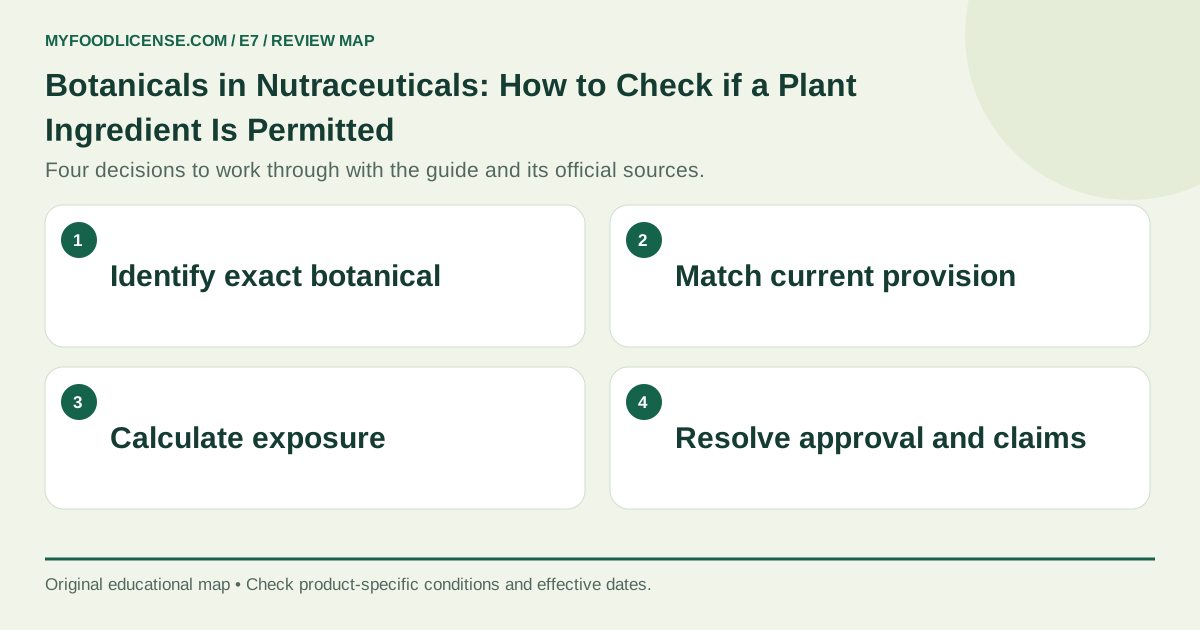
A botanical assessment needs the exact species, plant part, form, extraction process, concentration and intended dose. Familiarity with a plant as food does not establish permission for every extract. Match the material to the applicable current provision and all stated conditions.
By the MyFoodLicense team Sources checked 3 min read
In this guide
Build an identity sheet
Record Latin name and relevant synonym, part used, geographic source, preparation, extraction solvent, extract ratio, marker compounds and specification. A supplier’s common-name label may be insufficient to distinguish the material from another plant part or concentrated derivative.
Use the correct schedule version
The 2016 and operationalised 2022 structures use different schedule arrangements. Read the applicable botanical entry and later directions together rather than citing an old schedule number as if nothing changed. Check permitted form, quantities and warnings for the exact material. Read operationalised botanical provisions.
Check extracts and daily exposure
Assess standardisation, active constituents and contribution across the full daily usage. A dose permitted for a powder cannot automatically be transferred to a much stronger extract. Compare purity and contaminant evidence with the applicable requirements and relevant product risks.
A current example: Ashwagandha plant parts
FSSAI’s 16 April 2026 advisory states that Ashwagandha leaves are not permitted in crude, extract or other form under the cited food provisions, and identifies the permitted root/root-extract position subject to prescribed limits. It also refers to the accompanying AYUSH instruction. This is a concrete reason to verify plant part and supplier composition rather than accept the common name alone. Read the official advisory.
Treat history of use as evidence, not permission
The operationalised provisions describe a prior-approval route for certain ingredients with a documented safe-use history. Foreign use alone does not remove that route. Where no applicable permission is established, review approval or an alternative material. Read non-specified approval.
Review claims and source changes
A permitted botanical does not authorise every traditional or therapeutic benefit statement. Keep scientific and regulatory claim assessments separate. Reopen the material review when supplier, plant part, extraction method or marker strength changes. Build the evidence file.
A worked example
Hypothetical example
A supplier replaces a whole-root powder with a concentrated extract under the same common name. The brand records the new process and marker strength, recalculates exposure and reviews the applicable entry. The original powder assessment is not carried forward automatically.
Your practical checklist
- Record species, plant part and form.
- Obtain extraction and marker specifications.
- Check current entry, quantity and warnings.
- Calculate actual daily exposure.
- Resolve permission or approval gaps.
- Review claims and material substitutions.
Download this preparation checklist
For help applying this review to your business, explore our Ingredient Permissibility Assessment service. Bring the documents described above so the consultation can focus on the decisions still unresolved.
Frequently asked questions
Does traditional food use permit every extract?
No. Form, concentration and conditions matter.
Can common names settle identity?
Not reliably. Record the exact species and relevant specifications.
Do schedule numbers change between frameworks?
Yes. Identify the actual version relied on.
Is safe-use history automatic approval?
No. Apply the relevant prior-approval provision where required.
Does a supplier substitution need review?
Yes, where identity or material specifications change.
Official sources and further reading
Checked on 2 October 2026. Gazette notifications and operative directions prevail over compilations and summaries, including this guide.
- Operationalised supplement provisions, 29 March 2022 direction: Definitions, schedules, dosage, category-specific warnings and product requirements; read with later directions.
- Direction dated 18 October 2022, uploaded 28 November 2022: Operationalisation of 2022 provisions and May 2022 additions; distinguish directions from final Gazette regulations.
- FSSAI order of 6 May 2026: ePAAS single-window approvals: Exclusive ePAAS submission from 1 June 2026 for specified approval and notification routes.
- Non-specified product/ingredient application status, 3 June 2026: Applicant/product-specific status list; not blanket ingredient permission for any supplier or formulation.
- FSSAI Ashwagandha-leaf advisory, 16 April 2026: Plant-part restriction and root/extract conditions; advisory includes the cited AYUSH instruction.
This guide is general information, not legal advice; the right route depends on your product and business facts. Examples marked hypothetical are illustrations, not client cases. MyFoodLicense is an independent consultancy and is not affiliated with FSSAI; applications are decided by the competent authority on the official FoSCoS portal.