Claims & advertising
Comparative Claims ("30% Less Sugar"): How to Make Them Safely
A less sugar or more protein statement needs a valid reference food, a transparent comparison and the applicable difference criterion. A large percentage on the pack is not sufficient. Preserve the reference identity, product data and calculation used to support the comparison.
By the MyFoodLicense team Sources checked 3 min read
In this guide
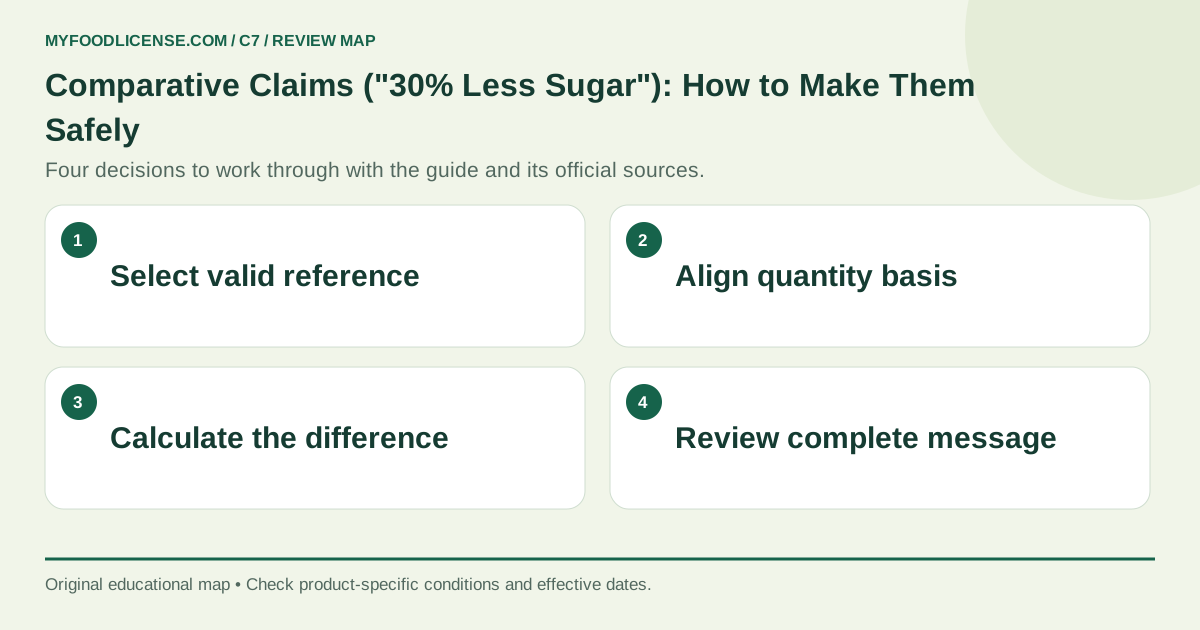
Choose a meaningful reference
Compare foods that meet the applicable comparable-food conditions and use the same quantity basis. Define the reference clearly enough for the claim to be understood. Comparing a prepared product with an unrelated dry concentrate can create a misleading result. Read comparative-claim conditions.
Apply the correct difference rule
The cited rules generally require at least a 30% relative difference for energy or macronutrients, with specified sodium and micronutrient treatment. Sodium uses a 25% difference criterion; micronutrient comparison has a 10% RDA absolute-difference assessment. Read qualifications for the exact claim rather than applying 30% to everything.
Show the calculation
For a hypothetical reference containing 10 g sugar per 100 g and a new product containing 7 g, the relative reduction is (10 − 7) ÷ 10 × 100 = 30%. This calculation demonstrates the percentage only. Reference suitability, evidence, minimum differences and presentation still require review.
Use current and representative evidence
Record the test or other justified data, recipe versions and sampling basis for both products. If the reference or new formula changes, reassess the claim. One historical result from a discontinued reference product should not silently support a current campaign.
Explain the comparison consistently
Keep reference and relevant difference information with the claim as required. Review prominent headlines and qualifiers together. A qualifying comparative claim does not establish that the food is low in sugar, low in fat or healthier overall; those are separate representations. Read nutrient-content criteria.
A worked example
Hypothetical example
A snack reduces sugar from 20 g to 14 g per 100 g. It assesses a 30% reduction claim against the appropriate reference, while recognising that the product does not thereby meet the cited low-sugar limit. Relative improvement and an absolute content claim answer different questions.
Your practical checklist
- Define the valid reference food.
- Use matching quantity and preparation bases.
- Select the nutrient-specific difference rule.
- Keep evidence for both products.
- Record the percentage calculation.
- Review qualifiers and separate health implications.
Download this preparation checklist
For help applying this review to your business, explore our Comparative Claim Review service. Bring the documents described above so the consultation can focus on the decisions still unresolved.
Frequently asked questions
Does 30% less automatically mean low sugar?
No. Low-sugar criteria are separate.
Can I compare unrelated food formats?
Assess the applicable comparable-food conditions and avoid a misleading basis.
Is every comparison subject to 30%?
No. Sodium and micronutrients have specific treatment.
Should I name the reference?
Provide the reference and difference information required for the claim.
Does reformulation affect existing comparison claims?
Yes. Recheck the evidence and calculation after relevant changes.
Official sources and further reading
Checked on 2 October 2026. Gazette notifications and operative directions prevail over compilations and summaries, including this guide.
- Advertising and Claims Regulations compendium, Version IV, 14 December 2022: Nutrition-claim thresholds and general claim conditions. Protein uses RDA-based alternatives, not a universal percentage-of-energy rule.
This guide is general information, not legal advice; the right route depends on your product and business facts. Examples marked hypothetical are illustrations, not client cases. MyFoodLicense is an independent consultancy and is not affiliated with FSSAI; applications are decided by the competent authority on the official FoSCoS portal.