Classification & formulation
FSSAI Food Category System Explained (with Examples)
The FSSAI food-category system helps locate additive permissions and other relevant product provisions. It is not the same as KoB and does not itself approve the recipe. Classify the actual food, processing and intended use before selecting a code.
By the MyFoodLicense team Sources checked 2 min read
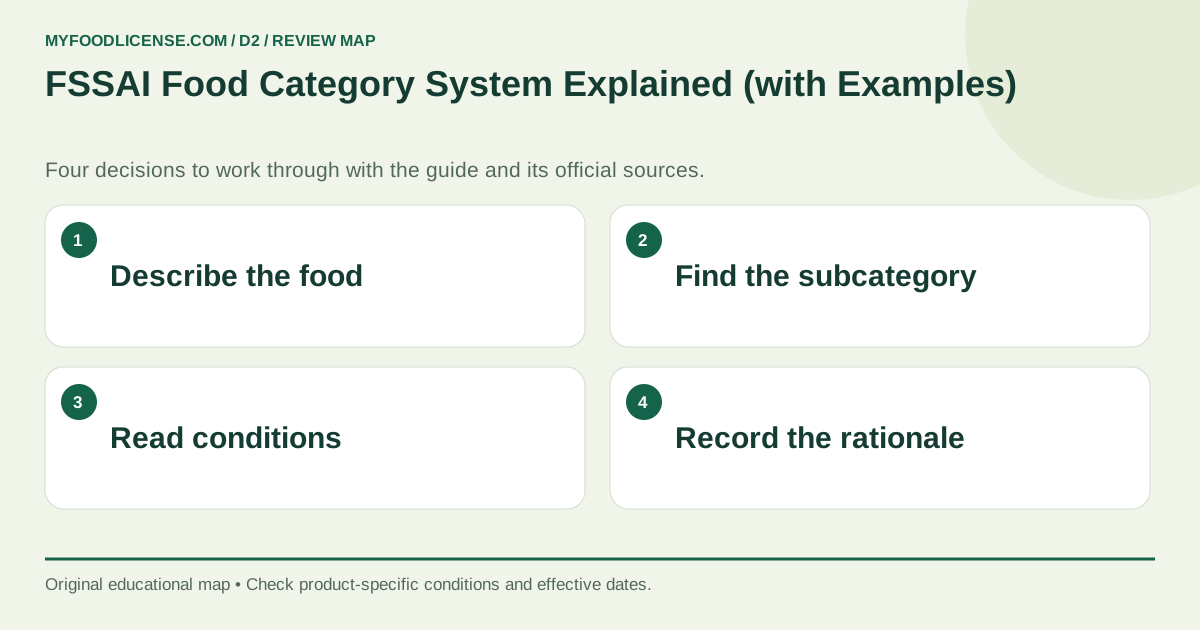
In this guide
Keep three classification questions separate
Product route asks whether the food is standardised, proprietary or specialised. Food category identifies the relevant category and subcategory for provisions such as additives. KoB describes the operator’s activity. Use separate columns in the assessment so one correct selection is not mistaken for all three decisions.
Start from the finished product
Record composition, physical form, processing, preparation instructions and intended consumer use. Dairy products, beverages, cereals, confectionery and supplements can lead to different category structures. A beverage containing a botanical does not automatically become a supplement category. Read Appendix A category structure.
Read the subcategory and notes
Broad headings are only the starting point. Check the most appropriate subcategory, restrictions and footnotes. An additive allowed in one type of beverage may not be allowed across every beverage category. Do not stop at the first search result containing the ingredient name.
Use examples as prompts, not automatic answers
A baked cereal snack, powdered drink mix and vitamin capsule have different classification questions. The exact recipe and presentation can change the answer. Document the reason for the selected code, relevant alternatives and unresolved issues rather than relying on a name-only lookup.
Connect the decision to evidence
Use the selected category to review additives, applicable standards and licensing product entries. Keep the classification record with the formulation and label file. Reopen it when a product changes form, use or composition. Read KoB selection and additive assessment.
A worked example
Hypothetical example
A fruit-flavoured drink team finds an additive under a broad beverage heading. Reading the subcategory and note reveals that permission is narrower than assumed. It records the correct product category and recalculates the formulation against that entry.
Your practical checklist
- Separate product route, food category and KoB.
- Describe form, composition and intended use.
- Read the applicable subcategory.
- Review restrictions and footnotes.
- Document the classification reason.
- Reassess after material product changes.
Download this preparation checklist
For help applying this review to your business, explore our Product Category Identification service. Bring the documents described above so the consultation can focus on the decisions still unresolved.
Frequently asked questions
Is the category code a product approval?
No. It identifies a category used in relevant regulatory provisions.
Is food category the same as KoB?
No. Product category and business activity answer different questions.
Can a marketing name settle the code?
Not reliably. Review the actual food and intended use.
Are all subcategories interchangeable?
No. Permissions and conditions can differ.
When should classification be revisited?
After changes that affect composition, form, process or intended use.
Official sources and further reading
Checked on 2 October 2026. Gazette notifications and operative directions prevail over compilations and summaries, including this guide.
- Food additive permissions: Appendix A: Category-specific additive limits, notes and restrictions; read later amendments.
- FSSAI current regulations directory: Product standards, specialised regulations, original notifications, compendiums and amendment lists.
- Food Products Standards and Food Additives: regulation 2.12, Proprietary Food: Definition, exclusions, permitted ingredients, additive categories and the prohibition on treating a failed standardized product as proprietary.
This guide is general information, not legal advice; the right route depends on your product and business facts. Examples marked hypothetical are illustrations, not client cases. MyFoodLicense is an independent consultancy and is not affiliated with FSSAI; applications are decided by the competent authority on the official FoSCoS portal.