Classification & formulation
Can You Use This Product Name? FSSAI Rules on Naming Food
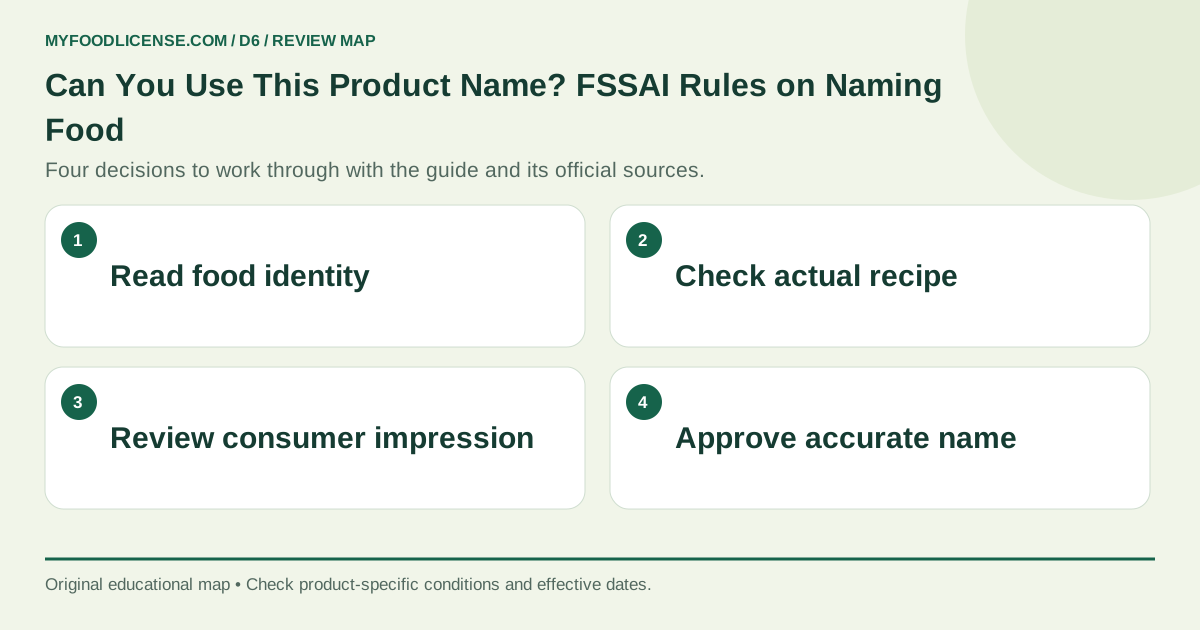
Choose a food name that accurately describes the product and respects any applicable prescribed standard. A brand or fancy name cannot replace the required food identity. Review recipe, process, ingredient emphasis and claims together before printing the name.
By the MyFoodLicense team Sources checked 2 min read
In this guide
Start with the applicable standard
Where a standard prescribes a food identity, compare the actual product with its composition and other conditions. A familiar category word can imply characteristics the recipe does not meet. Check naming provisions rather than relying on how similar products are marketed. Read applicable product standards.
For other foods, describe the true nature
The general labelling requirements address the name of the food. Keep it clear enough to identify what is being sold. A creative brand can sit alongside a suitable description, but should not conceal a plant-based substitute, compound product or specialised category. Read food-name requirements.
Assess words and imagery together
Highlighted ingredients, dairy terms, whole-grain representations and other identity cues may affect the assessment. Check whether percentage declarations or additional descriptions are needed. A picture of fruit can create a different impression from a flavour-only product.
Review trademark and claims separately
Trademark availability is a separate intellectual-property question. Food-rule compliance is not established by registering a name. Terms such as natural, fresh or pure in a brand may need a claims and disclaimer assessment. Read regulated adjectives.
Record the naming decision
Keep the formulation, applicable standard, proposed name and reasoning in the product file. Give designers the approved food identity and brand wording separately. Reopen the decision when reformulation changes the product’s nature or its ability to meet the cited standard.
A worked example
Hypothetical example
A brand proposes a fruit-heavy name for a flavoured product with no matching fruit content. The review assesses the actual food identity, imagery and ingredient emphasis, then chooses a description supported by the formulation rather than the intended brand story.
Your practical checklist
- Identify applicable standard and identity.
- Compare the recipe with that standard.
- Draft an accurate food description.
- Review highlighted ingredients and imagery.
- Assess trademark and claim questions separately.
- Control approved name and formula versions.
Download this preparation checklist
For help applying this review to your business, explore our Product Naming Assessment service. Bring the documents described above so the consultation can focus on the decisions still unresolved.
Frequently asked questions
Can a brand name replace the food name?
No. Assess the required description of the food’s true nature.
Does trademark registration prove food compliance?
No. It is a separate question.
Can any product use a standardised food name?
Check whether it meets the applicable identity and conditions.
Do images affect naming?
They can affect the overall representation and ingredient emphasis.
Should reformulation reopen the name review?
Yes, where the food’s nature or standard compliance changes.
Official sources and further reading
Checked on 2 October 2026. Gazette notifications and operative directions prevail over compilations and summaries, including this guide.
- Labelling and Display Regulations compendium, Version VIII, 9 September 2025: Regulation 5: retail declarations, nutrition, dates and allergens. Read alongside later amendments and directions.
- FSSAI current regulations directory: Product standards, specialised regulations, original notifications, compendiums and amendment lists.
- Advertising and Claims Regulations compendium, Version IV, 14 December 2022: Nutrition-claim thresholds and general claim conditions. Protein uses RDA-based alternatives, not a universal percentage-of-energy rule.
This guide is general information, not legal advice; the right route depends on your product and business facts. Examples marked hypothetical are illustrations, not client cases. MyFoodLicense is an independent consultancy and is not affiliated with FSSAI; applications are decided by the competent authority on the official FoSCoS portal.