Registration & licensing
FSSAI Licence for Food Importers: Central Licence, IEC and Process
A food importer requires the Central-licence route in the 2026 KoB table, irrespective of turnover. Licensing, IEC and shipment clearance are separate requirements. Obtain the correct business authorisation and establish Indian product compliance before placing a commercial import order.
By the MyFoodLicense team Sources checked 3 min read
In this guide
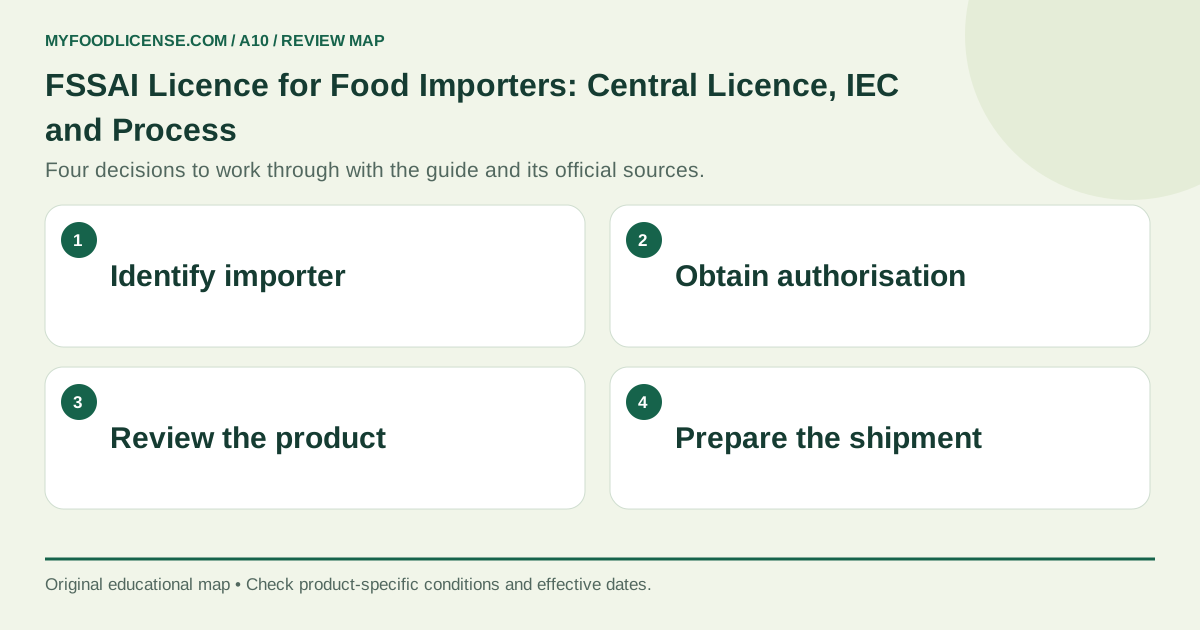
Identify the legal importer
Confirm the entity that will import the food and appear in the Customs and commercial documents. Keep its name and address consistent with the application evidence. A foreign manufacturer’s certificate or an Indian distributor’s unrelated licence does not replace the importer’s own requirements.
Apply under the importer row
The revised table specifies Central licensing for Importer without a turnover threshold. Do not use the general registration band to assess a small first shipment. Prepare the documents requested for the importer route, including the applicable IEC evidence. Importer eligibility; Import Regulations.
IEC and FSSAI have different jobs
IEC is part of the foreign-trade framework administered through DGFT. FSSAI licensing authorises the relevant food-business activity. Customs filing and FSSAI clearance assess the consignment. Make a document matrix showing which evidence serves which purpose, and ensure identifiers refer to the same importing entity.
Check the product before shipment
Review the complete recipe, ingredient specifications, additives, category, claims and Indian label. A product legally sold abroad may need reformulation, approval or different presentation in India. Check remaining shelf life and shipment conditions before accepting dispatch. Read the ingredient-permission comparison.
Continue compliance after the first import
Maintain shipment, batch, supplier and distribution records. Assess annual D1 applicability for the importer and other obligations under the current validity framework. Adding local repacking, storage or distribution operations can create further KoB and premises questions. The importer licence is not a universal permit for every activity. Follow the clearance workflow.
A worked example
Hypothetical example
A company imports a limited batch of premium snacks and expects its low turnover to qualify for registration. The importer row instead leads it to Central licensing. Before shipment, it checks the overseas additive specifications and prepares an India-specific label review, so business licensing and product clearance are addressed separately.
Your practical checklist
- Confirm the legal importer and document identifiers.
- Select the Central importer route.
- Prepare IEC and current application evidence.
- Review the complete product for India.
- Plan labels, shelf life and shipment records.
- Assess D1 and added local activities.
Download this preparation checklist
For help applying this review to your business, explore our Central FSSAI Licence – New service. Bring the documents described above so the consultation can focus on the decisions still unresolved.
Frequently asked questions
Does a small food importer need Central licensing?
Yes. The current Importer row has no turnover restriction.
Is IEC the same as an FSSAI licence?
No. They serve different foreign-trade and food-business purposes.
Does the licence clear every shipment?
No. Consignment clearance remains a separate process.
Can I import a product permitted in Europe?
First establish its compliance with Indian product, ingredient, additive and label requirements.
Do importers file D1?
Licensed importing activities are within the annual-return framework; assess the relevant year and account obligations.
Official sources and further reading
Checked on 2 October 2026. Gazette notifications and operative directions prevail over compilations and summaries, including this guide.
- FoSCoS revised Kind-of-Business eligibility table, 2 April 2026 file: Activity-specific eligibility and annual fees. The PDF itself is marked updated 1 April 2026; relevant rows appear on pages 3, 6, 7 and 9.
- Food Import Regulations compendium, Version III, 12 November 2021: Importer licence and IEC, clearance framework and restricted label rectification. Read with the 2025 amendment and current orders.
- FSSAI licensing FAQs, December 2022: D1 applicability and 31 May baseline deadline; old licensing bands and renewal passages superseded.
This guide is general information, not legal advice; the right route depends on your product and business facts. Examples marked hypothetical are illustrations, not client cases. MyFoodLicense is an independent consultancy and is not affiliated with FSSAI; applications are decided by the competent authority on the official FoSCoS portal.