Registration & licensing
FSSAI Licence for Restaurants, Cafés and Caterers
Restaurants, cafés and caterers need an FSSAI route matched to their actual business. Under the revised 2026 table, catering has a different eligibility row from ordinary restaurant operations. Assess event catering, café service and each premises before choosing registration or a licence.
By the MyFoodLicense team Sources checked 3 min read
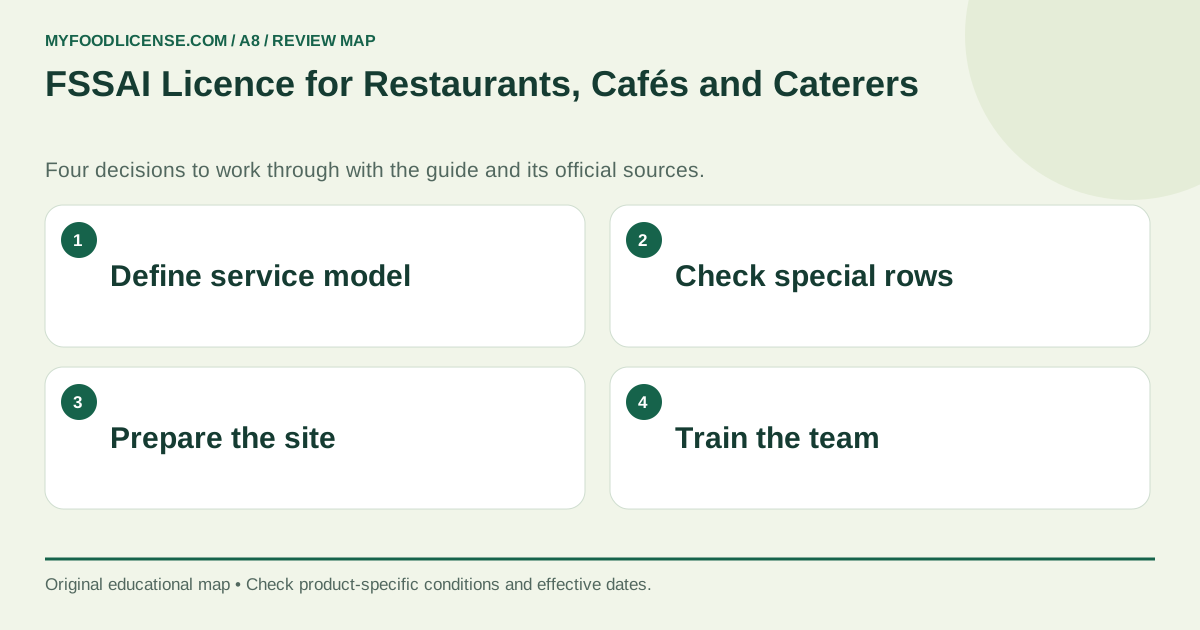
In this guide
Separate service models before comparing turnover
A café serving meals from its own premises, a restaurant delivering orders and a caterer serving organised events can have different activity descriptions. Hotels also have separate criteria. Describe what happens at the kitchen, outlet and event site, and identify the responsible operator for each.
The catering exception matters
The current table places caterers up to ₹50 crore annual turnover in the State-licence row and above that figure in Central licensing; it does not provide the ordinary registration band for catering. Ordinary restaurant rows use the general bands, subject to location or other special conditions. Read the food-service rows.
Prepare a site-specific application
Document the entity, applicant authority, premises and applicable food-service requirements. A shared kitchen or hired event facility should have a clear responsibility arrangement. Do not assume a venue’s certificate automatically authorises an unrelated caterer’s operations. Explain your model before filing a simple restaurant application.
Prepare staff and records for inspection
Use the relevant Schedule 4 requirements for catering and food service. Food receipt, preparation, water, cleaning, personal hygiene and waste handling should work during peak service. Maintain records staff can explain. For State or Central licensed premises, review trained-supervisor requirements. Read the FoSTaC guide.
Review food information and changes
Assess menu claims and any applicable display requirements by establishment type. Selling packaged sauces or retail snacks alongside café meals creates additional product and label questions. A new kitchen, change of operator or added activity should trigger a licensing review before business details drift away from the authorisation.
A worked example
Hypothetical example
A small café starts taking wedding catering contracts. Its owner initially assumes the existing low-turnover registration covers every order. The catering row prompts a review of the added activity and State-licence requirement, while the operating team prepares event transport, holding and service procedures.
Your practical checklist
- Describe café, restaurant, hotel and catering activities accurately.
- Check the catering exception in the current table.
- Assess every kitchen and event responsibility arrangement.
- Prepare Schedule 4 operating controls.
- Check supervisor and display requirements.
- Review packaged-product sales separately.
Download this preparation checklist
For help applying this review to your business, explore our State FSSAI Licence – New service. Bring the documents described above so the consultation can focus on the decisions still unresolved.
Frequently asked questions
Can a small caterer use ordinary registration bands?
The 2026 catering row requires a separate assessment; it does not list the ordinary registration band.
Is a café automatically a restaurant for licensing?
Assess its actual food-service activity and any other operations.
Does a hotel licence depend only on turnover?
No. The current table contains hotel-specific criteria.
Can I sell packaged products from a café?
Assess the relevant activities, product compliance and retail labels before adding them.
Do restaurant employees need hygiene training?
Training and supervision form part of compliance; State and Central licensed businesses should assess FoSTaC supervisor requirements.
Official sources and further reading
Checked on 2 October 2026. Gazette notifications and operative directions prevail over compilations and summaries, including this guide.
- FoSCoS revised Kind-of-Business eligibility table, 2 April 2026 file: Activity-specific eligibility and annual fees. The PDF itself is marked updated 1 April 2026; relevant rows appear on pages 3, 6, 7 and 9.
- FSSAI Food Safety Training and Certification: Food safety supervisors for State and Central licensed businesses; one for every 25 food handlers or part thereof at each premises.
- Licensing amendment notified 23 June 2026: Changes to manufacturing production records and stock-rotation provision. Avoid extending manufacturing record requirements to all businesses.
This guide is general information, not legal advice; the right route depends on your product and business facts. Examples marked hypothetical are illustrations, not client cases. MyFoodLicense is an independent consultancy and is not affiliated with FSSAI; applications are decided by the competent authority on the official FoSCoS portal.