Registration & licensing
FSSAI Licence for Cloud Kitchens (Swiggy & Zomato Requirements)
A cloud kitchen needs FSSAI authorisation for the premises where food is prepared. Delivery-only operation does not remove that requirement. Resolve the kitchen’s regulatory route first, then supply the certificate and business documents requested by Swiggy, Zomato or another platform.
By the MyFoodLicense team Sources checked 3 min read
In this guide
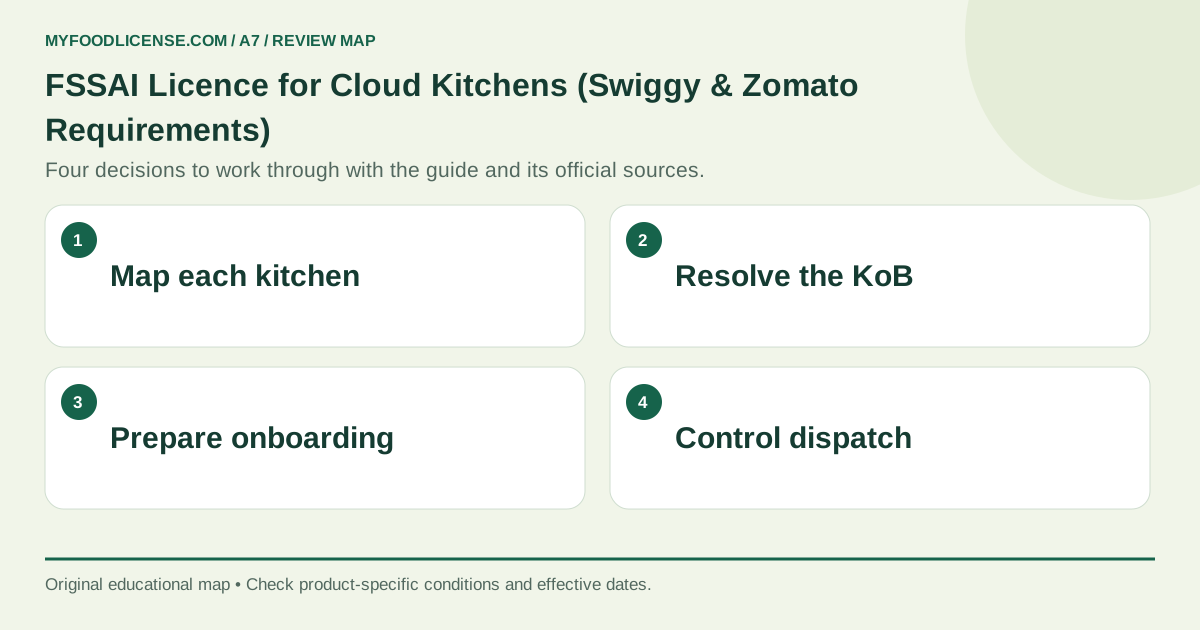
One kitchen can trade through several brands
List the legal operator, preparation address, menus and virtual brand names. Platform storefronts do not establish separate licensed premises. Conversely, opening a second kitchen creates a premises question even when the same brand and menu are used. Keep site addresses consistent across the certificate, partner account and invoice records.
Use the correct food-service row
Choose the actual KoB and assess the revised 2026 criteria. A restaurant-style delivery kitchen and an event caterer should not automatically receive the same registration recommendation. The number of online listings is not a licence category. Check the current eligibility table.
Prepare onboarding documents
Swiggy’s partner page asks applicants to keep an FSSAI licence copy, menu, bank details, GSTIN and PAN ready. That is a platform list; tax applicability and the correct FSSAI route still need their own assessment. Platform requests can change, so confirm the current request in the official partner flow. Swiggy partner onboarding.
Manage the delivery journey
Map ingredient receipt, cooking, holding, packing and handover. Choose packaging and handling controls appropriate to hot meals, chilled desserts or other products. Record complaints and investigate temperature, leakage or contamination issues. A food-safety plan should include dispatch practices, rather than stop at the moment cooking ends.
Keep listings and certificates aligned
Use accurate food descriptions and claims, avoid misleading images or ingredient omissions, and update the platform when regulatory details change. If the certificate has perpetual validity but an onboarding form demands an expiry date, raise a documented support query. Do not invent a date to pass validation. Understand the 2026 validity change.
A worked example
Hypothetical example
A cloud kitchen operates two virtual brands from one site and then rents a second production unit. The owner maps the existing authorisation to the first site and assesses a separate route for the new unit. Each partner listing is linked to the correct preparation location, so customers and platforms receive consistent business information.
Your practical checklist
- Map legal operator, brands and each preparation site.
- Assess the correct food-service KoB.
- Gather the current official partner document list.
- Review holding, packing and delivery controls.
- Match platform details to the certificate.
- Escalate certificate-date validation issues with evidence.
Download this preparation checklist
For help applying this review to your business, explore our State FSSAI Licence – New service. Bring the documents described above so the consultation can focus on the decisions still unresolved.
Frequently asked questions
Does a delivery-only kitchen need FSSAI authorisation?
Yes. The preparation premises and actual business activity determine the route.
Does every virtual brand need a separate licence?
Assess the operator, premises and endorsed activities; a storefront name alone does not settle the licensing question.
Can one certificate cover two kitchen addresses?
Do not assume so. Each operating premises needs an appropriate assessment.
Does Swiggy approval equal FSSAI approval?
No. Platform onboarding and regulatory authorisation are separate decisions.
What if the platform wants an expiry date?
Provide the current certificate and ask official partner support how its form handles perpetual-validity records.
Official sources and further reading
Checked on 2 October 2026. Gazette notifications and operative directions prevail over compilations and summaries, including this guide.
- FoSCoS revised Kind-of-Business eligibility table, 2 April 2026 file: Activity-specific eligibility and annual fees. The PDF itself is marked updated 1 April 2026; relevant rows appear on pages 3, 6, 7 and 9.
- Swiggy restaurant partner onboarding: Platform document list: FSSAI copy, menu, bank details, GSTIN and PAN; tax applicability separately assessed.
- FSSAI implementation FAQs issued 27 March 2026: Operational guidance on fee prepayment, migration, unchanged licence numbers and licences issued on or after 1 April 2026.
This guide is general information, not legal advice; the right route depends on your product and business facts. Examples marked hypothetical are illustrations, not client cases. MyFoodLicense is an independent consultancy and is not affiliated with FSSAI; applications are decided by the competent authority on the official FoSCoS portal.