Registration & licensing
FSSAI Licence for E-commerce and Online Food Sellers (Amazon, Flipkart, Quick Commerce)
An online food seller must assess its own food-business activities, while an e-commerce food platform has a separate Central-licensing row. Selling through Amazon or another marketplace does not automatically make every seller the platform operator. Manufacturing, relabelling, storage and import activities still matter.
By the MyFoodLicense team Sources checked 3 min read
In this guide
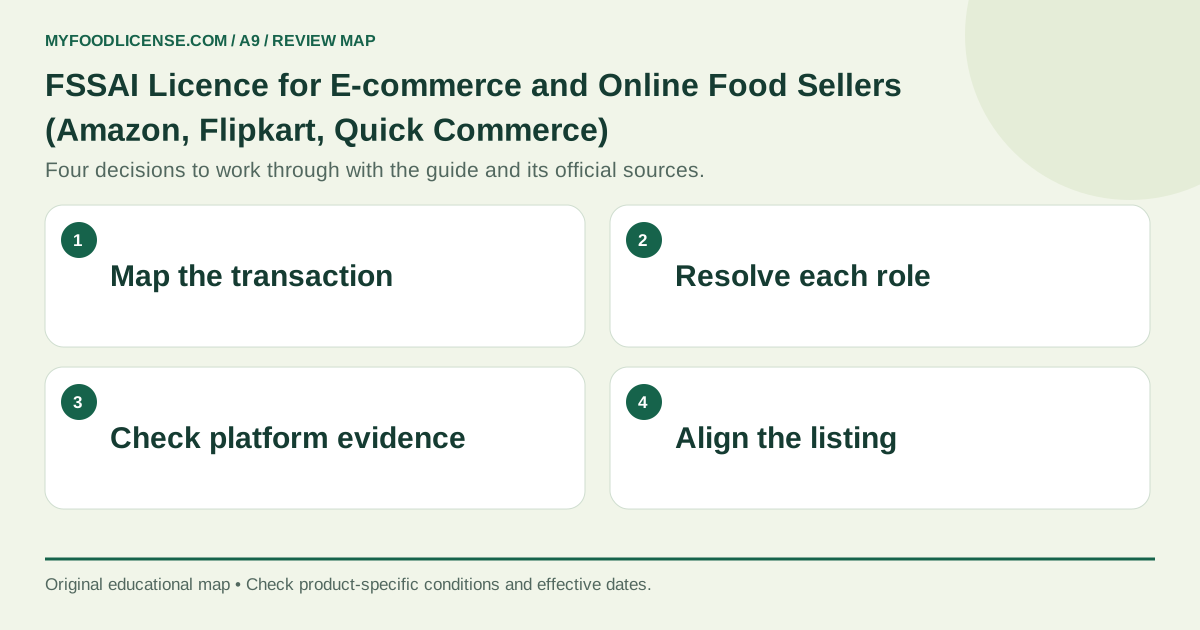
Distinguish seller from platform
Draw the transaction: who owns the website or marketplace, who sells the food, who manufactures it and where stock is stored. An online presence is a sales channel, but operating an e-commerce food business can create a specific KoB requirement. Resolve that boundary using the actual model rather than a blanket online-equals-Central rule.
Check every actual activity
The 2026 table lists E-Commerce for Central licensing without a turnover restriction. Other roles, such as ordinary retail, specialised manufacturing or importing, have their own rows. A D2C brand commissioning production may need a relabeller assessment even though it has no factory. Check activity-specific eligibility.
Prepare marketplace evidence
Amazon’s official grocery page requires FSSAI licence details and a declaration of compliance with food-safety standards. Its organic-product requirements create a separate certification question. Keep the food authorisation, product evidence and platform documents consistent. A platform’s approval does not establish that every claim or ingredient is compliant. Amazon grocery requirements.
Treat the listing as food information
Review title, pack images, ingredients, allergens, nutrition claims and business information across the listing and physical pack. Use the online declaration requirements that apply to your sale. Do not hide a required warning on an image that customers cannot read or use an outdated artwork version to advertise current stock.
Plan warehouse and stock changes
Identify who operates fulfilment facilities and who controls storage and shelf-life checks. New warehouses, outsourced storage and quick-commerce channels need an operational responsibility review. Assign someone to update regulatory certificates and product content when the recipe, pack or manufacturing site changes. Use the D2C compliance checklist.
A worked example
Hypothetical example
A snack brand buys contract-manufactured packs and sells through its own site and a marketplace. It maps the manufacturer, brand-owner activities, website operation and fulfilment sites separately. That assessment identifies the licensing questions and the data each listing must reflect, rather than assuming the marketplace’s licence covers the brand.
Your practical checklist
- Map seller, website operator, manufacturer and warehouses.
- Resolve e-commerce and other KoBs separately.
- Prepare current marketplace documents.
- Match product listings to approved physical labels.
- Define storage and shelf-life responsibilities.
- Create a process for updating every channel.
Download this preparation checklist
For help applying this review to your business, explore our Marketplace Compliance Review service. Bring the documents described above so the consultation can focus on the decisions still unresolved.
Frequently asked questions
Does Amazon’s licence cover my business?
No. Assess your own activities and premises independently.
Do all online sellers need a Central licence?
Do not generalise. E-commerce operators have a special row; individual sellers require an assessment of their own model.
Does a website need label information?
Assess applicable online declaration requirements and ensure customers receive accurate food information.
Can a home business sell online?
Assess licensing, product compliance and current platform eligibility before listing.
Does organic certification matter online?
Yes. Organic claims and relevant platform documentation require a separate certification assessment.
Official sources and further reading
Checked on 2 October 2026. Gazette notifications and operative directions prevail over compilations and summaries, including this guide.
- FoSCoS revised Kind-of-Business eligibility table, 2 April 2026 file: Activity-specific eligibility and annual fees. The PDF itself is marked updated 1 April 2026; relevant rows appear on pages 3, 6, 7 and 9.
- Amazon India grocery seller requirements: Platform requests FSSAI details and food-safety declaration; do not use third-party seller-forum posts as authoritative policy.
- Labelling and Display Regulations compendium, Version VIII, 9 September 2025: Regulation 5: retail declarations, nutrition, dates and allergens. Read alongside later amendments and directions.
This guide is general information, not legal advice; the right route depends on your product and business facts. Examples marked hypothetical are illustrations, not client cases. MyFoodLicense is an independent consultancy and is not affiliated with FSSAI; applications are decided by the competent authority on the official FoSCoS portal.