Launching a food brand
D2C Food Brand Compliance Checklist (Website, Marketplaces, Labels)
A D2C food brand needs consistent regulatory information across the product, label, website, marketplace and fulfilment operations. Review the actual business roles and online declaration requirements. A compliant printed pack does not automatically make every digital claim or warehouse arrangement compliant.
By the MyFoodLicense team Sources checked 2 min read
In this guide
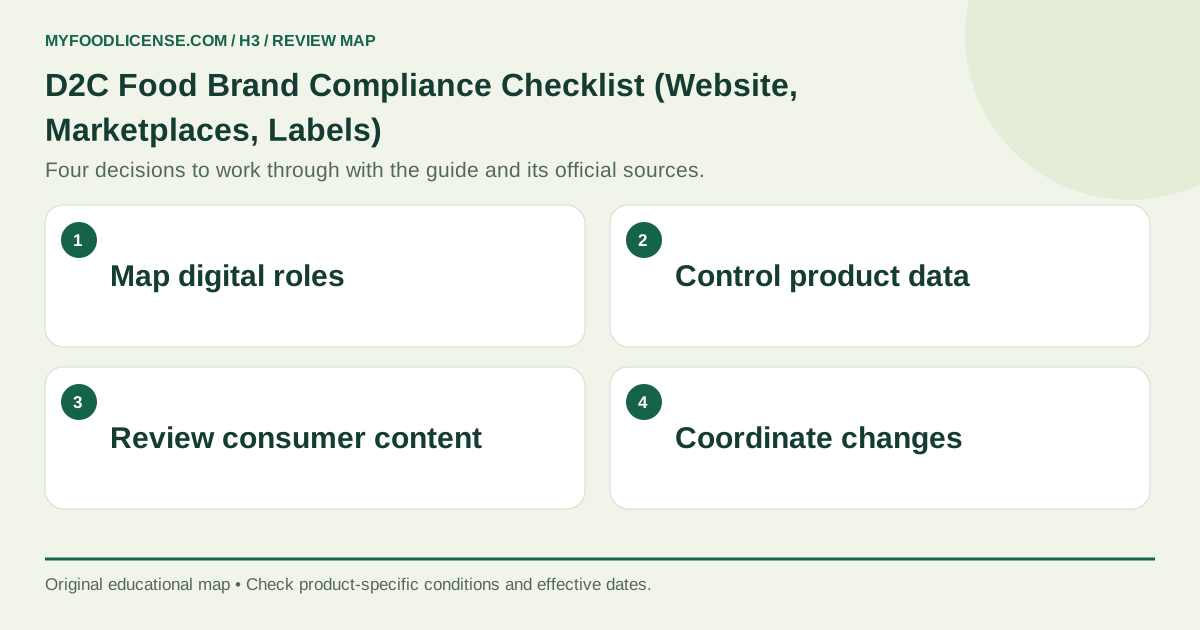
Map the online business
Identify brand owner, website operator, manufacturer, seller, importer and fulfilment sites. Assess the relevant KoBs and special e-commerce row against the actual model. A sales channel label such as D2C does not explain every activity. Read current eligibility.
Create one controlled product record
Keep formula, category, ingredient and allergen copy, nutrition, claim decisions, certificates and artwork versions together. Publish channel information from that record. Avoid separate spreadsheets in which marketing silently changes claims or omits warnings.
Review website and listing information
Assess applicable mandatory online food information and clear product presentation. Check titles, descriptions, pack images, testimonials and FAQ copy. Ensure customers can read relevant information before purchase under the applicable requirements. Read e-commerce label-information provisions.
Control advertising and fulfilment
Review ads and creator scripts against approved claims. Map storage, shelf life, dispatch and complaint responsibilities at warehouses and delivery partners. Refund or customer-service procedures do not replace investigation of a possible food-safety issue.
Keep changes coordinated
After a recipe, supplier, factory or pack change, update every affected channel and remove obsolete assets. Confirm certificates and catalogue data remain current. When perpetual-validity records cause platform form issues, obtain documented support instructions rather than inventing dates. Read validity changes.
A worked example
Hypothetical example
A brand removes a sweetened ingredient and updates its physical pack, but the old website still advertises a different nutrition profile. The change register identifies every listing and campaign asset affected, keeping the digital product record aligned with the released formula.
Your practical checklist
- Map online operator and supply-chain roles.
- Maintain controlled product source data.
- Review required website and listing information.
- Approve claims and creator content.
- Define fulfilment and incident responsibilities.
- Update all channels after material changes.
Download this preparation checklist
For help applying this review to your business, explore our Website Regulatory Review service. Bring the documents described above so the consultation can focus on the decisions still unresolved.
Frequently asked questions
Does D2C automatically determine my licence?
No. Assess actual activities and the e-commerce role.
Do website FAQs need claim review?
Yes. They can make food representations too.
Can old pack images stay online?
Review whether they accurately represent the current product.
Does customer service replace food-safety investigation?
No. Complaints can require product and batch assessment.
Can I invent an expiry date for a portal?
No. Seek documented platform handling for the actual certificate.
Official sources and further reading
Checked on 2 October 2026. Gazette notifications and operative directions prevail over compilations and summaries, including this guide.
- FoSCoS revised Kind-of-Business eligibility table, 2 April 2026 file: Activity-specific eligibility and annual fees. The PDF itself is marked updated 1 April 2026; relevant rows appear on pages 3, 6, 7 and 9.
- Labelling and Display Regulations compendium, Version VIII, 9 September 2025: Regulation 5: retail declarations, nutrition, dates and allergens. Read alongside later amendments and directions.
- Advertising and Claims Regulations compendium, Version IV, 14 December 2022: Nutrition-claim thresholds and general claim conditions. Protein uses RDA-based alternatives, not a universal percentage-of-energy rule.
- FSSAI implementation FAQs issued 27 March 2026: Operational guidance on fee prepayment, migration, unchanged licence numbers and licences issued on or after 1 April 2026.
This guide is general information, not legal advice; the right route depends on your product and business facts. Examples marked hypothetical are illustrations, not client cases. MyFoodLicense is an independent consultancy and is not affiliated with FSSAI; applications are decided by the competent authority on the official FoSCoS portal.