Registration & licensing
FSSAI for Street Food Vendors, Hawkers and Seasonal Businesses
Street vendors and hawkers should check the applicable registration position, hygiene requirements and local permissions. The 2026 licensing amendment recognises street vendors registered under the Street Vendors Act, 2014 as deemed registered under the food framework, while keeping hygiene obligations.
By the MyFoodLicense team Sources checked 3 min read
In this guide
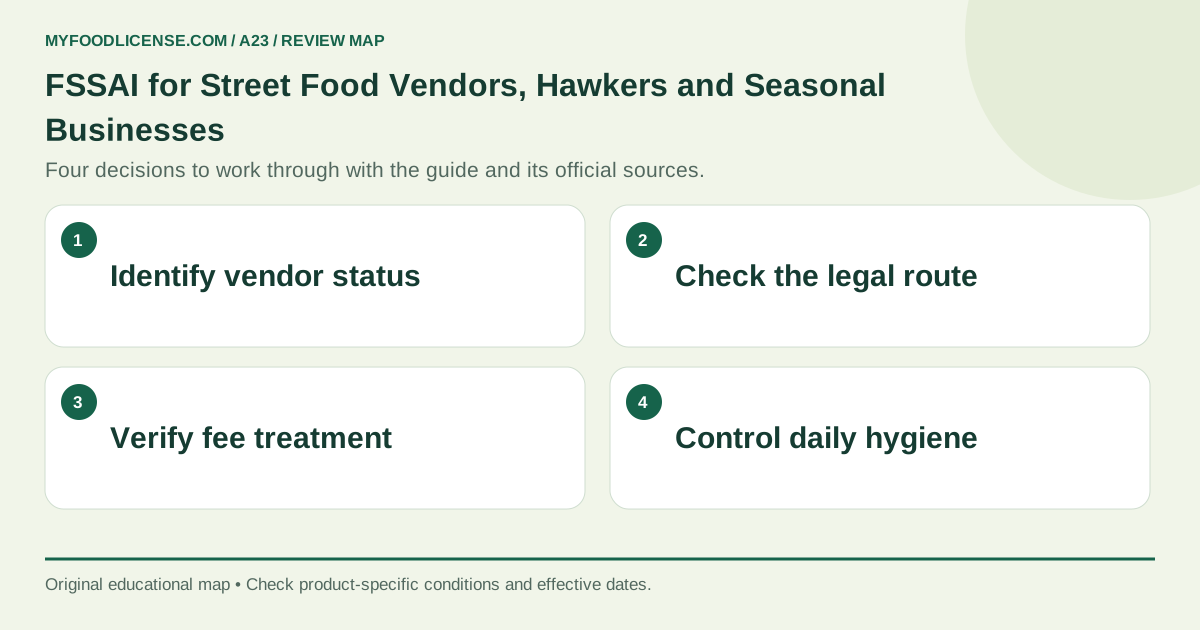
Identify the vendor’s actual status
Record whether the business is a mobile hawker, a fixed stall, an occasional event seller or another food-service model. Check the actual street-vendor registration and location permissions. Selling at a seasonal market does not automatically establish registration under the Street Vendors Act.
Understand deemed registration
The March 2026 amendment provides deemed registration for street vendors registered under the 2014 Act. Keep evidence that establishes the relevant status. Do not turn that specific rule into a claim that all street food or all temporary businesses are exempt. Read the amendment.
Check the route and fee where an application is needed
Use the current KoB table and official workflow for the actual business. The revised table records a registration-fee waiver for listed hawkers, with the stated earlier implementation date. A fee waiver is different from exemption from hygiene or permission to select an inaccurate KoB. Review hawker eligibility.
Control practical food-safety risks
Protect food from dust, pests and contamination; use safe water and appropriate utensils; plan hand hygiene and waste disposal. Separate raw and ready-to-eat food and manage holding conditions. A small mobile setup needs workable controls that staff can apply throughout service.
Prepare for seasonal and location changes
Check temporary-site arrangements, local permissions and any change in operator or activity. Keep supplier and purchase records and a way to handle customer complaints. A seasonal operation should record opening and closure decisions rather than assume the calendar removes its obligations.
A worked example
Hypothetical example
A vendor has a town-vending registration and checks whether it establishes the deemed-registration position. A neighbouring pop-up stall has only an event organiser’s receipt, so it assesses its own route. Both vendors still plan safe water, food protection and waste controls.
Your practical checklist
- Record vendor type and operating location.
- Check genuine Street Vendors Act registration.
- Assess deemed registration or application route.
- Verify any applicable fee waiver.
- Prepare water, hygiene and holding controls.
- Check seasonal and local-permission arrangements.
Download this preparation checklist
For help applying this review to your business, explore our Basic FSSAI Registration service. Bring the documents described above so the consultation can focus on the decisions still unresolved.
Frequently asked questions
Are all street vendors exempt from FSSAI?
No. The 2026 deemed-registration rule applies to the stated Street Vendors Act registration situation.
Does a hawker fee waiver remove hygiene duties?
No. Fee treatment and food-safety obligations are separate.
Is an event receipt a street-vendor registration?
Do not assume so. Check the actual legal status and document.
Do seasonal stalls need an assessment?
Yes. Review the activity, premises and temporary arrangements.
What records can a small vendor keep?
Simple supplier, purchase, cleaning and complaint records can support traceability and daily controls.
Official sources and further reading
Checked on 2 October 2026. Gazette notifications and operative directions prevail over compilations and summaries, including this guide.
- Licensing and Registration Amendment Regulations, notification dated 10 March 2026: Regulation 2.1.7: perpetual validity, annual fees, applicable returns and suspension; regulation 2.1.17: risk-based inspections.
- FoSCoS revised Kind-of-Business eligibility table, 2 April 2026 file: Activity-specific eligibility and annual fees. The PDF itself is marked updated 1 April 2026; relevant rows appear on pages 3, 6, 7 and 9.
This guide is general information, not legal advice; the right route depends on your product and business facts. Examples marked hypothetical are illustrations, not client cases. MyFoodLicense is an independent consultancy and is not affiliated with FSSAI; applications are decided by the competent authority on the official FoSCoS portal.