Registration & licensing
FSSAI Registration for Home Bakers and Home Kitchens
A home baker or home kitchen selling food needs the appropriate FSSAI authorisation for the actual activity. Operating from a residence, taking orders on WhatsApp or selling only at weekends does not by itself create an exemption. Start with the product, premises and current KoB criteria.
By the MyFoodLicense team Sources checked 3 min read
In this guide
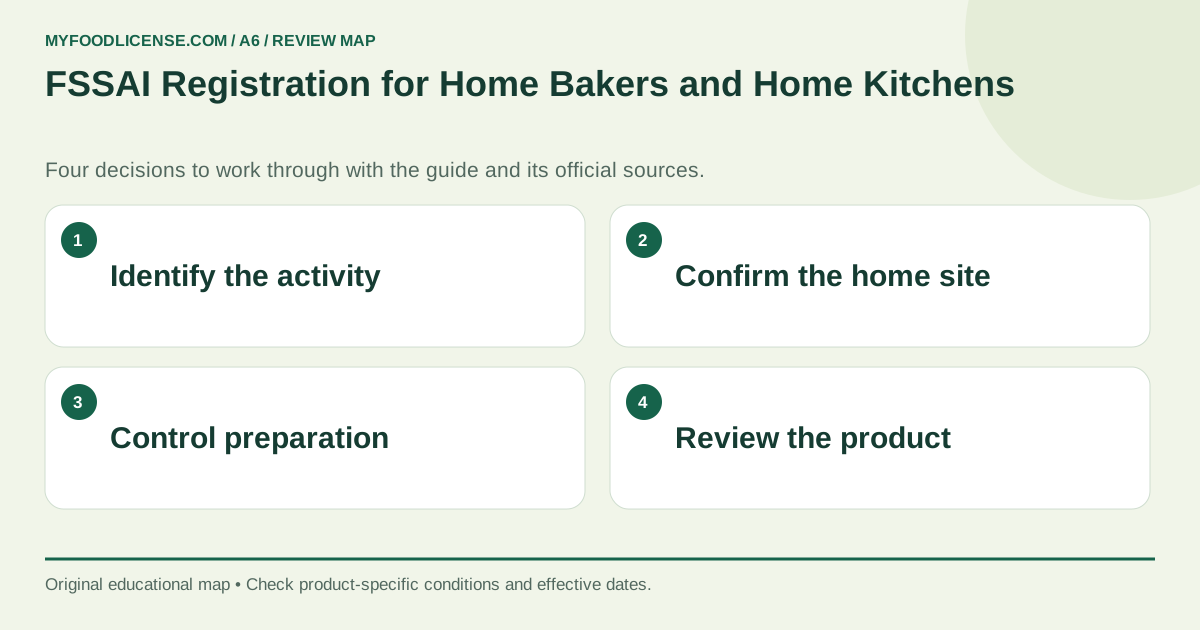
Describe what the home business actually does
Separate preparing fresh meals, baking packaged products, catering events and reselling another manufacturer’s packs. These activities can lead to different KoB selections and duties. Write down where ingredients are stored, where production occurs and how products reach customers. A residential address should accurately identify the food premises.
Check the current route
The general 2026 registration band extends to annual turnover up to ₹1.5 crore, but activity-specific rows can override the general bands. Catering and specialised manufactured foods are examples requiring a separate check. Do not select a registration route solely because the business has few orders. Use the revised KoB table.
Prepare documents that match the home premises
Gather the applicant’s identity, contact details and the evidence requested for the selected registration or licensing route. Establish the right to use the premises. Where another person owns the property, address that fact through appropriate supporting documents rather than changing the operating address to an unrelated shop.
Control hygiene in a shared kitchen
Separate business stock from household supplies, protect prepared food from pets and pests, manage cleaning and allergens, and choose storage suitable for the product. A domestic refrigerator is not evidence that every product remains safe through delivery. Plan holding time, transport and handling instructions together. Schedule 4 contains the applicable hygiene framework. Read the hygiene guide.
Review what customers receive
A prepacked cake mix, cookie pouch or jar sold as a retail product needs a category-specific label review. Freshly prepared order fulfilment needs its own presentation and information assessment. Do not reuse another bakery’s nutrition panel, shelf life or licence number. Keep the product identity, responsible business and customer claims accurate. Review the labelling guide.
A worked example
Hypothetical example
A home baker sells custom cakes and also launches sealed cookie pouches for local shops. The owner reviews both activities, the packaging and the retail distribution arrangement. The cookie shelf life and allergen statement are assessed separately from the made-to-order cake menu. One business address does not make all product information interchangeable.
Your practical checklist
- List meals, baking, catering and resale activities separately.
- Use the current eligibility row.
- Prepare evidence for the actual residence used.
- Create cleaning, storage and allergen controls.
- Assess labels for prepacked retail products.
- Keep order, supplier and complaint records.
Download this preparation checklist
For help applying this review to your business, explore our Basic FSSAI Registration service. Bring the documents described above so the consultation can focus on the decisions still unresolved.
Frequently asked questions
Do home bakers need FSSAI registration?
They need the appropriate authorisation for their food business; determine whether registration or a licence applies.
Does selling through Instagram change this?
The sales channel does not remove the underlying food-business obligations.
Can I use my home address?
Use the actual food premises and provide the evidence required for that premises and route.
Do all homemade products need the same label?
No. Product category, packaging and mode of sale affect the applicable declarations.
Is occasional selling exempt?
A small or intermittent business should assess the applicable route rather than assume an exemption.
Official sources and further reading
Checked on 2 October 2026. Gazette notifications and operative directions prevail over compilations and summaries, including this guide.
- FoSCoS revised Kind-of-Business eligibility table, 2 April 2026 file: Activity-specific eligibility and annual fees. The PDF itself is marked updated 1 April 2026; relevant rows appear on pages 3, 6, 7 and 9.
- FoSCoS documents required for a registration certificate: Photograph, government-issued photo identification and conditional business-address proof.
- Labelling and Display Regulations compendium, Version VIII, 9 September 2025: Regulation 5: retail declarations, nutrition, dates and allergens. Read alongside later amendments and directions.
This guide is general information, not legal advice; the right route depends on your product and business facts. Examples marked hypothetical are illustrations, not client cases. MyFoodLicense is an independent consultancy and is not affiliated with FSSAI; applications are decided by the competent authority on the official FoSCoS portal.