Registration & licensing
FSSAI Licence for Tiffin Services, Mess and Canteens
A tiffin service, mess and canteen should select the KoB that matches how meals are prepared and supplied. The 2026 table distinguishes home-based canteens or dabbawalas, clubs and canteens, and caterers. Do not apply one turnover answer to all three models.
By the MyFoodLicense team Sources checked 3 min read
In this guide
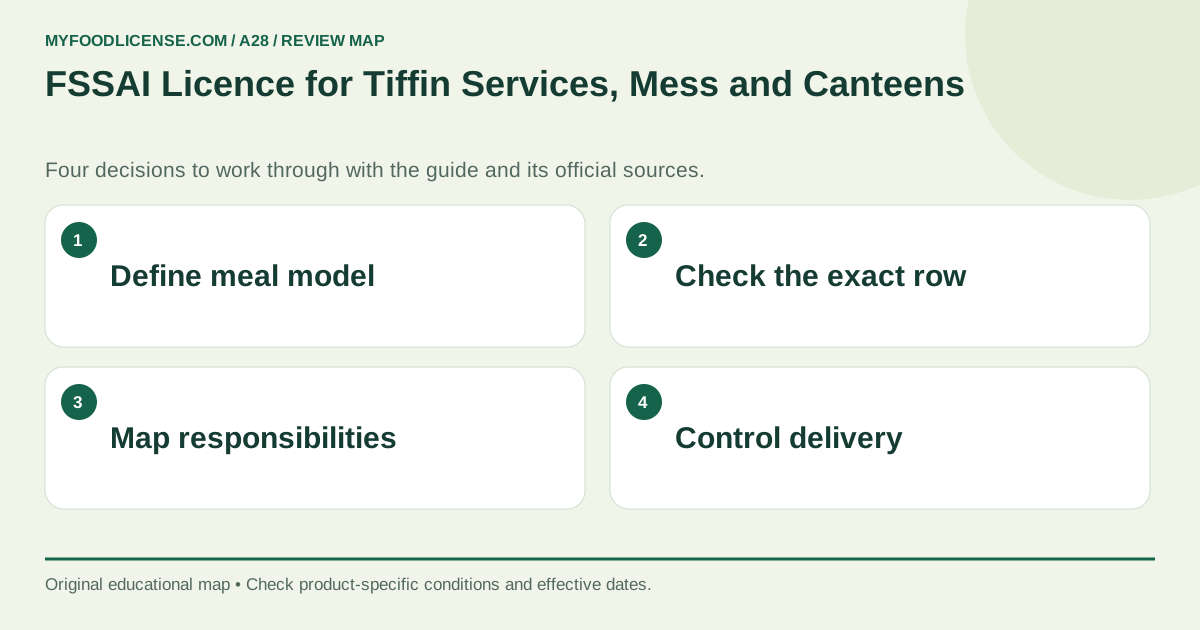
Describe the meal-service arrangement
Record the kitchen, operator, customers and service locations. Daily subscriptions from a home kitchen differ from an institutional canteen or organised event catering. A mess serving residents may share facilities with a hostel, but the responsible food-business operator still needs identification.
Read the relevant 2026 row
Home-based canteens/dabbawalas and clubs/canteens have their own eligibility rows. The revised table lists registration up to ₹1.5 crore and a State route above that band for those rows; do not invent a generic Central turnover row where none is shown. Caterers have a separate State/Central pattern. Check the exact meal-service row.
Prepare the premises and operator file
Use the actual kitchen and supporting documents for the selected route. If a hostel or institution engages a contractor, map the contractor and facility responsibilities. Neither the institution’s registration nor a commercial agreement alone settles every food-business authorisation question.
Control preparation and delivery
Plan safe water, ingredient storage, cooking, holding, cleaning and dispatch. Reusable containers require a workable cleaning and return arrangement. For subscriptions, record customer restrictions and communicate allergen-related information accurately rather than making unsupported allergen-free promises.
Review expansion before accepting new work
A service moving from home lunches to institutional catering, opening another kitchen or selling packaged snacks should revisit its KoB and premises assessment. Keep the authorised scope, menu representations and operating controls aligned. Read the catering guide and prepare an FSMS plan.
A worked example
Hypothetical example
A home lunch service wins a contract to operate a college canteen and provide event catering. It assesses the new institutional site and catering role instead of presenting its original home-kitchen registration as covering every arrangement. The meal-handling plan also expands to transport and event holding.
Your practical checklist
- Map operator, kitchen and service locations.
- Distinguish dabbawala, canteen and catering models.
- Read the exact current eligibility row.
- Prepare premises and contract evidence.
- Control food holding, containers and delivery.
- Review new sites and added packaged products.
Download this preparation checklist
For help applying this review to your business, explore our Basic FSSAI Registration service. Bring the documents described above so the consultation can focus on the decisions still unresolved.
Frequently asked questions
Does a tiffin service need authorisation?
Assess the appropriate route for its actual meal-service activity.
Are canteens and caterers the same KoB?
No. The current table distinguishes them.
Does a hostel’s licence cover its contractor?
Review the operator and premises arrangement rather than assuming it does.
Can I use one answer for all turnover levels?
Read the exact row; do not add a Central band absent from that row.
Do subscriptions remove food-safety duties?
No. Regular meal supply still requires appropriate hygiene, handling and information controls.
Official sources and further reading
Checked on 2 October 2026. Gazette notifications and operative directions prevail over compilations and summaries, including this guide.
- FoSCoS revised Kind-of-Business eligibility table, 2 April 2026 file: Activity-specific eligibility and annual fees. The PDF itself is marked updated 1 April 2026; relevant rows appear on pages 3, 6, 7 and 9.
- FoSCoS documents required for a registration certificate: Photograph, government-issued photo identification and conditional business-address proof.
- FSSAI Food Safety Training and Certification: Food safety supervisors for State and Central licensed businesses; one for every 25 food handlers or part thereof at each premises.
This guide is general information, not legal advice; the right route depends on your product and business facts. Examples marked hypothetical are illustrations, not client cases. MyFoodLicense is an independent consultancy and is not affiliated with FSSAI; applications are decided by the competent authority on the official FoSCoS portal.