Claims & advertising
"Immunity Booster" and Other Risky Claims Brands Still Make
Immunity booster is a health representation that needs a precise regulatory and evidence assessment. A permitted vitamin or botanical does not automatically authorise a broad immunity promise. Claims implying prevention, treatment or cure of disease are especially problematic for food products.
By the MyFoodLicense team Sources checked 2 min read
In this guide
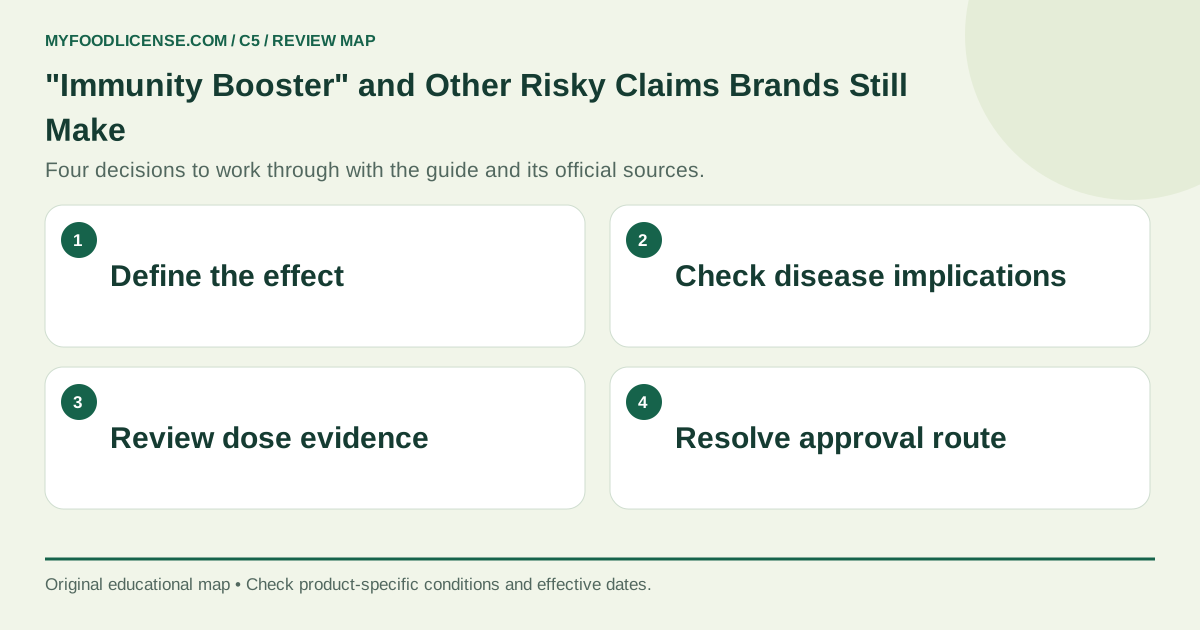
Translate the phrase into a testable claim
Write what the consumer is being told will happen, for whom and at what dose. Broad words such as protects, prevents infections or boosts defence can imply different effects. Review images, medical references and testimonials alongside the headline.
Separate nutrient function from disease protection
A statement about an established normal nutrient function is not interchangeable with a promise of immunity against illness. Apply the allowed-claim conditions and relevant evidence to the exact wording. Do not extend a general nutrient role to a quantified reduction in infections. Read health-claim provisions.
Check product and dose relevance
Review the finished product, recommended usage, nutrient or ingredient amounts and stability. An ingredient study at a different dose or on another population may not support the proposed food claim. A blend’s branding is not evidence that the complete product has the claimed effect.
Identify approval requirements
Some claims require prior approval or a specific notification route. The 2026 ePAAS order includes relevant claims and product approvals in its single-window framework. Establish the applicable route before relying on a filed dossier as permission to advertise. Read the current order.
Review vulnerable audiences and campaigns
Claims aimed at children, pregnant consumers or people managing disease need an especially careful category and evidence assessment. Give marketing partners controlled wording and review translations. A not-for-medicinal-use disclaimer does not repair a contradictory disease promise. Read supplement claims.
A worked example
Hypothetical example
A vitamin drink proposes prevents seasonal infections after its supplier shares a general review article. The brand assesses the exact dose and claim, rejects the leap from nutrient function to disease prevention and prepares a supported wording decision before campaign design.
Your practical checklist
- Define the claimed effect precisely.
- Review implied disease representations.
- Check product, dose and population relevance.
- Assess evidence quality and applicability.
- Identify any approval or notification route.
- Control translations and campaign versions.
Download this preparation checklist
For help applying this review to your business, explore our Health Claim Review service. Bring the documents described above so the consultation can focus on the decisions still unresolved.
Frequently asked questions
Is immunity booster automatically allowed?
No. It needs a claim-specific regulatory and evidence assessment.
Does a vitamin make the claim valid?
Not by itself. Product amounts, wording and conditions matter.
Can a disclaimer fix a cure promise?
No. Review the complete contradictory impression.
Do ingredient studies prove a blended product claim?
Not automatically. Establish relevance to the product and claimed use.
Are children’s claims assessed differently?
Age, product category and evidence relevance can materially affect the assessment.
Official sources and further reading
Checked on 2 October 2026. Gazette notifications and operative directions prevail over compilations and summaries, including this guide.
- Advertising and Claims Regulations compendium, Version IV, 14 December 2022: Nutrition-claim thresholds and general claim conditions. Protein uses RDA-based alternatives, not a universal percentage-of-energy rule.
- FSSAI order of 6 May 2026: ePAAS single-window approvals: Exclusive ePAAS submission from 1 June 2026 for specified approval and notification routes.
- Operationalised supplement provisions, 29 March 2022 direction: Definitions, schedules, dosage, category-specific warnings and product requirements; read with later directions.
This guide is general information, not legal advice; the right route depends on your product and business facts. Examples marked hypothetical are illustrations, not client cases. MyFoodLicense is an independent consultancy and is not affiliated with FSSAI; applications are decided by the competent authority on the official FoSCoS portal.