Claims & advertising
Influencer Marketing for Food Brands: The Rules on Claims
Food claims remain subject to the applicable rules when delivered by an influencer. Paid or other material connections also need appropriate disclosure under the relevant advertising framework. A testimonial cannot establish a health effect that the brand’s product evidence does not support.
By the MyFoodLicense team Sources checked 2 min read
In this guide
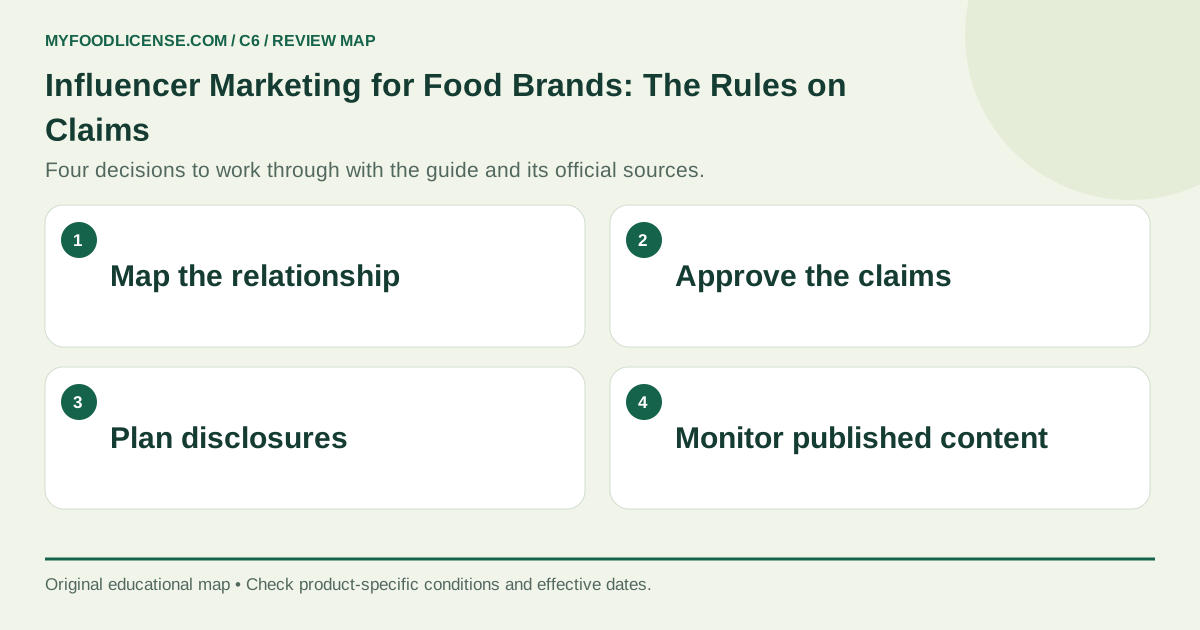
Map the campaign relationship
Record payment, free products, affiliate commissions and other material connections. Identify the brand, agency, influencer and approval owner. A campaign agreement should define who checks disclosure and claim wording before content is posted.
Review statutory food claims first
Apply the Advertising and Claims rules to spoken words, captions, visuals, product names and implied benefits. An influencer saying it is my experience does not remove the claim assessment. Avoid treatment or cure messages and unsupported before-and-after representations. Read food advertising requirements.
Apply disclosure guidance accurately
ASCI’s influencer guidance addresses material-connection disclosures and how they are presented. It also includes specialist requirements for health advice and qualification disclosure. Identify ASCI as a self-regulatory body; its guidance supplements rather than replaces statutory food and consumer-protection duties. Read ASCI influencer guidelines.
Give creators a controlled brief
Supply approved statements, necessary conditions, prohibited extensions, disclosure requirements and the evidence contact. Explain that improvised claims and translations need review. Short video, live sessions and stories all need a plan for visible or audible information appropriate to the format.
Monitor and correct the published content
Archive the final post and monitor changes, captions and reused clips. Establish a process to correct inaccurate material promptly and preserve the decision record. Deleting a campaign internally does not ensure that an agency, affiliate or reposted clip stops making the same claim.
A worked example
Hypothetical example
A creator changes high protein in the approved brief to cures weakness in the recording. The brand’s review catches the new therapeutic implication before posting. The product’s nutrition evidence does not authorise that improvised sentence, even with a sponsorship label.
Your practical checklist
- Record material connections and responsibilities.
- Review words, images and implied benefits.
- Apply appropriate disclosures.
- Assess health-credential guidance where relevant.
- Provide controlled approved copy.
- Archive and monitor the published versions.
Download this preparation checklist
For help applying this review to your business, explore our Influencer / Marketing Communication Review service. Bring the documents described above so the consultation can focus on the decisions still unresolved.
Frequently asked questions
Do free products create a disclosure question?
Yes. Material connections include more than direct cash payment.
Can personal experience replace evidence?
No. Assess the food representation and its support.
Are ASCI guidelines the FSSAI regulations?
No. They are a separate self-regulatory advertising framework.
Do stories and live videos need review?
Yes. Plan compliant claims and disclosure for the actual format.
Can creators improvise stronger claims?
Unapproved extensions should be reviewed before publication.
Official sources and further reading
Checked on 2 October 2026. Gazette notifications and operative directions prevail over compilations and summaries, including this guide.
- Advertising and Claims Regulations compendium, Version IV, 14 December 2022: Nutrition-claim thresholds and general claim conditions. Protein uses RDA-based alternatives, not a universal percentage-of-energy rule.
- ASCI influencer advertising guidelines, April 2025 compilation: Material-connection disclosure and specialist health credentials; self-regulatory guidance, not a substitute for statutory food-claim rules.
This guide is general information, not legal advice; the right route depends on your product and business facts. Examples marked hypothetical are illustrations, not client cases. MyFoodLicense is an independent consultancy and is not affiliated with FSSAI; applications are decided by the competent authority on the official FoSCoS portal.