Registration & licensing
FSSAI for Retailers, Kirana Stores, Distributors and Wholesalers
Retailers, distributors and wholesalers need the appropriate FSSAI authorisation for their food-trading activities and premises. The revised 2026 table changes the general turnover bands. Selling sealed food rather than making it does not remove food-business responsibilities.
By the MyFoodLicense team Sources checked 2 min read
In this guide
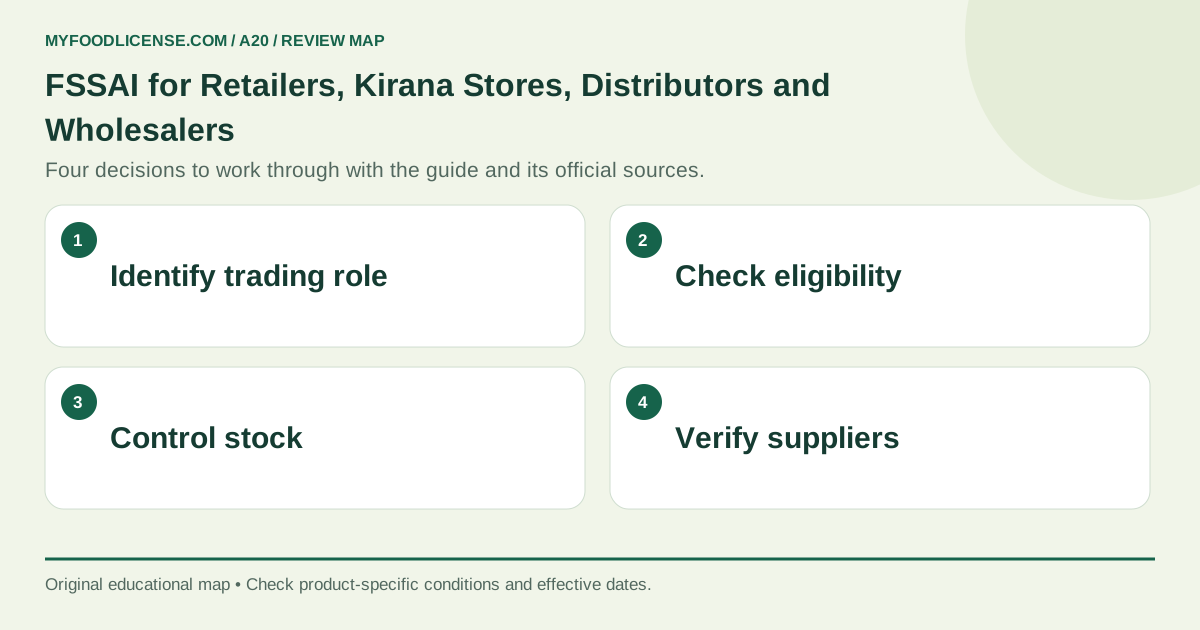
Choose the trading role accurately
Retail generally involves selling to consumers, while wholesale and distribution describe other positions in the supply chain. Map who buys stock, who invoices the sale and who stores it. A kirana adding bulk repacking or in-store food preparation should assess those added operations separately.
Use current turnover criteria
For the ordinary trading rows, the 2026 table provides registration up to ₹1.5 crore, State licensing above ₹1.5 crore up to ₹50 crore, and Central above ₹50 crore, subject to applicable special conditions. Do not use the old ₹12 lakh registration figure. Review the actual trading rows.
Check premises and stock controls
Prepare the documents required for the selected route and the actual shop or distribution location. Manage damaged packs, expired products, pest control, storage conditions and separation from non-food chemicals. A trading business should be able to identify its supplier and the batches supplied onward.
Verify supplier documents and food information
Check the supplier’s identity, appropriate authorisation, invoice and product labels. A printed licence number alone is insufficient to resolve whether that supplier and product match the transaction. Keep records that make a complaint or recall traceable. Verify licence details; plan traceability.
Watch for activity changes
Imports, private-label commissioning, transport, warehouse operations and e-commerce can create separate questions. The June 2026 licence-condition amendment also distinguishes applicability for particular activities; read the actual conditions rather than imposing a manufacturing checklist on a retailer. Read the amendment.
A worked example
Hypothetical example
A kirana selling sealed spice packs begins buying bulk spices and packing them under its own name. The owner reviews the new repacking role, premises controls and labels rather than assuming the existing retail activity covers the expanded model.
Your practical checklist
- Map retail, wholesale and distribution activities.
- Use current turnover and special criteria.
- Prepare premises evidence.
- Control storage, expiry and damaged products.
- Verify supplier identities and records.
- Review repacking, import or online additions.
Download this preparation checklist
For help applying this review to your business, explore our Basic FSSAI Registration service. Bring the documents described above so the consultation can focus on the decisions still unresolved.
Frequently asked questions
Does a kirana need FSSAI authorisation?
Assess the appropriate registration or licensing route for its food-trading activity.
Do sealed packs remove the requirement?
No. Food-trading obligations remain.
Is the old ₹12 lakh threshold current?
No. Use the revised 2026 eligibility table.
Can a retailer pack bulk food under its brand?
Assess repacking or other added activities and product-label obligations.
What records matter for traders?
Supplier, invoice, batch, stock-condition and onward-distribution records help establish traceability.
Official sources and further reading
Checked on 2 October 2026. Gazette notifications and operative directions prevail over compilations and summaries, including this guide.
- FoSCoS revised Kind-of-Business eligibility table, 2 April 2026 file: Activity-specific eligibility and annual fees. The PDF itself is marked updated 1 April 2026; relevant rows appear on pages 3, 6, 7 and 9.
- Licensing amendment notified 23 June 2026: Changes to manufacturing production records and stock-rotation provision. Avoid extending manufacturing record requirements to all businesses.
- Official FoSCoS application portal: Official applications, help topics, current document lists and eligibility information.
This guide is general information, not legal advice; the right route depends on your product and business facts. Examples marked hypothetical are illustrations, not client cases. MyFoodLicense is an independent consultancy and is not affiliated with FSSAI; applications are decided by the competent authority on the official FoSCoS portal.