Registration & licensing
FSSAI for Warehouses, Cold Storage and Transporters
Food storage and transport activities have their own FSSAI KoB rows. A warehouse, cold-storage facility and food transporter should assess the actual operator, premises and current eligibility. The customer’s food licence does not automatically settle the service provider’s responsibilities.
By the MyFoodLicense team Sources checked 3 min read
In this guide
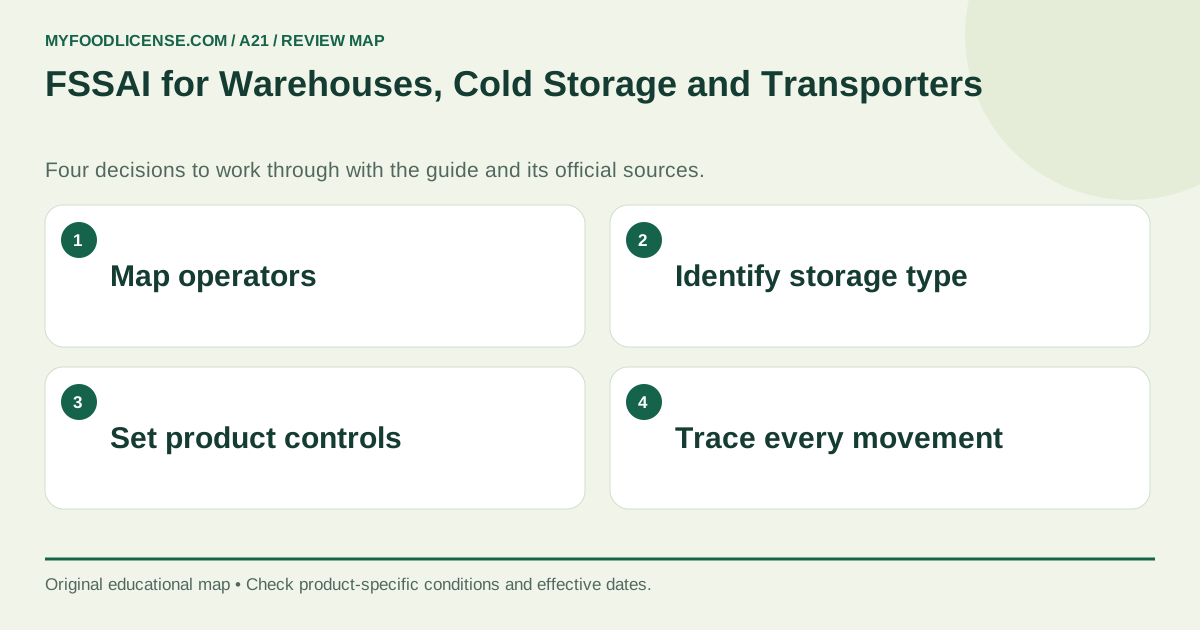
Map the storage and movement arrangement
Identify the owner of the food, operator of the facility, transporter and parties controlling temperature and loading. Separate ambient storage, controlled-atmosphere storage, cold storage and vehicle operations where the table distinguishes them. Record each operating address and outsourced arrangement.
Check the revised criteria
Use the current storage and transport rows rather than old capacity or vehicle-count guidance copied from earlier tables. The 2026 eligibility PDF provides the route and fees by activity. Read special location and mixed-activity conditions where applicable. Current storage and transport eligibility.
Design controls around the food
Define receiving checks, temperature requirements, incompatible goods, cleaning and pest controls. Refrigeration set points must fit the products actually stored; one generic cold-room temperature does not establish compliance for every food. Preserve handling instructions and identify who investigates temperature excursions.
Keep traceable movement records
Record incoming and outgoing batches, quantities, customers, dates and relevant vehicle or temperature information. A recall requires a usable link between stock and destinations, not merely a pile of invoices. Establish how returned, damaged or expired goods are segregated and prevented from re-entering sale.
Review added processing activities
Opening packs, repacking, relabelling or preparing products changes the activity assessment. Assess such changes before presenting them as incidental warehousing. Contract documents should allocate responsibilities clearly, while recognising that applicable statutory duties are not removed simply by a private agreement. Review repacking and relabelling.
A worked example
Hypothetical example
A fulfilment warehouse stores dry snacks and refrigerated desserts for several brands. It establishes product-specific receiving and storage controls, batch-location records and dispatch responsibilities. When a customer requests local relabelling, the operator treats it as an added compliance question instead of an ordinary picking instruction.
Your practical checklist
- Identify facility and transporter operators.
- Distinguish the actual storage types.
- Check current KoB rows.
- Set product-specific storage and movement controls.
- Maintain batch and destination records.
- Assess repacking or relabelling requests separately.
Download this preparation checklist
For help applying this review to your business, explore our State FSSAI Licence – New service. Bring the documents described above so the consultation can focus on the decisions still unresolved.
Frequently asked questions
Does my customer’s licence cover my warehouse?
Assess the warehouse operator’s own activities and authorisation needs.
Do old storage-capacity thresholds still apply?
Use the revised 2026 table for the current route assessment.
Is cold storage just ordinary storage?
Review the specific activity row and product handling requirements.
Can food travel with other goods?
Assess contamination, segregation and product-condition risks in the actual transport arrangement.
What if we apply new labels?
Review whether the task creates a relabelling or other regulated activity.
Official sources and further reading
Checked on 2 October 2026. Gazette notifications and operative directions prevail over compilations and summaries, including this guide.
- FoSCoS revised Kind-of-Business eligibility table, 2 April 2026 file: Activity-specific eligibility and annual fees. The PDF itself is marked updated 1 April 2026; relevant rows appear on pages 3, 6, 7 and 9.
- FSSAI licensing and registration FAQs, 26 July 2022: Online document submission and general application concepts only. Old turnover, validity, renewal and fee guidance is superseded by 2026 sources.
- Food Recall Procedure Regulations, 2017: Recall responsibilities, communication and recordkeeping.
This guide is general information, not legal advice; the right route depends on your product and business facts. Examples marked hypothetical are illustrations, not client cases. MyFoodLicense is an independent consultancy and is not affiliated with FSSAI; applications are decided by the competent authority on the official FoSCoS portal.