Classification & formulation
Millet Products: Standards and Labelling
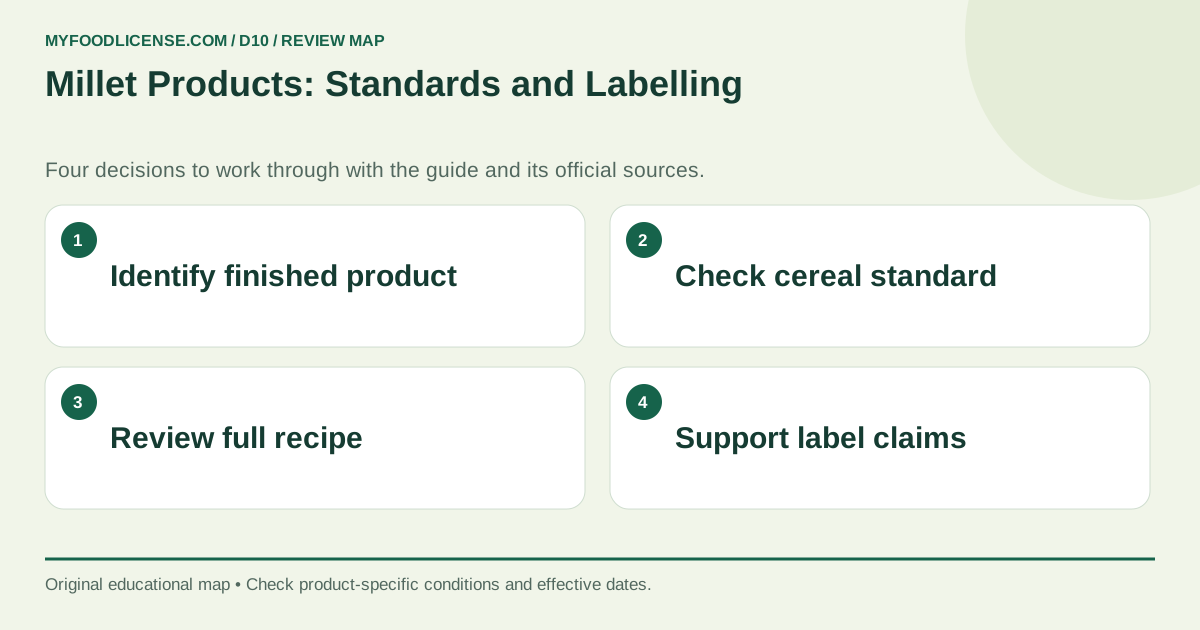
Millet does not create a single regulatory category for every grain, flour, biscuit or drink. Identify the finished product and applicable cereal or other standard, then review the recipe and label. A millet ingredient does not automatically justify gluten-free, high-protein or healthy claims.
By the MyFoodLicense team Sources checked 2 min read
In this guide
Distinguish grain, flour and processed products
Whole grains, single-millet flour, mixed flour and finished snacks have different identity and composition questions. The cereal chapter contains specific standards and conditions. Read the current provision for the actual food rather than treating all millet products as proprietary. Read chapter 2.4.
Review composition and naming
Map the millet species, other cereals, ratios and process. For blended products, the proposed name and ingredient emphasis should match the formula. Where a prescribed identity has composition requirements, a marketing preference cannot replace them.
Check additives and category
A millet biscuit or beverage may use a different additive category from the raw grain or flour. Establish the finished-food category before checking colours, sweeteners, stabilisers or preservatives. Permission for another cereal product does not settle the proposed recipe. Read additive limits.
Assess allergens and claims
Mixed products can contain wheat, milk, nuts or other listed allergens. Gluten-free requires the applicable criteria and evidence; millet origin alone is insufficient where processing or other ingredients introduce a relevant risk. Nutrition claims require finished-product data rather than the reputation of the grain.
Prepare a coordinated label file
Use the actual ingredient order, applicable millet percentages, nutrition basis, business information and dates. Avoid medical or weight-loss promises unsupported by the claim framework. Recheck the classification and label when blends or suppliers change. Read nutrition criteria.
A worked example
Hypothetical example
A millet cookie includes wheat flour and milk ingredients. The team reviews the cookie category, compound inputs and allergens rather than calling it gluten-free simply because millet appears in the brand name. Its front-panel ingredient emphasis is checked against the actual recipe.
Your practical checklist
- Identify the finished food and millet species.
- Read the applicable current standard.
- Check composition and product naming.
- Assess finished-food additive permissions.
- Review allergens and nutrition claims.
- Control recipe and label versions.
Download this preparation checklist
For help applying this review to your business, explore our Standardised Food Assessment service. Bring the documents described above so the consultation can focus on the decisions still unresolved.
Frequently asked questions
Are all millet products proprietary foods?
No. Check the applicable grain, flour or finished-product standard.
Does millet automatically mean gluten-free?
No. Other inputs, processing and claim evidence matter.
Can grain nutrition data support a snack claim?
Not alone. Assess the finished product and claim criterion.
Does adding millet change the additive category automatically?
Determine the actual finished-food category and relevant provisions.
Do blends need percentage review?
Assess applicable naming and ingredient-emphasis requirements.
Official sources and further reading
Checked on 2 October 2026. Gazette notifications and operative directions prevail over compilations and summaries, including this guide.
- Food standards chapter 2.4: cereals and cereal products: Current cereal and millet standards; check amendments for individual products.
- Labelling and Display Regulations compendium, Version VIII, 9 September 2025: Regulation 5: retail declarations, nutrition, dates and allergens. Read alongside later amendments and directions.
- Advertising and Claims Regulations compendium, Version IV, 14 December 2022: Nutrition-claim thresholds and general claim conditions. Protein uses RDA-based alternatives, not a universal percentage-of-energy rule.
- Food additive permissions: Appendix A: Category-specific additive limits, notes and restrictions; read later amendments.
This guide is general information, not legal advice; the right route depends on your product and business facts. Examples marked hypothetical are illustrations, not client cases. MyFoodLicense is an independent consultancy and is not affiliated with FSSAI; applications are decided by the competent authority on the official FoSCoS portal.